Factory Electrical Contractors: 7 Safe Planning Tips

On this page
Factory electrical contractors handle the power, lighting, machinery supplies and safety systems that keep large sites running. Their work differs from domestic and small commercial work because of the scale, the use of three-phase power, and the need to work safely around production, racking and vehicles. This guide explains what is involved, your legal duties, and seven tips for planning it safely.
We are NICEIC approved electricians based in Milton Keynes with 35+ years of experience, working on industrial units, warehouses and commercial sites.
What Do Factory Electrical Contractors Do?
Most jobs for factory electrical contractors involve a mix of the following:
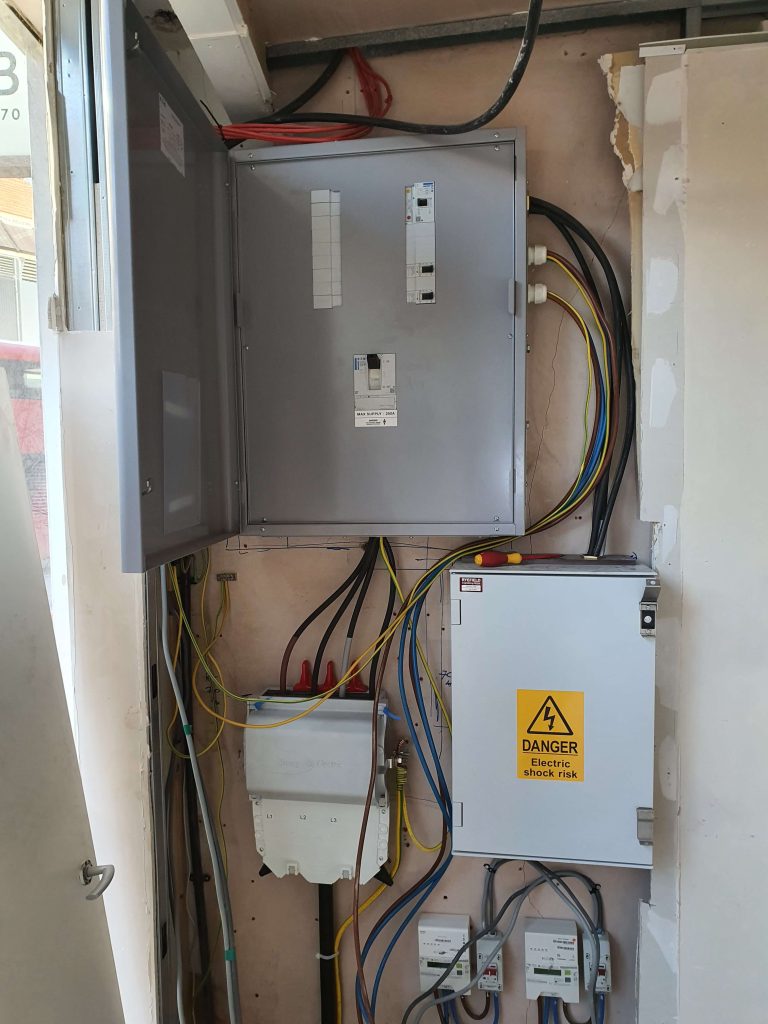
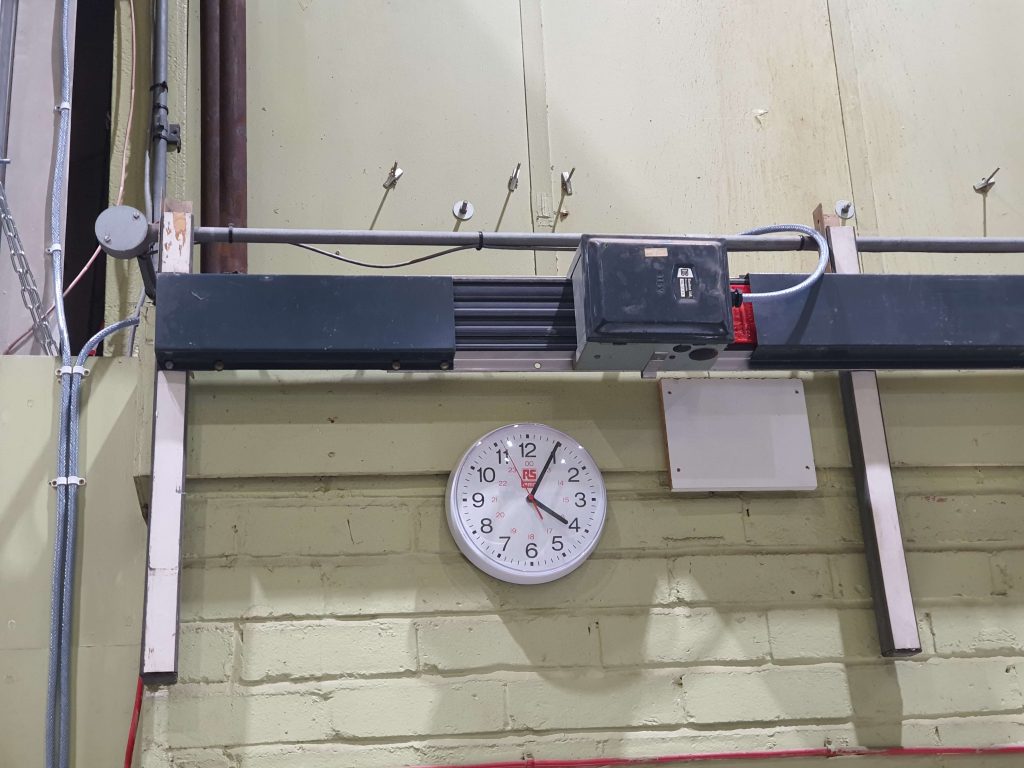
- Power distribution: incoming supplies, main switchgear, distribution boards, busbar and tap-off systems.
- Machinery supplies: dedicated circuits, isolators and controls for production equipment.
- Lighting: high-level LED lighting for production and storage areas, plus external and car park lighting.
- Safety systems: emergency lighting and fire alarms.
- Small power and data: sockets, offices, welfare areas and data cabling.
- Vehicle charging: EV chargers for staff and fleet vehicles.
- Testing and maintenance: periodic inspection, fault finding and repairs.
Factory electrical contractors often handle several of these at once, for example during a fit-out or when a business expands into a new unit.
Signs Your Site Needs Electrical Attention
Some problems mean you should call factory electrical contractors sooner rather than later:
- Breakers or RCDs tripping when machines start or shifts change.
- Lights flickering, failing early or leaving dark spots in aisles.
- Distribution boards that feel warm, smell hot or show discolouration.
- Damaged cables, containment or sockets near vehicle routes.
- Extension leads used to power fixed equipment.
- An overdue EICR, or defects from the last report still not fixed.
If anything shows signs of burning or overheating, isolate it if safe and treat it as an emergency. For the rest, planned work by factory electrical contractors is usually cheaper and less disruptive than waiting for a breakdown.
Your Legal Duties as a Site Owner or Employer
Employers have clear legal duties for electrical safety. Regulation 4 of the Electricity at Work Regulations 1989 requires electrical systems to be constructed and maintained to prevent danger, so far as is reasonably practicable. Work on or near those systems must also be carried out safely.
The HSE’s guidance Electricity at work: Safe working practices (HSG85) sets out the key elements of safe working practices. It is aimed at people who work on or near electrical equipment, and at managers who make decisions about design, installation and maintenance. In practice, that means you share responsibility with your factory electrical contractors for how the work is planned.
7 Safe Planning Tips for Factory Electrical Contractors
1. Start With a Load Assessment
Before you add machinery, chargers or a new production line, find out how much power you have and how much you will need. Undersized supplies cause tripping, overheating and expensive delays. Our guide on how much power your business needs explains how this is worked out.
2. Plan Distribution Around the Layout
Busbar and tap-off systems let you add or move machinery without new cable runs back to the main board. Place distribution boards where they are easy to reach and isolate, not behind racking or stock.
3. Protect Cables From Damage
Forklifts, pallet trucks and racking are a constant risk to cables. Use suitable containment and armoured cable where needed, and route cables away from vehicle paths. Damage to cables is a common cause of faults on busy sites.
4. Get the Lighting Right
Good lighting is a safety issue in factories and warehouses, not just a comfort one. High-level LED fittings with suitable controls can light aisles and work areas well. Plan for safe access for maintenance at height from the start.
5. Include Emergency Lighting and Fire Alarms
Large open buildings need emergency lighting on escape routes and a fire alarm suited to the risk. Both must be tested regularly. Build them into the design rather than adding them at the end.
6. Work Around Production
Downtime is expensive, so good factory electrical contractors schedule work carefully. Plan isolations, phased work and out-of-hours shifts with your electrician so that production and deliveries can continue where possible. Safe isolation must never be skipped to save time.
7. Agree an Inspection and Maintenance Plan
The HSE says installations should be tested often enough that there is little chance of deterioration leading to danger. Industrial environments with dust, vibration and heavy use can wear electrics faster. Our guide to industrial electrical maintenance covers what a good plan includes.
Safe Working on Live Sites
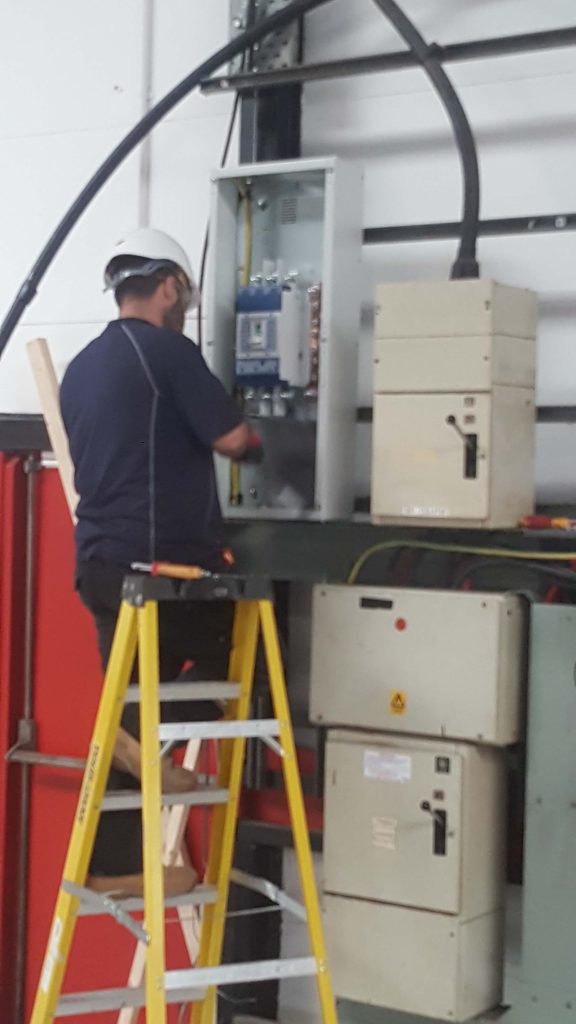
Factory electrical contractors often work while the site is still operating. Good contractors will:
- Agree a method statement and risk assessment before work starts.
- Isolate circuits safely, lock them off and prove them dead before working.
- Coordinate with your site manager about access, vehicles and other trades.
- Keep work areas segregated from staff and visitors.
- Leave clear records, updated circuit charts and certificates.
For wider site safety, see our guide to industrial electrical safety.
What the Current Wiring Regulations Mean
New work by factory electrical contractors must meet the current Wiring Regulations, BS 7671. The current edition is BS 7671:2018+A4:2026, and it applies to new work, modifications and periodic inspections. An older installation is not automatically unsafe because it was installed under a previous edition. An inspection will show whether anything needs action.
Common questions
Do factories and warehouses need three-phase power?
Most do, because larger machinery, high-level lighting and multiple chargers need more power than a single-phase supply can provide. A load assessment will confirm what your site needs.
How often should a warehouse electrical installation be inspected?
Often enough that there is little chance of deterioration leading to danger, as HSE puts it. The inspector sets the next date on your EICR based on the type of site, its condition and how it is used.
Can factory electrical contractors work out of hours?
Yes. Phased and out-of-hours working is common to reduce disruption, but safe isolation and testing are always required.
Who is responsible for electrical safety in a rented warehouse?
It depends on the lease, but employers using the building always have duties under the Electricity at Work Regulations. Check your lease and agree responsibilities in writing.
What paperwork should I get after the work?
You should receive the relevant installation certificates, updated circuit charts and test results. Keep them with your other compliance records.
Last checked: 31 October 2026.
Planning new power, lighting or maintenance for an industrial site? Our industrial electricians work across Milton Keynes and the surrounding areas, with 24/7 emergency cover. Call 01908 464 431 to discuss your project.
Power problem right now?
24/7 emergency electricians across Milton Keynes.