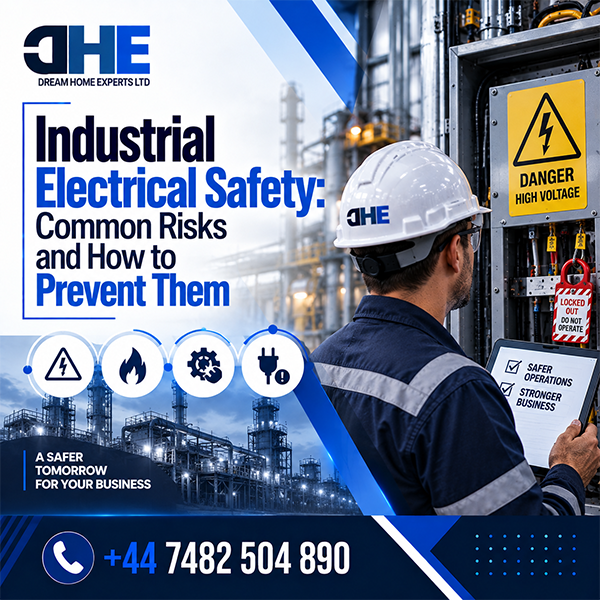
Industrial electrical safety covers a different risk profile than a typical office or shop, simply because factories, warehouses, and production sites run heavier equipment under more demanding conditions. Understanding the most common hazards, and how to prevent them, is the first step toward reducing incidents rather than reacting to them after the fact.
The Most Common Industrial Electrical Safety Risks
Industrial sites tend to see the same categories of risk repeat across different facilities. The most frequent ones include:
- Overloaded circuits and distribution boards carrying more load than they were originally designed for
- Damaged or degraded cable insulation from heat, chemical exposure, or physical wear near machinery
- Poor or outdated earthing on installations that predate current safety standards
- Arc flash risk around high-voltage equipment and switchgear
- Water ingress near washdown areas, loading bays, or outdoor equipment
- Inadequate lockout/tagout procedures during maintenance or equipment servicing
- Overheating connections from vibration loosening terminals over time
Why Industrial Sites Carry Higher Risk Than Standard Commercial Premises
Heavy machinery draws far more current than office equipment, which means faults tend to escalate faster and with more force. Continuous operation also means less downtime for routine checks, so small issues can go unnoticed longer than they would in an office that closes overnight. Add in dust, moisture, vibration, and higher ambient temperatures common on factory floors, and the same fault that might sit dormant in an office environment for years can develop into a genuine hazard on an industrial site within months.
How to Prevent the Most Common Hazards
Prevention comes down to a mix of scheduled inspection, staff awareness, and proper documentation. In practice, that means:
- Shorter EICR cycles than standard commercial premises, typically 1 to 3 years depending on risk level
- Thermal imaging surveys to catch overheating connections before they fail
- Regular visual checks by site staff trained to spot obvious warning signs
- Clear lockout/tagout procedures documented and followed during any equipment servicing
- Arc flash risk assessments for high-voltage switchgear and equipment
- Proper earthing reviews particularly on older installations
Sites around Kiln Farm and Winterhill, where warehouse and light industrial units are common, often build these into a standing maintenance contract rather than treating each item as a separate one-off task.
Staff Training and Awareness
Even the best inspection schedule can’t catch everything between visits. Staff who work around the equipment daily are often the first to notice a warning sign, provided they know what to look for and feel able to report it without delay. Basic awareness training should cover:
- Recognising signs of overheating, such as discolouration or a burning smell
- Understanding what lockout/tagout means and why it can’t be skipped
- Knowing who to contact immediately if something seems wrong
- Never attempting a repair beyond a qualified electrician’s remit, even under time pressure
What Happens When Industrial Electrical Safety Is Neglected
The consequences go beyond a simple repair bill. A serious electrical incident on an industrial site can mean injury, HSE investigation, production shutdown, and insurance disputes if maintenance records can’t demonstrate reasonable care was taken. Arc flash incidents in particular carry a severity risk that most standard commercial faults simply don’t.
Documentation: The Overlooked Side of Industrial Electrical Safety
Records matter as much as the physical inspections themselves. HSE investigators, insurers, and auditors will all ask for evidence that a site took reasonable steps to manage electrical risk, not just assurance that it did. A solid documentation trail usually includes:
- EICR reports with dates, findings, and remedial action taken
- Thermal imaging survey results, stored and compared over time to track developing issues
- Lockout/tagout logs showing when procedures were followed during servicing
- Staff training records confirming awareness sessions actually took place
- Incident and near-miss reports even for events that didn’t result in injury
Sites that treat documentation as an afterthought often find themselves scrambling to reconstruct a history after an incident, which rarely reflects well during an HSE investigation or insurance claim review.
Reviewing Risk as Equipment and Layout Change
An industrial electrical safety plan built around a site’s original layout can quickly go out of date as machinery gets added, moved, or replaced. New equipment often draws more current than what it replaced, and a distribution board sized correctly five years ago may no longer have adequate headroom. Reviewing electrical safety alongside any significant equipment change, rather than only at the next scheduled inspection, catches problems while they’re still simple to fix.
Building an Industrial Electrical Safety Plan
Industrial electrical safety works best as an ongoing plan rather than a reaction to a near-miss. Dream Home Electrical has 35 years of experience identifying and preventing electrical hazards on industrial and warehouse sites across Milton Keynes, and our industrial team can assess your site’s specific risks and build a prevention plan around them.
Want a safety assessment for your industrial site? Get in touch with our industrial team for a free consultation, or call us on 01908 464431.
Frequently Asked Questions
What’s the biggest electrical safety risk on industrial sites?
Overloaded circuits and degraded cable insulation, often worsened by heat, vibration, and continuous operation.
How often should industrial sites have an EICR?
Typically every 1 to 3 years, shorter than the standard 5-year commercial cycle, due to higher risk.
What is arc flash and why does it matter?
A dangerous electrical explosion risk around high-voltage equipment, requiring specific risk assessments and precautions.
Can staff help prevent electrical hazards without training?
Basic awareness training helps staff spot warning signs early, even without electrical qualifications.
Is lockout/tagout a legal requirement?
It’s considered standard best practice and often required under health and safety regulations during equipment servicing.
What should I do if I notice a burning smell near machinery?
Report it immediately and avoid the area; don’t attempt to investigate or fix it yourself.