Three phase vs single phase power comes down to how electricity gets delivered to a building, and it matters more than most business owners realise until equipment starts underperforming or an electrician tells them an upgrade is needed. Getting the wrong supply for your setup can mean tripped circuits, damaged motors, or simply not being able to run the equipment a business actually needs.
Three Phase vs Single Phase: The Basic Difference
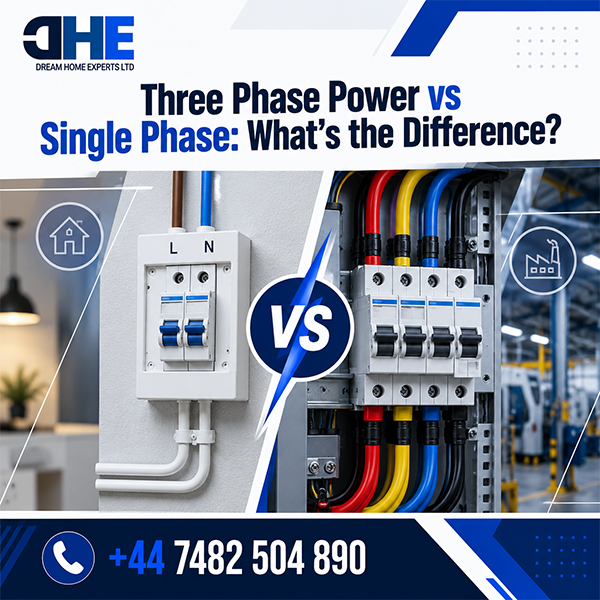
Single phase power runs on one alternating current, delivered through two wires: live and neutral. It’s the standard supply for most homes and small offices, built to handle typical loads like lighting, computers, and small appliances without issue.
Three phase power delivers electricity through three separate live wires, each carrying current slightly out of sync with the others. That staggered delivery gives a smoother, more constant flow of power, which matters for equipment that needs to run consistently under heavy load, rather than in the small bursts a single phase supply provides.
Why the Difference Matters for Equipment
Motors are where the difference shows up most clearly. A three phase motor starts more smoothly, runs more efficiently, and handles heavier loads than an equivalent single phase motor of the same physical size. Industrial machinery, large compressors, lifts, and heavy HVAC systems are usually built to run on three phase power specifically because single phase can’t deliver the same consistent output without significant strain.
Three phase supply also tends to run cooler and last longer under continuous heavy use, since the load is spread more evenly rather than pulsing the way single phase current does.
Which One Does Your Business Need?
Most small offices, shops, and light commercial units run perfectly well on single phase power. If your equipment is limited to computers, lighting, small kitchen appliances, and standard office machinery, upgrading to three phase is rarely necessary and adds cost without a real benefit.
The calculation changes for businesses running heavier equipment: industrial machinery, large-scale refrigeration, workshop tools, lifts, or anything drawing a significant continuous load. In these cases, single phase power often can’t supply enough current without tripping, overheating, or shortening the equipment’s working life.
Warehouses and manufacturing units around Kiln Farm and Knowlhill frequently run on three phase power for exactly this reason, particularly where multiple pieces of heavy machinery operate at the same time.
Signs You Might Need to Upgrade
A few warning signs tend to show up before a formal upgrade gets considered. Motors that struggle to start or run hot under load, breakers tripping when heavy equipment switches on, or a supplier flagging that your current connection can’t support new machinery are all common triggers. If a business is planning to bring in equipment rated for three phase power, checking the existing supply before ordering the equipment saves a costly surprise later.
What a Three Phase Upgrade Involves
Upgrading from single phase to three phase isn’t a simple socket swap. It typically involves coordination with the local distribution network operator, since the supply itself needs to be extended or reinforced to the property, alongside internal rewiring to a new distribution board built for three phase loads. Timelines vary depending on how much work the network operator needs to do outside the building, so it’s worth planning well ahead of an equipment delivery date rather than after machinery has already arrived.
Cost Considerations Beyond the Upgrade Itself
The three phase vs single phase decision isn’t purely about equipment compatibility. Running costs differ too. Three phase supply tends to be more efficient for heavy continuous loads, which can mean lower energy costs per unit of work done compared with straining a single phase supply beyond what it was designed for. On the other hand, standing charges for a three phase connection are usually higher than single phase, so the comparison only favours an upgrade once the equipment load genuinely justifies it.
Businesses sometimes assume a three phase supply is simply “better” across the board. It isn’t. A single phase supply that comfortably handles a business’s actual equipment is the more cost-effective choice; three phase only pays for itself once the load genuinely needs it.
Planning Ahead if You’re Expanding
Businesses growing into heavier equipment, additional machinery, or expanded refrigeration should factor the three phase vs single phase question into planning well before signing off on new purchases. A short site survey before ordering equipment can confirm whether the existing supply is sufficient, borderline, or clearly inadequate, avoiding a scenario where new machinery arrives and simply can’t be switched on safely.
Getting the Right Supply for Your Business
Choosing between three phase vs single phase power isn’t something to guess at. Dream Home Electrical has 35 years of experience assessing commercial and industrial electrical supply across Milton Keynes, and our industrial electrical team can survey your property, check your equipment’s actual power requirements, and advise honestly on whether an upgrade is worth the cost.
Not sure which power supply your business needs? Get in touch with our team for a free assessment, or call us on 01908 464431.
Frequently Asked Questions
What’s the main difference between single phase and three phase power?
Single phase uses one live wire and suits typical office loads; three phase uses three staggered live wires for heavier, continuous loads.
Do I need three phase power for a small office?
Usually not. Standard office equipment and lighting run fine on a single phase supply.
What equipment typically needs three phase power?
Industrial machinery, large compressors, lifts, and heavy HVAC systems commonly require a three phase supply.
How do I know if my current supply can handle new equipment?
Check the equipment’s power rating against your existing supply, or have an electrician survey the property first.
Is upgrading to three phase expensive?
Costs vary significantly depending on distance to the network and internal rewiring needed; a site survey gives an accurate figure.
How long does a three phase upgrade usually take?
It depends on the local network operator’s schedule, so plan well ahead of any equipment delivery date.