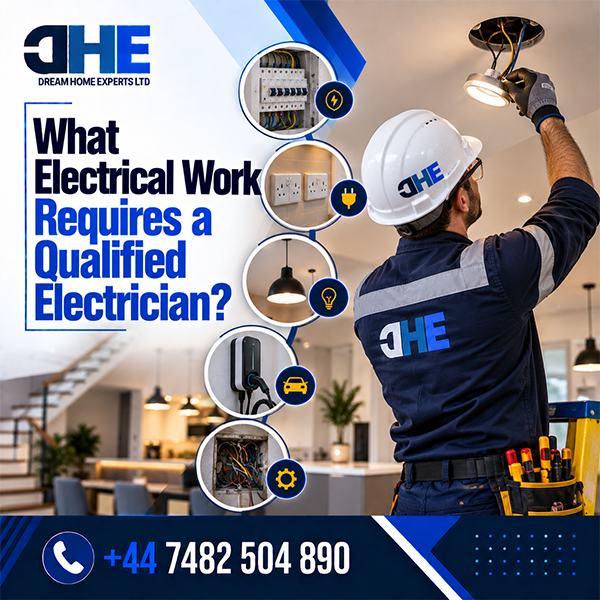
What electrical work requires a qualified electrician comes down to a fairly simple rule: anything involving the fixed wiring or the consumer unit does, while a small number of minor tasks can legally be done by a competent homeowner. Knowing where that line sits protects both your safety and your home’s compliance with current regulations.
What Electrical Work Requires a Qualified Electrician by Law
Under Part P of the Building Regulations, certain electrical work in England and Wales must be notified to building control and carried out or certified by a registered electrician. This includes:
- New circuits including additions to the consumer unit
- Consumer unit replacement or upgrade
- Rewiring whether a full property rewire or significant sections of it
- Work in bathrooms and kitchens where water increases the risk of electric shock
- Outdoor electrical installations including garden lighting and outbuildings
- Electric shower and cooker circuit installations due to the high current involved
Attempting notifiable work without proper certification can cause problems later, particularly when selling a property, since buyers’ solicitors typically ask for documentation proving compliant work was carried out.
Work a Competent Homeowner Can Usually Do
Not everything needs a qualified electrician by law, though caution is still worth exercising even for permitted tasks. Non-notifiable work generally includes:
- Replacing a like-for-like socket, switch, or light fitting
- Adding a socket or light fitting to an existing circuit, outside a bathroom or kitchen
- Installing plug-in appliances that don’t require wiring into a fixed circuit
- Replacing a broken accessory, such as a cracked switch plate
Even where DIY work is technically permitted, a mistake can still create a genuine safety risk, so many homeowners choose to use a qualified electrician regardless of the legal minimum.
Why the Qualified Electrician Requirement Exists
Electrical faults are a leading cause of house fires in the UK, and incorrectly installed wiring is a common factor behind them. Requiring qualified work on higher-risk tasks, new circuits, bathroom and kitchen wiring, and full rewires, reduces the chance of a fault causing fire or electric shock. It also creates a paper trail through certification, so future owners, insurers, and inspectors can confirm work meets current standards.
What Happens If Notifiable Work Isn’t Certified?
Uncertified notifiable work can cause real problems down the line. Home insurance claims linked to an electrical fault can be challenged if the work wasn’t properly certified. Selling a property becomes more complicated too, since a conveyancing solicitor will typically ask for certificates covering any electrical work carried out, and missing documentation can delay or complicate a sale.
Retrospective certification is sometimes possible through a further inspection, but it’s rarely as straightforward or cost-effective as having the work properly certified at the time.
Planning Renovations Around Electrical Requirements
Kitchen and bathroom renovations are where the question of what electrical work requires a qualified electrician comes up most often, since these rooms combine plumbing, tiling, and electrical work in a tight sequence. Bringing an electrician in early, alongside the initial planning rather than after other trades have started, avoids the common problem of sockets or lighting being positioned before the final layout is confirmed.
Extensions and loft conversions raise similar questions, particularly around new circuits for additional rooms, outdoor sockets for garden access, and lighting circuits that need to tie into the existing consumer unit correctly. Involving a qualified electrician during the design stage, rather than treating electrical work as a final step, tends to produce a cleaner result with fewer changes needed later.
When It’s Worth Using a Professional Even for Permitted Work
Even where DIY work falls outside the notifiable category, there’s a reasonable argument for using a qualified electrician anyway on anything beyond the simplest swap. A like-for-like socket replacement is genuinely low risk, but anything involving cutting into a wall, working near existing cabling, or dealing with an unfamiliar circuit carries more risk than it might first appear. The cost of a short callout is usually small compared with the cost of getting something wrong.
When in Doubt, Ask Before Starting
If you’re unsure whether a specific job falls under what electrical work requires a qualified electrician, the safest approach is asking before starting rather than after. A quick phone call to a registered electrician can confirm whether a planned job is notifiable, non-notifiable, or somewhere in between that’s better left to a professional regardless of the legal classification.
Homeowners across Newport Pagnell, Olney, and Great Linford planning renovation work often find it worth checking early, particularly for kitchen and bathroom refits where several different trades are involved and electrical work can easily get overlooked until it’s needed.
Get Electrical Work Done Properly and Certified
Understanding what electrical work requires a qualified electrician protects your home, your safety, and your ability to sell the property without complications later. Dream Home Electrical has carried out notifiable and non-notifiable electrical work across Milton Keynes for 35 years, as a NICEIC-approved electrician, providing full certification for every job that needs it.
Not sure if your electrical job needs a qualified electrician? Get in touch with our team for free advice, or call us on 01908 464431.
Frequently Asked Questions
Can I replace a light switch myself?
Yes, replacing a like-for-like switch or socket is generally non-notifiable, though caution is still advised.
Do I need an electrician to add a socket in my kitchen?
Yes. Electrical work in kitchens and bathrooms is notifiable due to the increased risk near water.
What happens if I do notifiable work without certification?
It can complicate home insurance claims and cause delays or issues when selling the property.
Is rewiring a house something I can do myself?
No. Full or partial rewiring must be carried out or certified by a qualified, registered electrician.
Can I install outdoor garden lighting myself?
No. Outdoor electrical installations are notifiable work requiring a qualified electrician.
How do I know if my planned job is notifiable?
Ask a registered electrician before starting; they can confirm the correct classification quickly.