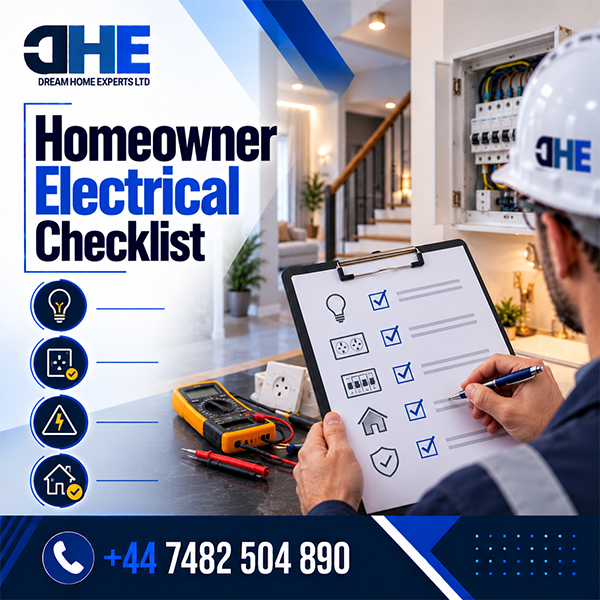
A homeowner electrical checklist gives you a simple way to catch small problems before they turn into a costly repair, a failed inspection, or worse. Most electrical faults at home don’t happen suddenly. They build up quietly over weeks or months, and a short regular check is usually all it takes to spot them early.
What to Include in a Homeowner Electrical Checklist
A practical checklist splits naturally into things you can check yourself and things that need a qualified electrician. The everyday items include:
- Sockets and switches: checking for scorch marks, discolouration, or a warm feel to the touch
- Extension leads: making sure they’re not daisy chained together or running under rugs and carpets
- Light fittings: watching for flickering, buzzing, or dimming when other appliances switch on
- The fuse box: a quick visual check for any warmth, unusual smells, or a fuse that trips repeatedly
- Cables and cords: looking for fraying, cracking, or exposed wiring on appliance leads
- Bathrooms and kitchens: confirming sockets are a safe distance from water sources and properly rated for wet areas
Monthly and Annual Checks
Beyond the everyday glance, a few items are worth checking on a longer cycle. Test any RCD (residual current device) by pressing the test button monthly to confirm it trips correctly. Smoke alarms and carbon monoxide detectors need a monthly test too, alongside a battery check. An EICR, carried out by a qualified electrician, is generally recommended every 10 years for owner-occupied homes, or sooner if the property is older or hasn’t been checked recently.
Common Hazards a Home Checklist Should Flag
Certain issues come up repeatedly in homes that haven’t had a recent electrical check:
- Overloaded sockets with too many high-power appliances plugged in at once
- Old rewireable fuse boxes without RCD protection
- DIY electrical work carried out without proper certification
- Damaged cables hidden behind furniture or under carpets
- Outdoor sockets and lighting not rated for weatherproof use
None of these need specialist knowledge to spot. They need someone actually looking, on a regular basis, rather than assuming everything is fine because nothing has failed yet.
Why a Checklist Matters More in Older Homes
Properties built before the 1980s often combine several risk factors at once: ageing wiring, fuse boxes without modern RCD protection, and sockets never designed for today’s number of plugged-in devices. A homeowner electrical checklist becomes especially useful in these properties, since it catches warning signs early rather than waiting for a fault to force the issue.
Homeowners in Newport Pagnell, Olney, and Woburn Sands with period properties often find that a checklist review alongside a periodic EICR gives real peace of mind, rather than wondering what might be happening behind the walls.
Rented or recently purchased older properties deserve particular attention, since neither a new owner nor a new tenant has necessarily had the chance to notice slow-building issues that a previous long-term occupant might have grown used to ignoring.
What to Do If the Checklist Flags a Problem
Not everything needs an emergency callout. A slightly warm socket is worth monitoring closely, while a burning smell, a tripping breaker that won’t reset, or exposed wiring needs a call the same day. Keeping a simple homeowner electrical checklist pinned somewhere visible, like inside a cupboard near the fuse box, makes it easier to remember what to check and how often.
Building the Checklist Into Seasonal Habits
A homeowner electrical checklist works best when it’s tied to something you’re already doing regularly, rather than a separate task easy to forget. Clock change weekends, when smoke alarm batteries typically get checked anyway, are a natural point to run through the wider checklist too. Moving into a new home is another obvious trigger, since previous occupants may not have flagged issues that a fresh set of eyes would catch immediately.
Seasonal changes matter too. Outdoor sockets and lighting are worth a closer look before winter, when damp and cold can expose weaknesses in older fittings that were never designed for prolonged wet weather exposure.
Get a Full Home Electrical Safety Check
If it’s been a while since your home’s wiring was properly checked, a homeowner electrical checklist is a useful starting point, but a full inspection gives real certainty. Dream Home Electrical has carried out domestic electrical safety checks across Milton Keynes for 35 years, as a NICEIC-approved residential electrician.
Want a full home electrical safety check? Get in touch with our residential team for a free quote, or call us on 01908 464431.
Frequently Asked Questions
How often should I check my home’s electrics myself?
A quick visual check every few weeks, with monthly RCD and smoke alarm tests, catches most early warning signs.
What’s the most commonly missed item on a home checklist?
Overloaded extension leads and outdated fuse boxes without RCD protection.
How often does a home need a full EICR?
Generally every 10 years for owner-occupied homes, though older properties may need it sooner.
Is a warm socket always dangerous?
It’s worth monitoring closely and having checked, since it often points to a loose connection or overload.
Can I test my own RCD at home?
Yes. Most consumer units have a test button that should trip the RCD when pressed monthly.
What should I do if I find damaged wiring?
Avoid touching it and call a qualified electrician the same day rather than attempting a DIY fix.