Why Does My Electric Keep Tripping? | Milton Keynes Guide
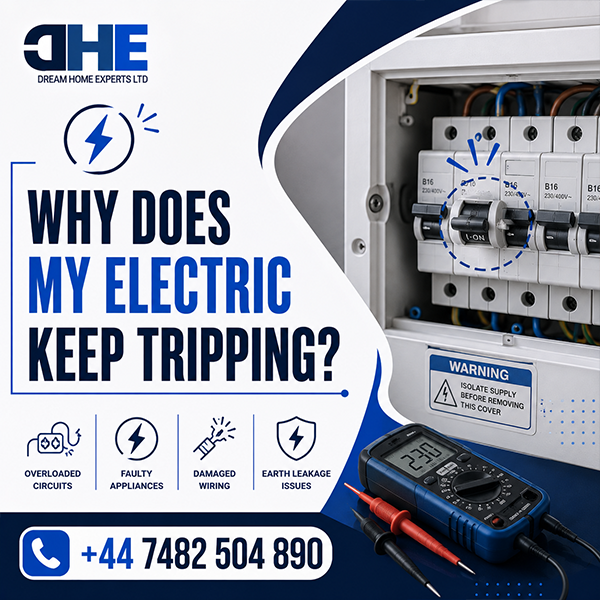
Why does my electric keep tripping is one of the most common questions Dream Home Experts hears from homeowners across Milton Keynes, usually asked after the second or third time resetting the same breaker in a single evening. A tripping circuit is the electrical system doing exactly what it was designed to do, cutting power before a fault turns into something more serious, though repeated tripping still points to an underlying issue that needs a proper diagnosis rather than another reset each time it happens.
Why Does My Electric Keep Tripping in the First Place
Why does my electric keep tripping usually comes down to one of a small number of common causes, and understanding the difference helps a homeowner describe the problem accurately when booking an electrician. A circuit breaker or RCD trips as a safety response to a fault it has detected, whether that fault sits inside an appliance, the wiring itself, or the device protecting the circuit.
The Most Common Causes Behind a Tripping Circuit
Certain faults answer why does my electric keep tripping for the vast majority of calls received across Milton Keynes properties.
- An overloaded circuit drawing more current than it can safely handle
- A faulty appliance developing an internal fault
- Moisture reaching a socket, switch, or outdoor fitting
- Damaged or ageing wiring inside a wall or under a floor
- A worn out circuit breaker or RCD that trips too easily
How to Tell Which Circuit Is Causing the Problem
Identifying the affected circuit before an electrician arrives speeds up the diagnosis considerably, and a simple process of elimination usually narrows it down within a few short minutes.
- Note which lights or sockets lost power when the trip happened
- Check the consumer unit label to identify the affected circuit
- Unplug appliances on that circuit before resetting the breaker
- Reset the breaker once, and if it trips again straight away, leave it off
When an Overloaded Circuit Is the Culprit
Overloading happens when too many appliances draw power from the same circuit at once, particularly common in older properties with fewer circuits than modern homes typically have. Kitchens and home offices with several high draw appliances plugged into the same run are the most frequent source of this type of trip, and the solution often involves redistributing the load rather than replacing anything.
- Spreading high draw appliances across separate circuits
- Adding a dedicated circuit for equipment such as ovens or heaters
- Avoiding multiple extension leads chained together on one socket
- Upgrading an outdated consumer unit that limits available circuits
When a Faulty Appliance Is Behind the Trip
An appliance developing an internal fault will often trip the circuit it is plugged into every time it switches on, which makes this cause easier to isolate than most others. Unplugging suspect appliances one at a time and resetting the breaker after each one usually identifies the culprit within a few attempts, though a qualified electrician should confirm the diagnosis before any appliance goes back into regular use.
When to Call a Professional Rather Than Keep Resetting
Some situations call for a qualified electrician immediately rather than continuing to investigate alone, particularly where safety is a concern.
- The breaker trips again within seconds of being reset
- A burning smell accompanies the tripping
- Multiple circuits trip together without an obvious cause
- The consumer unit itself feels warm to the touch
- Tripping happens repeatedly despite unplugging every appliance
Why Choose Us to Diagnose Why Your Electric Keeps Tripping
Every diagnosis is carried out by a NICEIC approved electrician using proper test equipment rather than guesswork, and a current Google rating of 4.9 from sixty nine reviews reflects the accuracy homeowners across Milton Keynes rely on when the same Fault Finding problem keeps happening.
- NICEIC approved contractor status
- Thirty years of trade experience diagnosing electrical faults
- Same visit repairs wherever the fault allows it
- Transparent pricing agreed before any work begins
Why Does My Electric Keep Tripping After an RCD Test
Some homeowners notice tripping specifically after testing the RCD button on the consumer unit, and this usually points to the device itself rather than a fault elsewhere in the property. A worn RCD can become oversensitive over time, tripping under loads that would never have caused a problem when the unit was newly installed, and replacing the device often resolves the issue completely.
Preventing Future Trips Once the Cause Is Found
Once the underlying fault has been identified and repaired, a few simple habits help avoid a repeat visit for exactly the same problem.
- Avoid overloading a single circuit with multiple high draw appliances
- Replace ageing extension leads rather than daisy chaining several together
- Book a periodic inspection if the property has an older consumer unit
- Report any repeat tripping promptly rather than living with an ongoing workaround
Frequently Asked Questions
Is it safe to keep resetting a breaker that keeps tripping?
Resetting once is normally fine, though repeated tripping means the underlying fault needs proper diagnosis.
Can a faulty light bulb cause a circuit to trip?
Yes, a failing bulb or fitting can sometimes cause a trip, particularly on older lighting circuits.
Why does my electric keep tripping only during wet weather?
This usually points to moisture reaching an outdoor socket, cable, or fitting that needs sealing or repair.
Does an old consumer unit make tripping more likely?
Yes, outdated units are often less tolerant of modern appliance loads and trip more readily as a result.
How quickly can someone come out to diagnose a tripping circuit?
Most call outs are attended within a few hours, sooner if the property has no power at all.
Will the electrician need to access every room in the house?
Access to the consumer unit and the affected circuit is usually enough, though full access speeds up diagnosis.