Every business runs on electricity, but most owners only think about their electrical systems when something goes wrong. By then, it’s usually cost them downtime, a failed inspection, or worse.
With 35 years in the electrical industry and NICEIC-approved status, Dream Home Electrical has carried out commercial electrical work across Milton Keynes for offices, retail units, warehouses, and public sector buildings. This guide covers exactly what commercial electrical services involve, when you need them, and how to choose a contractor you can rely on.
What Are Commercial Electrical Services?
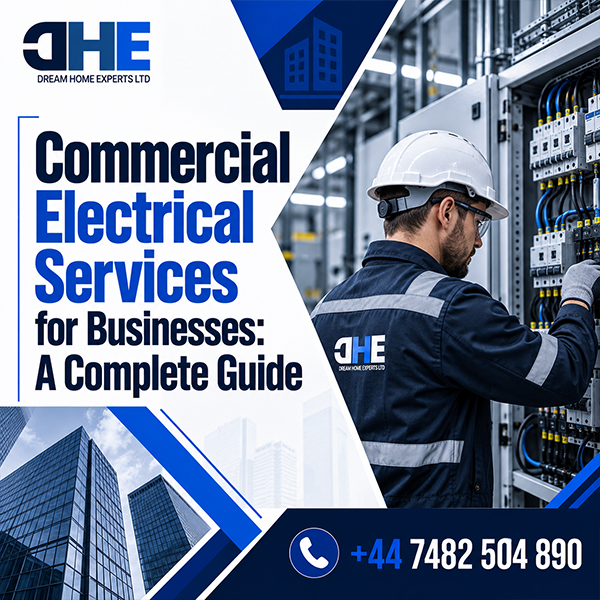
Commercial electrical services cover the design, installation, testing, and maintenance of electrical systems in non-domestic properties: offices, shops, restaurants, warehouses, schools, and industrial units. Unlike domestic work, commercial electrics has to meet stricter compliance standards, handle higher loads, and often continue operating with minimal disruption to a live business.
A qualified commercial electrician typically handles:
- New electrical installations: wiring for fit-outs, refurbishments, and new builds
- Electrical Installation Condition Reports (EICR): mandatory periodic safety testing
- PAT testing: portable appliance testing for workplace equipment
- Fire alarm systems: installation, testing, and maintenance
- Emergency lighting: legally required in most commercial buildings
- Commercial lighting upgrades: including energy-efficient LED retrofits
- Data cabling and networking: structured cabling for offices and data centres
- CCTV and door entry systems: security infrastructure
- EV charger installation: increasingly common for staff and customer parking
- Consumer unit and fuse board upgrades: replacing outdated or unsafe distribution boards
- Maintenance contracts: scheduled servicing to prevent faults before they happen
Why Commercial Electrical Compliance Matters
Under the Health and Safety at Work Act and the Electricity at Work Regulations 1989, business owners have a legal duty to keep their electrical installations safe. This isn’t optional. Insurers, landlords, and local authorities can all require proof of compliance, and non-compliance can invalidate insurance or result in enforcement action following an incident.
The main compliance requirements for commercial properties include:
- EICR every 5 years (or more frequently for higher-risk environments like industrial units)
- PAT testing on a schedule appropriate to the equipment and how often it’s used
- Fire alarm testing on a weekly and annual basis
- Emergency lighting testing monthly and annually, per BS 5266
Skipping these isn’t just a compliance risk. It’s a safety risk. Faulty wiring and overloaded circuits are among the leading causes of commercial fires in the UK.
Signs Your Business Needs Electrical Attention
You don’t need to wait for a scheduled inspection to spot a problem. Watch for:
- Circuit breakers tripping repeatedly
- Flickering or dimming lights, especially when equipment switches on
- Warm or discoloured sockets and switches
- A burning smell near outlets or the consumer unit
- Buzzing or crackling sounds from electrical fittings
- Outdated fuse boards (anything without RCD protection should be reviewed)
Any of these warrant a call to a commercial electrician before they become a bigger, more expensive problem.
How to Choose a Commercial Electrical Contractor
Not every electrician is set up to handle commercial work. Here’s what to check before you hire one:
Look for NICEIC approval, ECA membership, or City & Guilds-qualified engineers. These aren’t just badges; they mean the contractor’s work is independently assessed against industry standards, and that they’re insured to carry out the work they’re quoting for.
Domestic and commercial electrical work are not the same skill set. Ask for examples of similar commercial projects they’ve completed.
A contractor who won’t give you a written quote before starting work is a red flag. You should know the cost before you commit.
A good commercial electrician will work around your business hours where possible, or plan phased work so you’re never fully shut down.
The best relationships with a commercial electrician aren’t one-off callouts. They’re maintenance contracts that catch problems early and keep your compliance paperwork up to date.
What to Expect From the Process
- Site survey and quote: an electrician assesses your property and current setup, then provides a written estimate.
- Scheduling: work is planned around your business hours to minimise disruption.
- Installation or testing: carried out to BS 7671 wiring regulations.
- Certification: you receive the relevant compliance certificates (EICR, EIC, minor works certificate, etc.) for your records and insurers.
- Ongoing maintenance: many businesses opt for a scheduled maintenance plan rather than waiting for something to break.
Commercial Electrical Services in Milton Keynes
Dream Home Electrical has spent 35 years working with businesses across Milton Keynes and the surrounding areas, from small retail units to larger commercial and industrial sites. As NICEIC-approved and ECA-registered electricians, every job, from a single EICR to a full commercial rewire, is carried out to current wiring regulations, with all the certification your business needs on file.
Whether you need a one-off inspection, an urgent repair, or a long-term maintenance plan, our commercial electrician team is available around Milton Keynes with 24/7 callout cover for genuine emergencies.
Frequently Asked Questions
Here are quick answers to the questions we hear most often from business owners about commercial electrical services.
How often does a business need an EICR?
Every 5 years for most commercial premises, though higher-risk sites like industrial units may need testing every 1 to 3 years.
Is PAT testing a legal requirement?
Not by name, but the Electricity at Work Regulations 1989 require businesses to keep portable appliances safe.
How much do commercial electrical services cost?
Costs vary by property size and scope of work, from a few hundred pounds to several thousand for a full rewire.
Can a domestic electrician do commercial work?
Not always. Commercial work involves higher loads and stricter compliance, so use an electrician with commercial experience and accreditation.
What happens if a commercial EICR fails?
Unsafe issues get classified and must be fixed within a set timeframe before the report is marked satisfactory.
How long does a commercial electrical inspection take?
A few hours for a small unit, up to a full day or more for larger or industrial premises.
Do I need an electrician for fire alarm testing?
Weekly tests can be done in-house, but the annual full system service needs a qualified electrician or fire alarm engineer.
What’s included in an emergency lighting test?
A monthly function check plus an annual full duration test, confirming lights and batteries work during a power failure.
Need a commercial electrical inspection or quote? Get in touch with our team for a free, no-obligation quote, or call us directly on 01908 464431.