Best EV Charger for Home: 7 Smart Ways to Choose
Simple UK Buyer’s Guide
On this page
- What Makes the Best EV Charger for Home Use?
- 7kW or 22kW: Match the Best EV Charger for Home to Your Supply
- Smart Charging Is Now the Law
- Tethered or Untethered?
- Features Worth Comparing
- Common Mistakes When Choosing a Home Charger
- Grants for Home Chargers in 2026
- Installation: Why It Matters as Much as the Charger
- Our Practical Advice on the Best EV Charger for Home
- Common questions
The best EV charger for home use is the one that suits your car, your parking, your electricity supply and your tariff. There is no single best brand for everyone. What matters is choosing a compliant smart charger, at the right power for your supply, fitted by a qualified installer.
This guide explains how to choose, what UK rules every home charger must meet, and what grants are available in 2026. It is written for drivers in Milton Keynes, but the rules apply across Great Britain. We do not rank brands here, because the right model depends on your home.
What Makes the Best EV Charger for Home Use?
Start with five questions. The answers narrow the choice quickly.
- What supply does your home have? Most UK homes have a single-phase supply, which limits a home charger to around 7kW.
- Where will it go? Distance from the consumer unit and the route for the cable affect installation.
- Do you want a fixed cable? Tethered or untethered is a daily convenience choice.
- What tariff are you on, or planning to use? Smart scheduling only saves money with a time-of-use tariff.
- Do you have solar or other loads to manage? Some chargers manage load better than others in busy homes.
The best EV charger for home charging ticks all five boxes for your situation, not just the one with the longest feature list.
7kW or 22kW: Match the Best EV Charger for Home to Your Supply
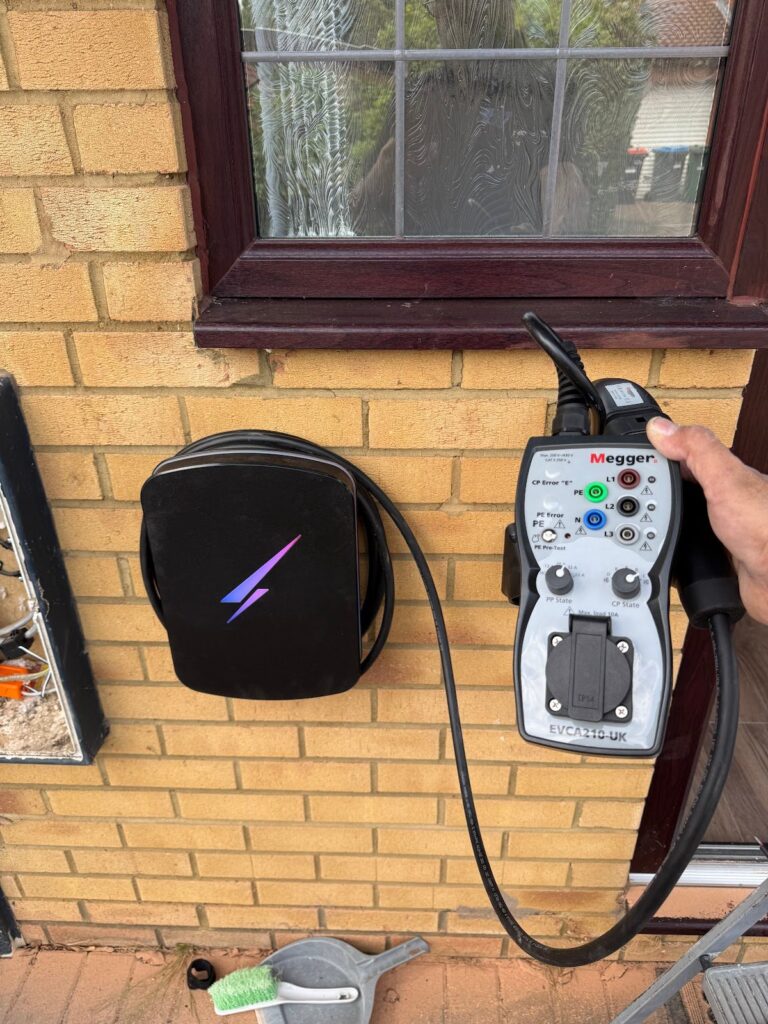
For most people, the best EV charger for home use is a 7kW unit, the standard choice for a single-phase home. It will usually charge a car fully overnight. A 22kW charger needs a three-phase supply, which few homes have.
Buying a 22kW unit for a single-phase home does not make it charge faster. It will run at the lower rate your supply allows. Many cars also limit how fast they accept AC charging, so check your car’s onboard charger rating before paying extra.
Before any installation, your electrician should check the incoming supply, main fuse and consumer unit can take the extra load. In some homes, a load-management device lets the charger slow down when the kettle, oven and shower are all on at once. Our guide to three phase vs single phase explains the difference.
Smart Charging Is Now the Law
Any home or workplace charger sold in Great Britain since 30 June 2022 must meet the Electric Vehicles (Smart Charge Points) Regulations 2021. GOV.UK summarises the smart charge point requirements. In short, a compliant charger must:
- Send and receive information, and respond to signals to change the rate or timing of charging
- Keep its smart functions if you switch electricity supplier
- Carry on charging if it loses its internet connection
- Come with pre-set default charging hours outside peak times, which you can accept, change or remove
- Include a randomised delay, so thousands of chargers do not all start at once
- Show you how much electricity it has used and for how long
- Meet cyber security requirements, in force since 30 December 2022
Government guidance defines the peak hours to avoid by default as 8am to 11am and 4pm to 10pm on weekdays. The default randomised delay is up to 600 seconds.
So when choosing the best EV charger for home charging, “smart” is not a premium extra. It is the legal minimum. Check that any charger you buy new from a UK retailer or installer is sold as compliant.
Tethered or Untethered?
A tethered charger has the cable fixed to the unit. You simply unhook it and plug in. An untethered charger has a socket, and you use your own cable.
- Tethered: quicker day to day and nothing to forget. The cable stays outside on the unit.
- Untethered: neater on the wall and works with any car if you change vehicle, but you store and carry a cable.
There is no right answer here, only the best EV charger for home routines like yours. For a single household with one car, tethered is usually the more convenient option. For shared driveways or households that change cars often, untethered gives more flexibility.
Features Worth Comparing
Once a charger meets the legal minimum, these features decide which is the best EV charger for home use in your case. Compare them using the manufacturer’s published specification sheets.
App and tariff integration
A good app makes scheduling simple. Some chargers connect directly with energy suppliers’ smart tariffs, which can automate cheaper off-peak charging.
Load management
Built-in or add-on load management protects your main fuse in homes with high demand. It is especially useful in older homes or where there is an electric shower or heat pump.
Solar compatibility
If you already have solar panels, some chargers can use surplus generation. Check compatibility with your existing system.
Weatherproofing and build
Outdoor chargers need a suitable ingress protection (IP) rating and impact resistance for an exposed driveway.
Warranty and support
Look at the warranty length, how faults are handled and whether the app and software are kept up to date. A charger stays on your wall for years, so support matters.
Common Mistakes When Choosing a Home Charger
- Buying a 22kW charger for a single-phase home
- Choosing a unit before the supply and consumer unit have been surveyed
- Paying for features your tariff or car cannot use
- Buying a charger online without checking it meets grant or installer requirements
- Placing the charger where the cable has to cross a footpath or driveway
Avoiding these mistakes matters more than picking the best EV charger for home use from a review list. A survey first saves money and stress later.
Grants for Home Chargers in 2026
Grants can change which is the best EV charger for home budgets, because the charger must be on the approved list. Most homeowners in houses cannot get a grant. The current GOV.UK schemes focus on people who rent or live in flats.
- Renters and flat owners: 75% off the cost of buying and installing a charger, up to £500. You need private off-street parking and an eligible vehicle.
- Households with on-street parking only: up to £500 towards an approved cross-pavement solution.
- Landlords: up to £500 per socket, for up to 200 sockets across all properties.
GOV.UK says the five chargepoint grant schemes are available until 31 March 2027 at the new rates introduced on 1 April 2026. The charger and installer must meet the scheme’s requirements, so check before you buy. Full details are on the GOV.UK EV chargepoint grants page.
Installation: Why It Matters as Much as the Charger
Installation quality is an easy part of the decision to overlook.
Even the best EV charger for home use will disappoint if it is badly installed. A proper installation includes:
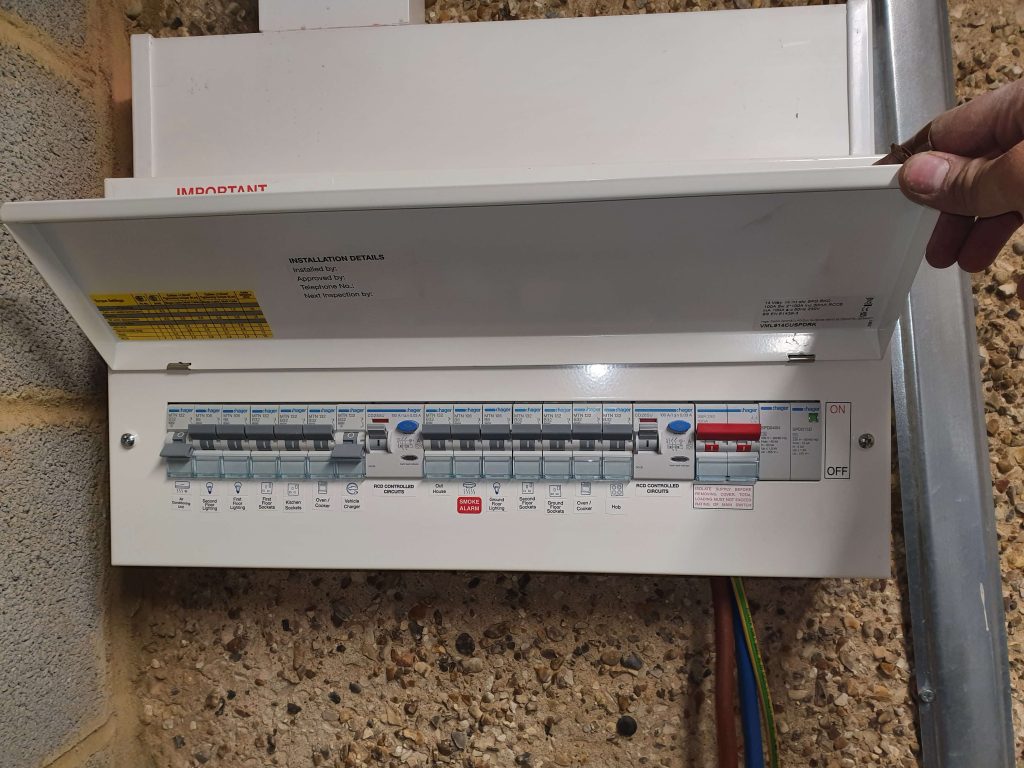
- A survey of the supply, earthing arrangements and consumer unit
- A dedicated circuit with the correct protection
- A sensible cable route and mounting position
- Commissioning, app set-up and a demonstration
- Certification, and notification to the network operator where required
EV charging installations have specific requirements in BS 7671, and BS 7671:2018+A4:2026 is the current edition. Use an installer who works with chargers regularly and can explain the earthing and protection choices for your home.
When it is safe to wait
If your car charges adequately from a standard socket for now, there is no rush to buy the best EV charger for home charging. But a household socket is not designed for long, heavy loads every night. If you notice a hot plug, a scorched socket or a burning smell, stop using it and get the circuit checked.
Our Practical Advice on the Best EV Charger for Home
Choose the best EV charger for home use by working backwards: survey first, then shortlist chargers that suit your supply, parking and tariff, then compare features on published specs. Ignore marketing claims you cannot check.
Dream Home Experts installs home and commercial EV chargers across Milton Keynes. We are an NICEIC Approved Contractor and ECA member, with 35+ years of experience in the team. For more reading, see our guides to EV charger installation cost and EV charger types.
Last checked: 31 October 2026.
Common questions
What is the best EV charger for home use in the UK?
There is no single best model. The best EV charger for home use depends on your property. The right charger is a compliant smart unit at the right power for your supply, with the cable type and features that suit your home.
Is a 7kW charger enough?
For most single-phase homes, yes. It will usually charge a car fully overnight. A 22kW charger needs a three-phase supply.
Do all new home chargers have to be smart?
Yes. Chargers sold for home or workplace use in Great Britain since 30 June 2022 must meet the smart charge point regulations.
Can I get a grant as a homeowner?
Usually not if you own a house. The current grants are for renters, flat owners, households with only on-street parking, and landlords.
Can I install a charger myself?
No. It needs a dedicated circuit, the right protection and certification. Use a qualified electrician.
Ready to choose and install a charger? Visit our domestic electrician page or call 01908 464 431 to book a survey.
Power problem right now?
24/7 emergency electricians across Milton Keynes.