EV charger types can seem confusing at first glance, since manufacturers, dealerships, and installers all use slightly different terms for what are essentially the same handful of charging speeds. Dream Home Electrical helps homeowners and businesses across Milton Keynes choose the right option from the available EV charger types, based on how the vehicle actually gets used rather than which unit looks most impressive on a spec sheet or in a showroom display.
The Main EV Charger Types Explained
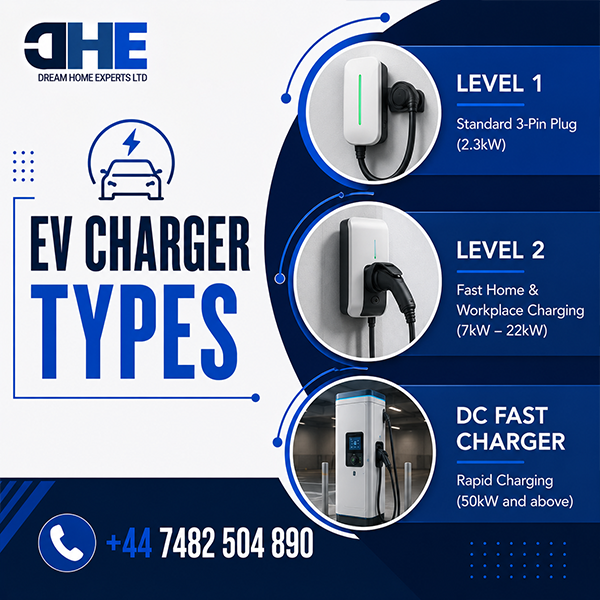
EV charger types fall into three broad categories based on charging speed, and understanding the difference helps a buyer avoid paying for capability their property or vehicle cannot actually use in practice. Slow chargers draw around three kilowatts and suit overnight charging at a relaxed pace, fast chargers running at seven or twenty two kilowatts cover most home and workplace installations, and rapid chargers above forty kilowatts are built for motorway service stations rather than driveways.
Slow, Fast, and Rapid Charging Compared
Each category suits a different charging scenario, and most home installations across Milton Keynes sit firmly in the middle tier of this range.
- Slow chargers around three kilowatts, similar to a standard socket
- Fast chargers at seven kilowatts, typical for a single phase home driveway
- Fast chargers at twenty two kilowatts, requiring a three phase supply
- Rapid chargers above forty kilowatts, found at public charging hubs and dedicated charging stations
- Ultra rapid chargers exceeding one hundred kilowatts for motorway stops and long distance travel
Best EV Charger Options for Different Properties
Best EV Charger choices depend heavily on parking arrangements, vehicle type, and how quickly a driver needs to top up between journeys and daily errands. A tethered unit with a built in cable suits most homeowners who only ever charge one vehicle, while an untethered socket gives more flexibility for households with more than one electric car using different cable types.
- Tethered chargers with a fixed cable for everyday convenience
- Untethered sockets compatible with any Type 2 cable a driver might already own
- Smart chargers that schedule charging around off peak electricity rates automatically each night
- Chargers with app connectivity for remote monitoring and scheduling
EV Charger Maintenance and Longevity
EV Charger Maintenance needs are minimal compared with most household electrical equipment, though a few simple habits keep a unit working reliably for years rather than developing faults that shorten its lifespan. Outdoor units in particular benefit from occasional visual checks, since weather exposure is the most common cause of early failure in home charging points.
- Keep charging cables off wet ground when not connected
- Avoid using adaptors or extension leads with the charging unit
- Report error codes or unusual noises to an electrician promptly
- Book a periodic inspection alongside other electrical safety checks
Choosing the Right EV Charger Types for Your Vehicle
Not every vehicle can accept the fastest charging speed available, since the car’s onboard charger limits how quickly it can actually draw power regardless of what the wallbox is capable of delivering on paper. Checking the vehicle’s maximum onboard charging rate before choosing a unit avoids paying extra for speed the car will never use in practice.
Why Choose Us for EV Charger Installation in Milton Keynes
Every installation is carried out by a NICEIC approved electrician, and a current Google rating of 4.9 from sixty nine reviews reflects the same standard applied to EV Chargers work as to any other domestic or commercial project across Milton Keynes and the surrounding towns.
- NICEIC approved contractor status
- Independent advice matched to actual vehicle and property needs
- Transparent quotations agreed before work starts
- Full testing and certification on completion
Matching EV Charger Types to Household Charging Habits
The right charger for a household depends on daily mileage more than any other factor, since a driver covering a short commute needs far less overnight power than someone regularly driving long distances. Understanding actual charging habits before choosing between EV charger types avoids overspending on capacity that rarely gets used.
- Short commuters often manage comfortably with a standard seven kilowatt unit
- High mileage drivers may benefit from a twenty two kilowatt three phase supply
- Multi vehicle households often prefer an untethered charger for flexibility
- Households planning a second EV should consider future capacity needs early, since running two vehicles from one charger often means longer overnight charging windows
Every EV Charger Types Comparison Ends With a Site Survey
Every charger type requires a site survey before installation, since the existing electrical supply, cable route, and parking layout all influence which units are actually suitable for a given property and vehicle combination. A property with an outdated consumer unit may need upgrade work regardless of which charger type is eventually chosen for the driveway.
Frequently Asked Questions About Charger Selection
Choosing between the available EV charger types often comes down to a handful of practical questions that a site survey and a short conversation with an installer can answer clearly.
Which EV charger type suits most homeowners?
A seven kilowatt tethered charger suits most driveways and covers an overnight charge for typical daily mileage.
Can I upgrade from a slow charger to a faster one later?
Yes, though an upgrade may require additional cabling work depending on the original installation.
Does a faster charger always mean quicker charging?
Only if the vehicle’s onboard charger can accept that speed, otherwise the car limits the rate itself.
Are tethered chargers better than untethered ones?
Neither is universally better, the right choice depends on how many vehicles will use the charger regularly.
How long do home EV chargers typically last?
Most quality units last well over a decade with minimal maintenance beyond occasional visual checks.
Do smart chargers cost more than standard units?
Smart chargers usually cost slightly more upfront, though scheduling features can reduce electricity costs over time.