Commercial EICR: How Often? 7 Vital Factors for Businesses

On this page
- Who Sets How Often You Need a Commercial EICR?
- 7 Vital Factors That Change the Interval
- Commercial EICR Frequency by Business Type
- When to Inspect Early
- Other Checks on Their Own Cycles
- How to Keep Track of Due Dates
- Landlords and Tenants of Commercial Units
- What Happens at a Commercial EICR
- Common questions
How often does a commercial property need an EICR? There is no single commercial EICR interval set in law. The Electricity at Work Regulations 1989 require you to maintain your electrical systems to prevent danger, and the inspector sets the date of your next inspection on each Electrical Installation Condition Report (EICR), based on how the building is used and the condition they find.
This guide explains who decides the interval, what pushes it shorter, which other checks run on their own cycles, and what to do if you are not sure when your last inspection was. It is written for business owners and facilities managers in Milton Keynes.
Who Sets How Often You Need a Commercial EICR?
Three things decide it: the law, the wiring regulations and the person inspecting your installation.
The law
Regulation 4(2) of the Electricity at Work Regulations 1989 requires electrical systems to be maintained, so far as reasonably practicable, to prevent danger. HSE explains that the right frequency for checks depends on the equipment, its environment and the results of previous checks. You can read HSE’s overview on maintaining electrical equipment safely.
BS 7671
The wiring regulations require periodic inspection and testing, and leave the interval to the competent person. They expect that person to consider the type of installation, how it is used and maintained, and the external influences on it. BS 7671:2018+A4:2026 is the current edition.
Your inspector and your last EICR
Every EICR states the date by which the next inspection is required. That date sets when your next commercial EICR is due. If your last report recommended three years, that is your interval, even if a neighbouring business works to five.
7 Vital Factors That Change the Interval
When an inspector sets the date of your next commercial EICR, these are the factors that move it up or down.
- Type of premises. An office with desk equipment is lower risk than a workshop, kitchen or warehouse.
- How hard the installation works. Heavy loads, three-phase machinery and long operating hours wear components faster.
- Environment. Dust, damp, vibration, heat and vehicle movement all shorten the interval.
- Public access. Shops, venues and premises open to the public carry more risk of damage and misuse.
- Condition at the last inspection. Defects, poor records or ageing equipment usually mean a shorter interval.
- Maintenance in between. A site with planned maintenance and good records can often justify a longer interval than one with none.
- Licensing and insurance. Some licences and insurers set their own intervals, which can be shorter than the inspector would otherwise recommend.
Commercial EICR Frequency by Business Type
Because the interval is set case by case, treat these as typical patterns rather than rules.
Offices
Low-demand offices with stable layouts often sit at the longer end. NICEIC has advised, for example, that the period between tests for a garage workshop should not exceed five years. Your inspector may recommend a similar interval for a low-risk office.
Shops, restaurants and venues
Display lighting, refrigeration, commercial kitchens and public access put more demand on the installation. Expect a shorter gap between each commercial EICR if the inspector finds wear or frequent alterations.
Industrial units and warehouses
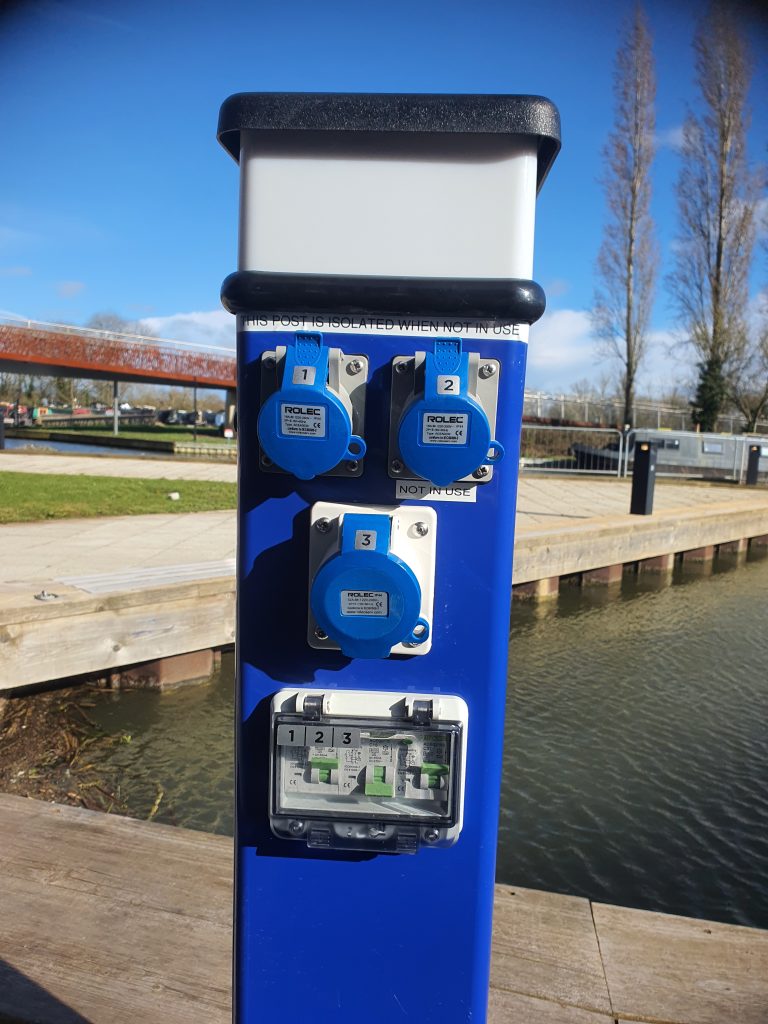
Machinery, three-phase supplies, dust and forklift traffic all raise the risk. Shorter intervals are likely, and the inspector will usually look closely at distribution boards and cable routes. A sensible commercial EICR interval here balances downtime for testing against the cost of an unplanned failure.
Licensed premises
NICEIC notes that licensing conditions often set intervals. Cinemas are typically inspected every one to three years, and petrol filling stations and caravan parks generally every year. Temporary installations at shows and fairgrounds are inspected after each assembly on site.
When to Inspect Early
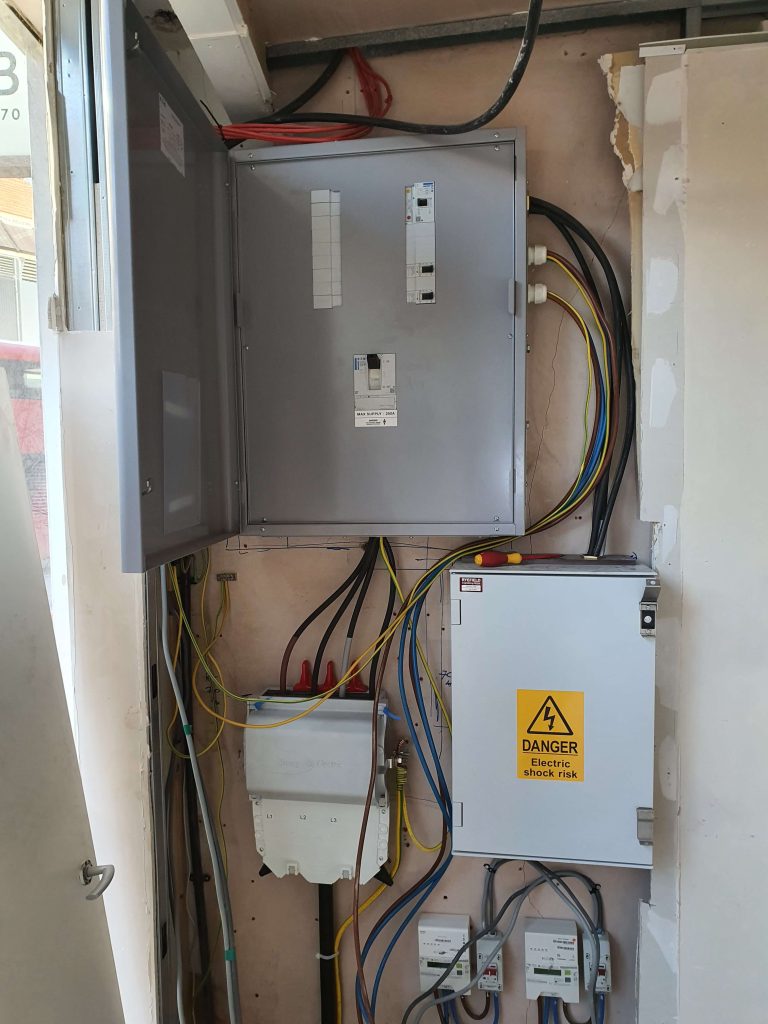
The next-due date on your commercial EICR is a maximum, not a target. Some events should trigger an inspection regardless of the due date:
- A change of use, such as office to workshop or retail to food service
- A major refit, extension or new machinery
- A new lease, or taking over premises with no records
- Flood, fire or storm damage
- Repeated tripping, burning smells or overheating equipment
If you are buying or leasing a commercial unit, ask for the latest commercial EICR before you sign. If there is none, budget for one straight away.
Other Checks on Their Own Cycles
A commercial EICR covers the fixed wiring. It is not the only check a business needs, and these run to their own timetables.
- Portable appliances: HSE does not require annual PAT testing. Its low-risk guidance suggests intervals from six months to five years depending on the equipment. See our PAT testing checklist.
- Fire alarms: Home Office guidance gives weekly tests and six-monthly servicing by a competent person as examples.
- Emergency lighting: monthly tests and an annual test by a competent person, again as examples in Home Office guidance.
Putting all of these on one schedule makes it much harder to miss one. Our guide to electrical maintenance contracts explains how.
How to Keep Track of Due Dates
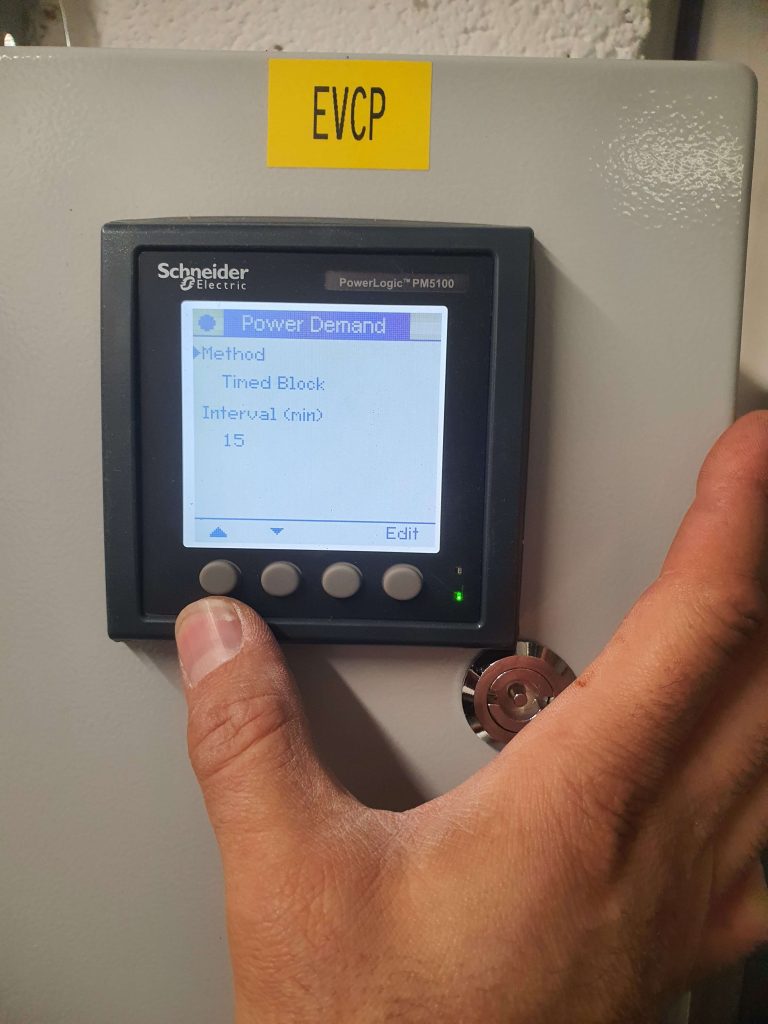
Keep one register for each site that lists the date of the last EICR, the result, the next due date and any open remedial items. Add PAT, fire alarm and emergency lighting dates to the same register. If you manage several sites, review it every quarter. A missed date is an easily avoided compliance problem, and a simple register makes your commercial EICR history easy to prove to insurers, landlords and inspectors.
Landlords and Tenants of Commercial Units
The Electrical Safety Standards regulations that require five-yearly EICRs apply to residential lettings, not commercial ones. For commercial property, the lease usually decides who is responsible for the fixed installation.
Check whether the landlord’s inspection covers your fit-out, or whether you need your own EICR for circuits you added. Agree it in writing so the commercial EICR schedule is clear for both sides.
What Happens at a Commercial EICR
The inspector checks the distribution boards, wiring, accessories, earthing and bonding, then tests a sample of circuits. Results are coded: C1 and C2 mean the installation is unsatisfactory and work is needed, while C3 is an improvement recommendation. Under the current edition, further investigation items are listed separately and do not on their own make the result unsatisfactory. The findings decide when your next commercial EICR is due.
Testing means isolating circuits, so plan it around trading hours. Weekend or out-of-hours inspections are often the least disruptive option. For more background, see what is an EICR.
Last checked: 31 October 2026.
Common questions
Is there a legal interval for a commercial EICR?
No single interval is set in law. The legal duty is to maintain the installation to prevent danger. The interval on your last EICR is the one to follow.
Is five years the maximum for every business?
Not necessarily. Your inspector may recommend five years for a low-risk office, but the interval may be shorter because of use, environment, licensing or insurance.
What if I cannot find my last EICR?
Treat the installation as overdue and book an inspection. Without a report, you cannot show the installation has been maintained.
Does a new edition of BS 7671 mean I need a new EICR?
No. A new edition does not make an existing installation unsafe. Follow the date on your current report.
Can the inspection be done out of hours?
Yes. We can plan testing for evenings or weekends to keep disruption low.
Need to check when your commercial EICR is due, or book one? Visit our EICR and electrical testing page or call 01908 464 431. NICEIC approved, with 35+ years of experience in the team and 24/7 emergency cover.
Power problem right now?
24/7 emergency electricians across Milton Keynes.