Electrical Maintenance Contracts: 7 Essential Checks
Avoid Costly Mistakes
On this page
- Why Electrical Maintenance Contracts Matter for Businesses
- What Electrical Maintenance Contracts Usually Cover
- 7 Essential Checks Before You Sign
- How Often Should Each Task Happen?
- Planned Contracts vs Paying Per Call-Out
- Contracts for Landlords and Multi-Tenant Buildings
- Costs: What Affects the Price
- Getting Started
- Common questions
Electrical maintenance contracts give a business a planned, written schedule for keeping its wiring, distribution boards, emergency lighting and fire alarm in safe working order. Instead of waiting for a fault, you agree what gets checked, how often, and how quickly someone responds when something goes wrong.
This guide explains what the law actually asks of you, what a good contract should cover, and the seven checks to make before you sign one. It is written for office, shop, warehouse and landlord clients in and around Milton Keynes.
Why Electrical Maintenance Contracts Matter for Businesses
The short answer: the law requires you to maintain your electrics, and a contract is the simplest way to prove you do. Under the Electricity at Work Regulations 1989, electrical systems must be maintained, so far as is reasonably practicable, to prevent danger.
The Health and Safety Executive puts it plainly: the law requires electrical equipment to be maintained to prevent danger. It does not set one fixed method or frequency. That flexibility is useful, but it also means you need a sensible plan and a record of what was done.
A common problem is not an old building but no clear owner for the electrics. Electrical maintenance contracts fix that by putting dates, tasks and responsibilities in writing.
What Electrical Maintenance Contracts Usually Cover
Most electrical maintenance contracts combine planned visits with reactive cover. The planned part keeps the installation in good order. The reactive part gets an electrician to you when something fails.
Planned (preventive) tasks
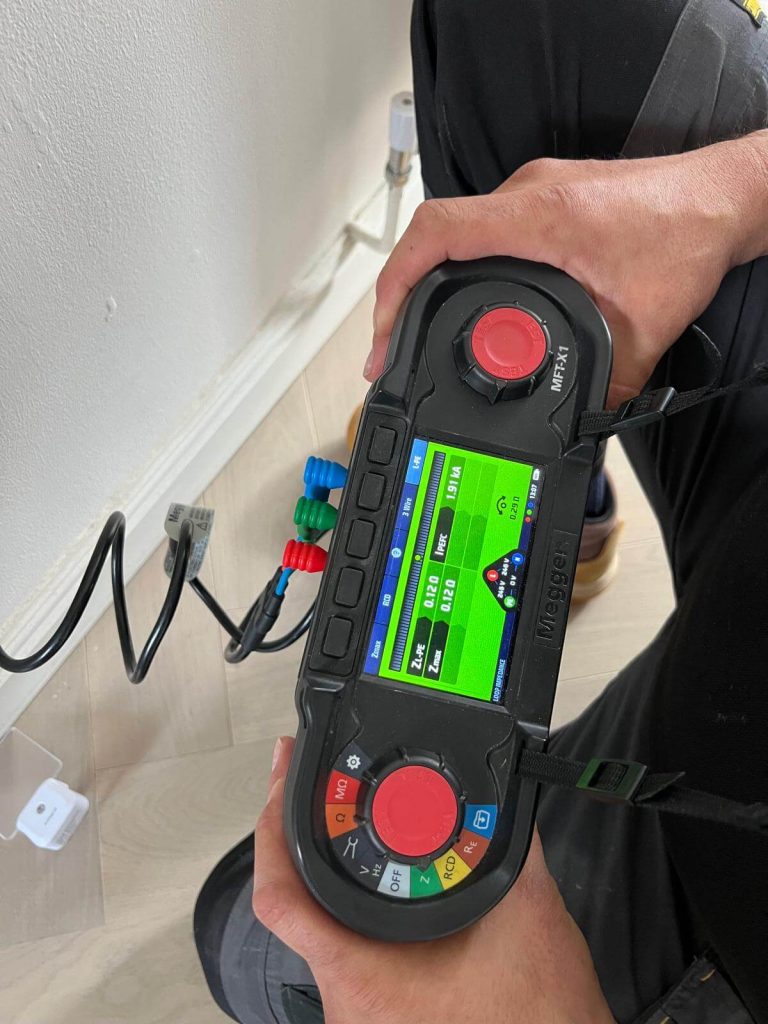
- Periodic inspection and testing of the fixed wiring, with an Electrical Installation Condition Report (EICR)
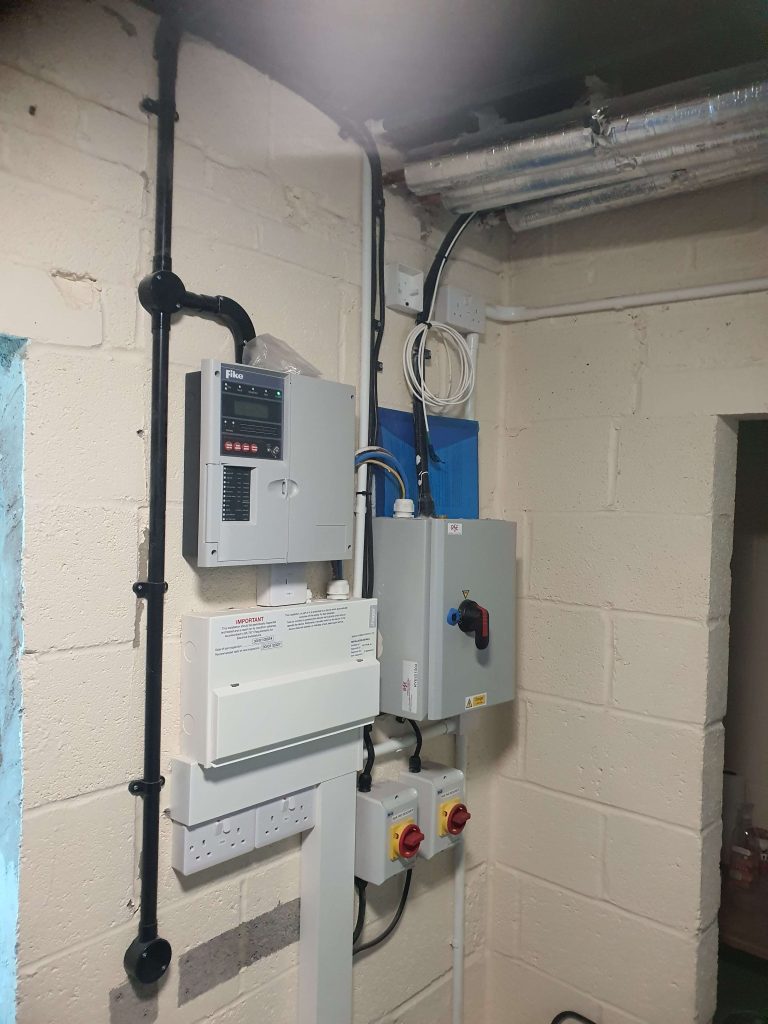
- Visual checks of distribution boards, consumer units and isolators
- Emergency lighting tests and servicing
- Fire alarm testing support and servicing
- PAT testing of portable equipment
- Lighting repairs, including LED upgrades and car park lighting
Reactive tasks
- Fault finding when circuits trip or equipment stops working
- Emergency call-outs, including out of hours
- Remedial work from EICR observations
A small office may only need an annual visit plus call-out cover. A warehouse with three-phase plant, data cabling and EV chargers may need quarterly visits. The contract should match how your site is used, not a generic template.
7 Essential Checks Before You Sign
Not all electrical maintenance contracts are equal. These seven checks separate a useful agreement from a piece of paper.
1. A clear asset list
The contract should list what is covered: boards, circuits, emergency lights, fire alarm panels, chargers and so on. If it is not listed, assume it is not included.
2. Defined inspection intervals
BS 7671 leaves the interval between fixed-wiring inspections to the inspector, who records the next due date on the EICR. Your contract should follow that date, and shorten it if your site is harsh or busy. BS 7671:2018+A4:2026 is the current edition, so check your contractor works to it.
3. Fire alarm and emergency lighting tasks
Home Office guidance for offices and shops suggests testing fire detection and warning systems weekly, testing emergency lighting monthly, and having a competent person test and maintain the fire alarm every six months. Be clear which tasks your staff do and which the contractor does.
4. Response times
Ask what “emergency” means in the contract and how fast someone attends. Dream Home Experts provides 24/7 emergency call-outs, so faults outside trading hours are not left until Monday.
5. Who does remedial work, and how it is priced
Good electrical maintenance contracts state how repairs are quoted and approved. You should never discover a large bill after the visit.
6. Records you can show an insurer or inspector
You should receive certificates, test results and a log of every visit. Fire and rescue services expect fire safety testing and maintenance to be recorded in writing.
7. Accreditation and competence
Check the contractor is registered with a recognised scheme. Dream Home Experts is an NICEIC Approved Contractor and ECA member, with 35+ years of hands-on electrical experience in the team.
How Often Should Each Task Happen?
There is no single legal timetable. The right frequency depends on the equipment, the environment and what previous checks found. That is HSE’s position, and it is the honest answer.
For portable equipment, HSE’s low-risk workplace leaflet suggests starting points. Earthed (Class I) items like kettles may need a formal visual inspection every 6 to 12 months and a combined inspection and test every 1 to 2 years. Desktop IT equipment may only need a visual inspection every 2 to 4 years. Your results should then shorten or lengthen those intervals.
For fixed wiring, follow the date on your EICR. If you change the use of a unit, refit it or take on a new tenancy, bring the inspection forward rather than waiting.
Planned Contracts vs Paying Per Call-Out
Paying per call-out can work for a very small, low-risk office. The trade-off is that nobody is tracking due dates, and faults tend to be found when they cause downtime.
Electrical maintenance contracts spread the work across the year. Testing can be booked around trading hours, small defects are fixed before they trip a whole floor, and you build a paper trail as you go. For a fuller comparison, read our guide to planned vs reactive maintenance.
When it is safe to wait, and when to call
A single failed light or a cracked socket faceplate can usually wait for the next planned visit, as long as it is isolated or taped off safely. Burning smells, scorch marks, repeated tripping, water near electrics or hot sockets should be treated as urgent. Switch off if it is safe to do so and call an electrician.
Contracts for Landlords and Multi-Tenant Buildings
If you own or manage a building with several tenants, decide early who is responsible for what. The landlord usually controls the landlord’s supply, common-area lighting, fire alarm and emergency lighting. Each tenant may control their own fit-out and equipment.
Good electrical maintenance contracts for managed buildings spell out that split. They also say who holds the fire alarm log book and who arranges access to each unit. Without that, testing gets missed because everyone assumes someone else booked it.
Sites with three-phase plant or EV chargers
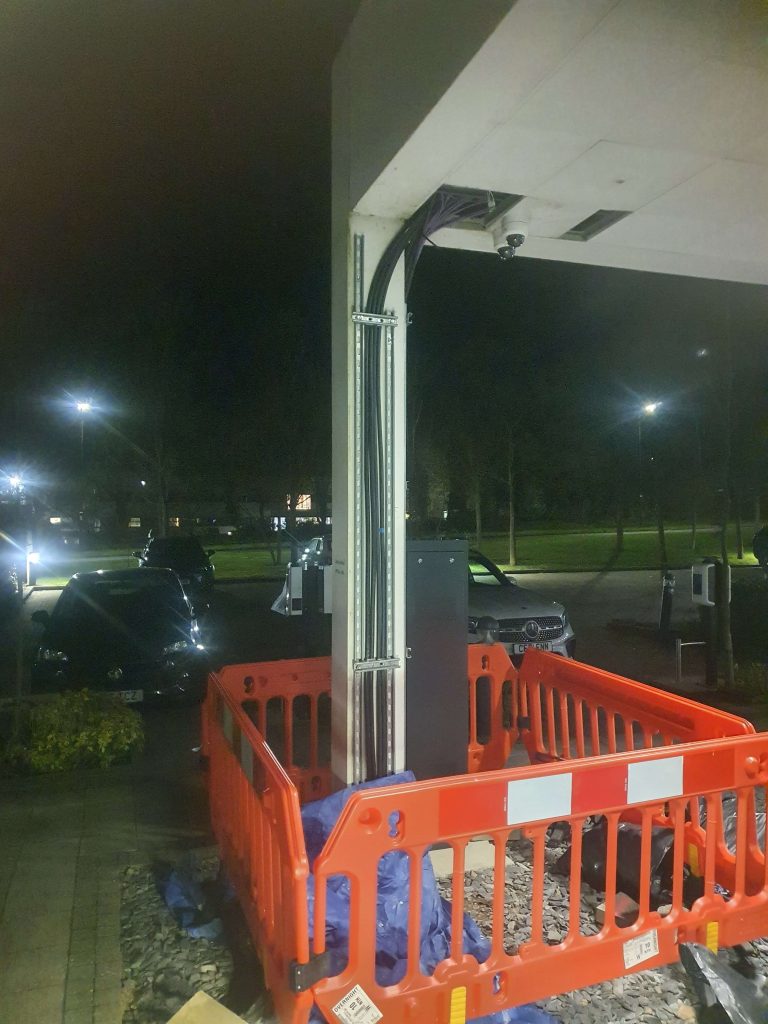
Workshops, warehouses and offices with three-phase supplies, large distribution boards or EV charge points need a contractor who works on that equipment regularly. Ask that the scope lists each board and charger by location, and that thermal or visual checks of busy boards are included where appropriate.
What a good visit report looks like
After each planned visit you should get a short report. It should list what was checked, what was found, what was fixed on the day and what needs a quote. Photos of defects help you approve work quickly. Keep these reports with your EICR and fire safety records so everything is in one place when an insurer, landlord or fire officer asks.
Costs: What Affects the Price
We do not publish fixed contract prices because the cost of electrical maintenance contracts varies widely by site. The main factors are:
- The size of the building and number of circuits and boards
- How many emergency lights and fire alarm devices need servicing
- Number of portable appliances on the PAT register
- Required response times and out-of-hours cover
- Access restrictions, such as testing only at night or weekends
Ask any provider of electrical maintenance contracts for a site survey and a written scope. A fixed annual fee for planned work, with agreed rates for reactive work, is the clearest arrangement for most businesses.
Getting Started
Before comparing electrical maintenance contracts, start with what you already have: your last EICR, fire alarm log book, emergency lighting records and any PAT register. Those documents show what is due and what is overdue.
From there, a survey sets the asset list and visit schedule. If you want a simple starting point, our commercial electrical maintenance checklist lists the core checks, and our guide to commercial electrical inspection frequency explains how intervals are set.
Last checked: 31 October 2026.
Common questions
Is an electrical maintenance contract a legal requirement?
No. Electrical maintenance contracts are optional. The legal duty is to maintain your electrical systems to prevent danger. A contract is simply a practical way to meet that duty and keep records.
How long do electrical maintenance contracts usually last?
Most electrical maintenance contracts run for 12 months and renew annually. Check the notice period and what happens to outstanding remedial work if you leave.
Does a maintenance contract include the EICR?
Good electrical maintenance contracts include it if the EICR is due during the term. Confirm whether remedial work from the report is included or quoted separately.
Can my staff do some of the checks?
Yes. HSE accepts that trained staff can carry out simple user checks and some visual inspections in low-risk settings. Testing and fixed-wiring inspection need a competent electrician.
Do you cover sites outside Milton Keynes?
Yes. We work across Milton Keynes and the surrounding areas. Call us to check your location.
Want a maintenance plan built around your site? Visit our commercial electrical services page or call 01908 464 431. Our team offers 24/7 emergency cover for business clients.
Power problem right now?
24/7 emergency electricians across Milton Keynes.