Electrical Emergency: 7 Essential Steps to Stay Safe
24/7 Help in Milton Keynes
On this page
- What Counts as an Electrical Emergency?
- Electrical Emergency: 7 Essential Steps to Stay Safe
- What Not to Do in an Electrical Emergency
- Power Cut or Electrical Emergency in Your Home?
- Common Causes of an Electrical Emergency
- When It Is Safe to Wait
- Electrical Emergency Help for Businesses
- What Happens When You Call Us
- Common questions
An electrical emergency is any electrical problem that puts people or property at immediate risk: a burning smell, sparks, a hot or scorched socket, water near electrics, or someone getting a shock. The first rule is simple. If there is fire, smoke or anyone hurt, get everyone out and call 999.
This guide explains what counts as an electrical emergency, the safe steps to take in the first few minutes, what not to do, and when a problem can wait for a normal appointment. It is written for homeowners, tenants and businesses in Milton Keynes.
What Counts as an Electrical Emergency?
Treat these signs as an electrical emergency and act straight away:
- A burning or fishy smell near sockets, switches, lights or the consumer unit
- Sparks, crackling or buzzing from a socket, switch or fitting
- Sockets, plugs or switches that feel hot or look scorched
- Water getting into lights, sockets or the consumer unit
- A trip switch that goes off again as soon as you reset it
- Exposed or damaged cables after building work, a storm or an accident
- Anyone receiving an electric shock
- Damaged overhead power lines or a damaged substation
NICEIC advises treating burning smells, sparks and visible damage as warning signs that should never be ignored.
Electrical Emergency: 7 Essential Steps to Stay Safe
Follow these steps in order. Never put yourself at risk to complete one.
1. Fire, smoke or injury? Call 999
Leave the property, close doors behind you if you can, and call 999. Do not try to fight an electrical fire with water.
2. Do not touch anyone in contact with electricity
If someone is still touching a live source, do not touch them. Switch off the power at the consumer unit if you can reach it safely, then call 999.
3. Switch off at the consumer unit
Turn off the affected circuit, or the main switch if you are not sure which circuit it is. Only do this if the consumer unit is dry and safe to reach.
4. Keep away from water
If water has reached anything electrical, do not touch it, and do not stand in water to reach the fuse box. If you cannot reach the switch safely, leave the area and call for help.
5. Unplug only if it is safe
Unplug the affected appliance only if the plug and socket look and feel normal. Do not touch damaged sockets or exposed wiring.
6. Note what happened
Which circuit tripped, what was switched on, any smell or noise. This helps the electrician find the fault faster.
7. Call a qualified electrician
Describe the problem clearly. A good electrician will tell you whether it is safe to wait or needs someone on site straight away.
What Not to Do in an Electrical Emergency
- Do not keep resetting a trip switch that keeps going off. It is tripping to protect you.
- Do not remove socket covers, open the consumer unit or attempt repairs yourself. NICEIC’s advice is never to attempt DIY repairs on electrical systems or appliances.
- Do not use extension leads to get around a circuit that has failed.
- Do not tape or hold a breaker in the on position.
- Do not ignore a burning smell that comes and goes. Heat damage inside a wall or socket can get worse.
For more on repeated tripping, read our guide to why your electric keeps tripping.
Power Cut or Electrical Emergency in Your Home?
If everything goes dark, work out whether the problem is inside your property or on the network.
- Check the consumer unit. If a switch has tripped, the problem is probably in your property.
- Look outside. If neighbours and street lights are also off, it is likely a power cut.
- Call 105. Powercut 105 is the free number for reporting power cuts in England, Scotland and Wales. It connects you to your local network operator, whoever you pay your bill to.
NICEIC also advises not to assume your network operator already knows about an outage. Report it.
Damaged power lines or substations
Stay well away. Call 105 to report damage that could put you or others in danger, and call 999 if there is an immediate risk to life.

Common Causes of an Electrical Emergency
Most electrical emergency call-outs trace back to a handful of common causes.
- Faulty appliances: internal faults in kettles, heaters, washing machines and similar items
- Overloaded sockets: too many high-power appliances on one socket or extension lead
- Loose or damaged connections: these can overheat and cause scorching
- Water ingress: leaks, floods or rain reaching fittings, outdoor sockets or garden supplies
- Damaged cables: after drilling, nailing, building work or rodent damage
- Old installations: worn wiring, rewireable fuses or no RCD protection
If your consumer unit has no RCD, Electrical Safety First advises using plug-in RCDs for sockets until a proper upgrade is carried out.
When It Is Safe to Wait
Not every fault is an electrical emergency. These can usually wait for a normal appointment, provided there is no smell, heat, sparking or water involved:
- A single light that has stopped working
- One dead socket, with no signs of damage
- A doorbell or extractor fan fault
- A breaker that tripped once, reset and has stayed on
If you are unsure, call and describe what you can see, hear and smell. It is always better to ask than to guess.
Electrical Emergency Help for Businesses
For a business, an electrical emergency can mean lost trading, spoiled stock or an unsafe workplace. Follow the same safety steps, then:
- Make the area safe and keep staff and customers away
- Check whether emergency lighting has come on and whether exits are clear
- Record what happened, for your insurer and your maintenance records
- Call an electrician who can attend out of hours
Planned maintenance reduces the chance of an emergency in the first place. Our guide to electrical maintenance contracts explains how.
What Happens When You Call Us
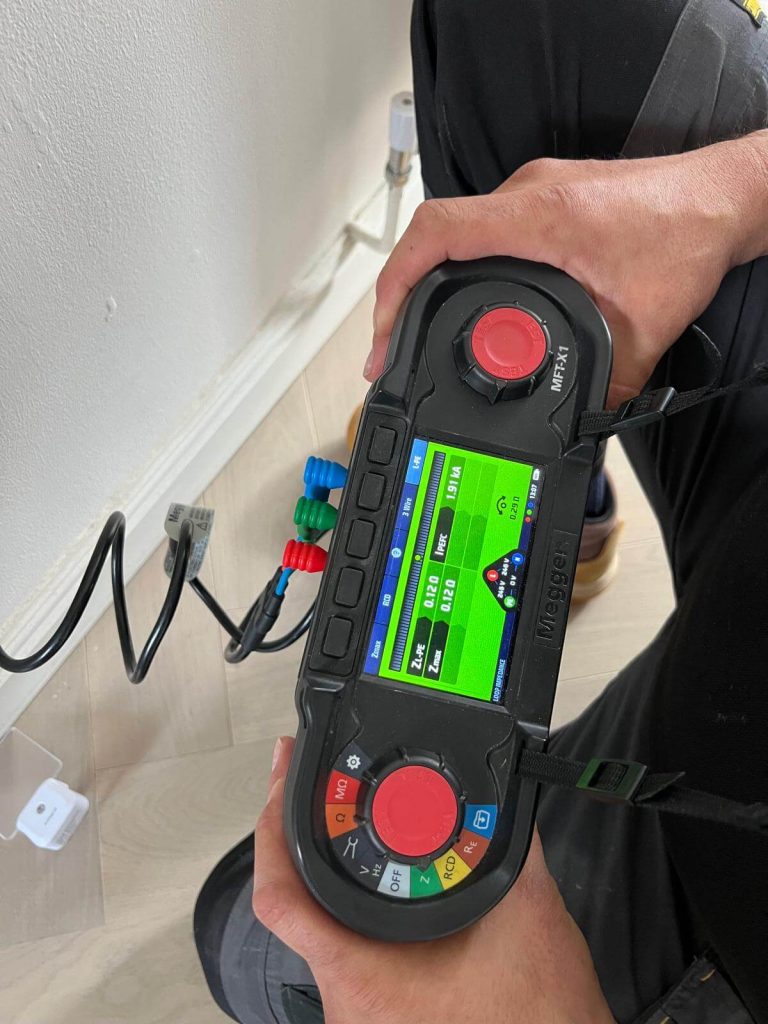
Dream Home Experts provides 24/7 emergency call-outs across Milton Keynes for homes and businesses. When you call, tell us what you can see, hear and smell, and we will give you safety advice straight away. If the problem needs someone on site, an electrician will attend to make it safe, trace the fault with proper test equipment and explain the options.
We are an NICEIC Approved Contractor and ECA member, with 35+ years of experience in the team. If a damaged consumer unit is the cause, see our guide to emergency consumer unit repair.
After the electrical emergency
Once the immediate danger is dealt with, ask for a written record of what was found and fixed. If the fault points to a wider problem, such as old wiring or no RCD protection, an EICR gives a full picture of the installation so you can plan any further work.
Common questions
What is classed as an electrical emergency?
Anything that creates an immediate risk: burning smells, sparks, hot or scorched sockets, water near electrics, exposed cables, or someone getting a shock.
Who do I call in an electrical emergency?
Call 999 for fire, smoke or injury. Call 105 for a power cut or damaged power lines. Call a qualified electrician for faults inside your property.
Should I switch off the electricity?
Yes, at the consumer unit, if it is dry and safe to reach. Never touch the board, sockets or cables if water is involved.
Is a power cut an electrical emergency?
A network power cut is handled by your network operator through 105. If only your property is affected, or a switch keeps tripping, call an electrician.
Can I wait until morning?
Only if there is no smell, heat, sparking, water or shock risk and the affected circuit is switched off. If in doubt, call us and describe the problem.
Need help now? Visit our 24/7 emergency electrician page or call 01908 464 431, day or night.
Power problem right now?
24/7 emergency electricians across Milton Keynes.