Emergency Commercial Electrician: 5 Essential First Steps
On this page
- What Counts as an Electrical Emergency for a Business?
- 5 Essential First Steps Before the Emergency Commercial Electrician Arrives
- What to Tell the Emergency Commercial Electrician When You Call
- What Happens On Site
- How to Keep Downtime Low
- Choosing an Emergency Commercial Electrician in Advance
- Your Legal Duty
- Preventing the Next Call-Out
- Common questions
An emergency commercial electrician is needed when an electrical fault puts people at risk or stops your business from operating safely. This guide explains what counts as a genuine emergency, the first steps to take, and how to keep downtime as short as possible.
It is written for business owners, office managers and facilities teams. The aim is simple: protect people first, then get trading again quickly and safely.
What Counts as an Electrical Emergency for a Business?
An electrical emergency is any fault that creates an immediate risk of fire, shock or injury, or that knocks out systems your business cannot safely run without. If in doubt, treat it as urgent.
Call an emergency commercial electrician for:
- A burning smell, smoke, sparking or scorch marks at a socket, board or fitting.
- Loss of power to all or part of the premises that is not a wider power cut.
- Damaged cables or exposed live parts, for example after an impact from a forklift or vehicle.
- Water getting into electrical equipment, boards or light fittings.
- A main board or RCD that trips straight away every time it is reset.
- Failure of fire alarm power, emergency lighting, refrigeration or security systems.
What can usually wait for a booked visit
A single faulty light, one dead socket or a breaker that tripped once and has stayed on is rarely an emergency. Isolate it, label it and book an appointment. That keeps emergency rates for real emergencies.
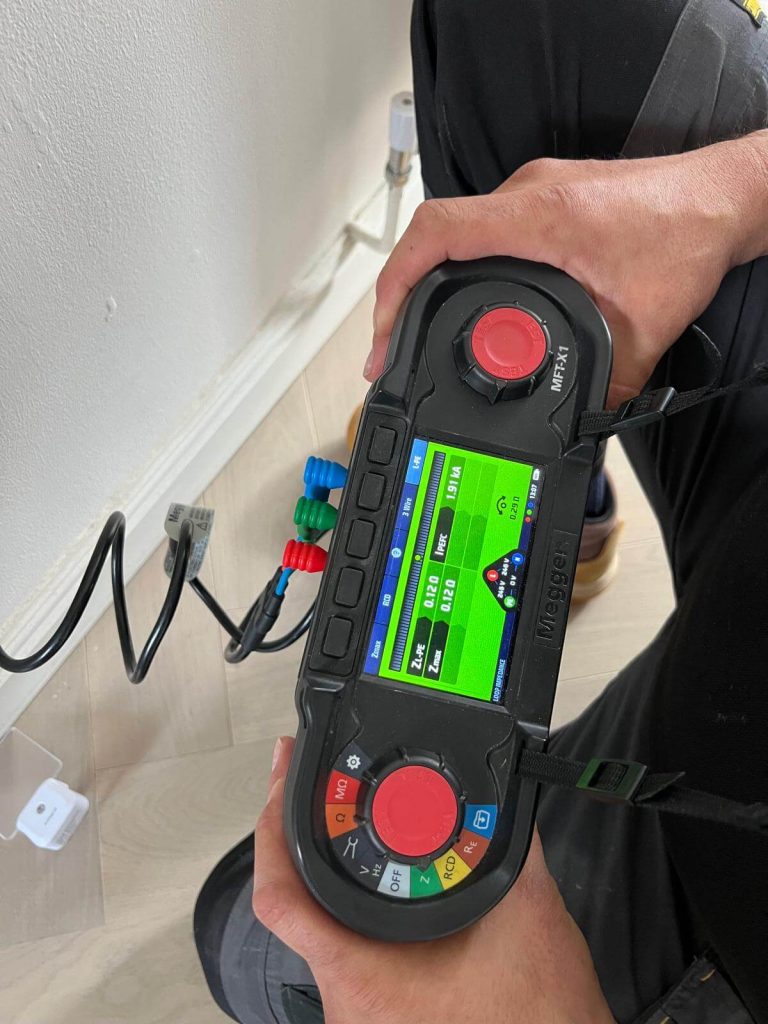
5 Essential First Steps Before the Emergency Commercial Electrician Arrives
The first few minutes matter most. These five steps protect your staff and help the emergency commercial electrician fix the problem faster.
1. Make people safe
If there is smoke or fire, evacuate and call 999. Never use water on an electrical fire. Keep staff and customers away from damaged equipment or wet areas.
2. Isolate, but only if it is safe
If the affected board or isolator is dry and easy to reach, switch it off. If it is wet, damaged or hot, stay away and wait for the electrician.
3. Check whether it is a power cut
If neighbouring units and street lights are also off, it is likely a network fault. Call 105. Powercut 105 is free and connects you to your local network operator. An electrician cannot fix a fault on the network side.
4. Note what happened
Write down what you saw, heard or smelled, the time, and which areas lost power. This saves time on diagnosis.
5. Prepare access
Make sure someone can meet the electrician, open plant rooms and riser cupboards, and show them where the boards are.
What to Tell the Emergency Commercial Electrician When You Call
Clear information helps the emergency commercial electrician arrive with the right tools and parts. Have this ready:
- Your address and the best entrance to use.
- What has happened and whether anyone is hurt.
- Which areas and equipment are affected.
- Whether the supply is single-phase or three-phase, if you know.
- Any critical loads, such as servers, freezers or production lines.
- Who will meet them on site.
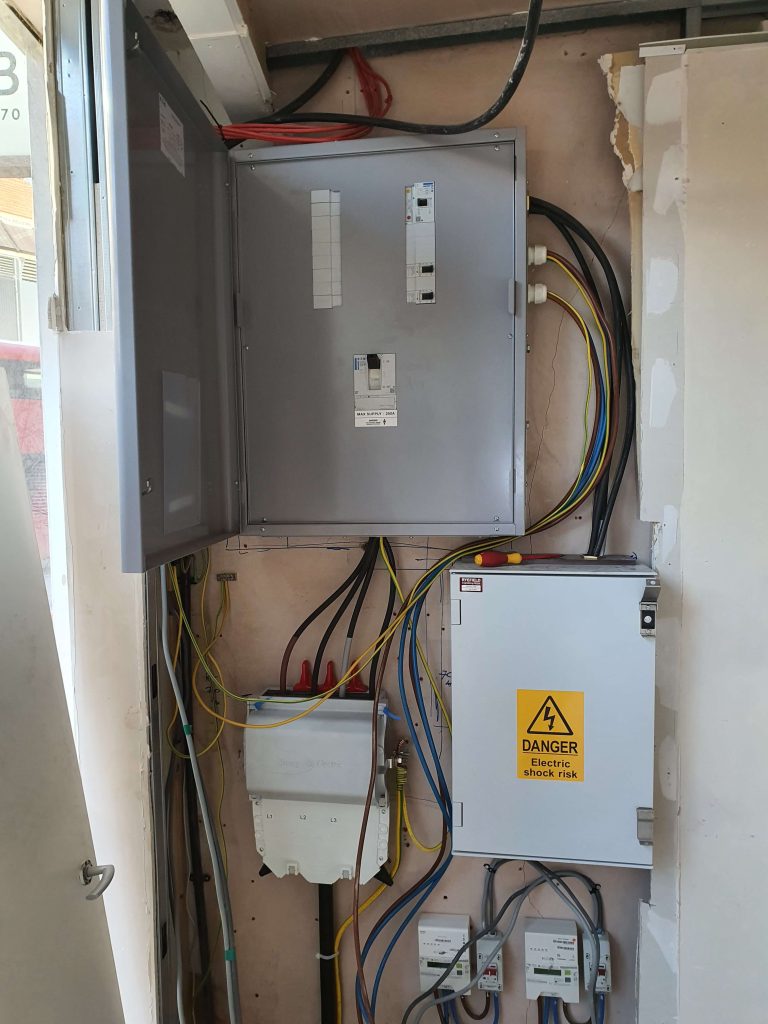
What Happens On Site
A good emergency commercial electrician works in a set order: make safe, find the fault, restore what can be safely restored, then report.
First, the electrician isolates the affected area and checks for heat damage, loose terminations and signs of arcing. Next, they test circuits to find where the fault is. Many faults are on a single circuit or a single piece of equipment, not the whole installation.
Circuits that test safely can usually be brought back the same visit. Anything unsafe stays off until it is repaired. You should then get a clear explanation of what failed and what follow-up work is needed.
How to Keep Downtime Low
Most of the delay in a business emergency comes from things that could have been sorted out beforehand. These habits cut that time.
- Label your boards. An up-to-date circuit chart lets the electrician isolate the right circuit in minutes.
- Know your critical circuits. Agree in advance what must come back first.
- Keep access easy. Boards should not be blocked by stock or locked away with no key holder.
- Keep your EICR current. NICEIC recommends business owners get one at least every five years.
- Plan maintenance. Regular checks find loose connections and worn parts before they fail.
- Keep a contact list. Store your emergency commercial electrician number where every manager can find it.
Choosing an Emergency Commercial Electrician in Advance
The worst time to find an emergency commercial electrician is during the emergency. Pick one before you need them and keep their details with your fire and first aid information.
- Check they are registered with a recognised scheme, such as NICEIC, and carry suitable insurance.
- Ask whether they work on commercial and three-phase installations, not just homes.
- Confirm they offer 24/7 cover and explain how out-of-hours call-outs are charged.
- Ask whether they can also carry out your EICR and planned maintenance, so they already know your site.
An emergency commercial electrician who already knows your building can diagnose faults faster, because they have your test results and board schedules to hand.
Your Legal Duty
The Electricity at Work Regulations 1989, regulation 4(2) require electrical systems to be maintained, as necessary, to prevent danger so far as is reasonably practicable. HSE adds that installations should be tested often enough that there is little chance of deterioration leading to danger.
In practice, that means fixing faults promptly, keeping records and not reusing equipment that has been damaged. An emergency repair should be followed by any testing needed to confirm the installation is safe.
Preventing the Next Call-Out
After an emergency, ask why it happened. Repeated problems usually point to an overloaded circuit, ageing equipment or a board that needs upgrading. Fixing the cause costs less than calling an emergency commercial electrician again.
Common questions
How do I know if it is a power cut or a fault in our building?
If nearby businesses and street lights are also off, it is probably a power cut, so call 105. If only your premises are affected, the fault is likely inside your installation.
Should staff reset tripped breakers?
A trained person can reset a breaker once. If it trips again, leave it off and call an emergency commercial electrician.
Can work be done without closing the whole site?
Often, yes. Faults are usually isolated to one area, so unaffected circuits can stay on while the repair is made.
Will we get a report after the repair?
You should be told what failed and what was done, and receive any certificate needed for the work.
What is the best way to avoid emergencies?
Keep a current EICR, label your boards and book planned maintenance. Most faults give warning signs first.
Dream Home Experts provide 24/7 emergency call-outs for offices, shops, warehouses and industrial units. We are NICEIC Approved Contractors with 35+ years of experience. See our emergency electrician service and commercial electrical services, or read how to book an emergency electrician for your business. For urgent help, call 01908 464 431.
Power problem right now?
24/7 emergency electricians across Milton Keynes.