Fuse Box Replacement: 7 Warning Signs and What to Expect
Safe Upgrades in Milton Keynes
On this page
- 7 Warning Signs You Need a Fuse Box Replacement
- What the Rules Say About Fuse Box Replacement
- What Happens on the Day
- How to Prepare for a Fuse Box Replacement
- Planning Ahead: EV Chargers, Showers and Extensions
- RCDs, RCBOs and Surge Protection: What to Choose
- When It Is Safe to Wait, and When to Call
- Landlords and Fuse Box Replacement
- Choosing an Electrician
- Common questions
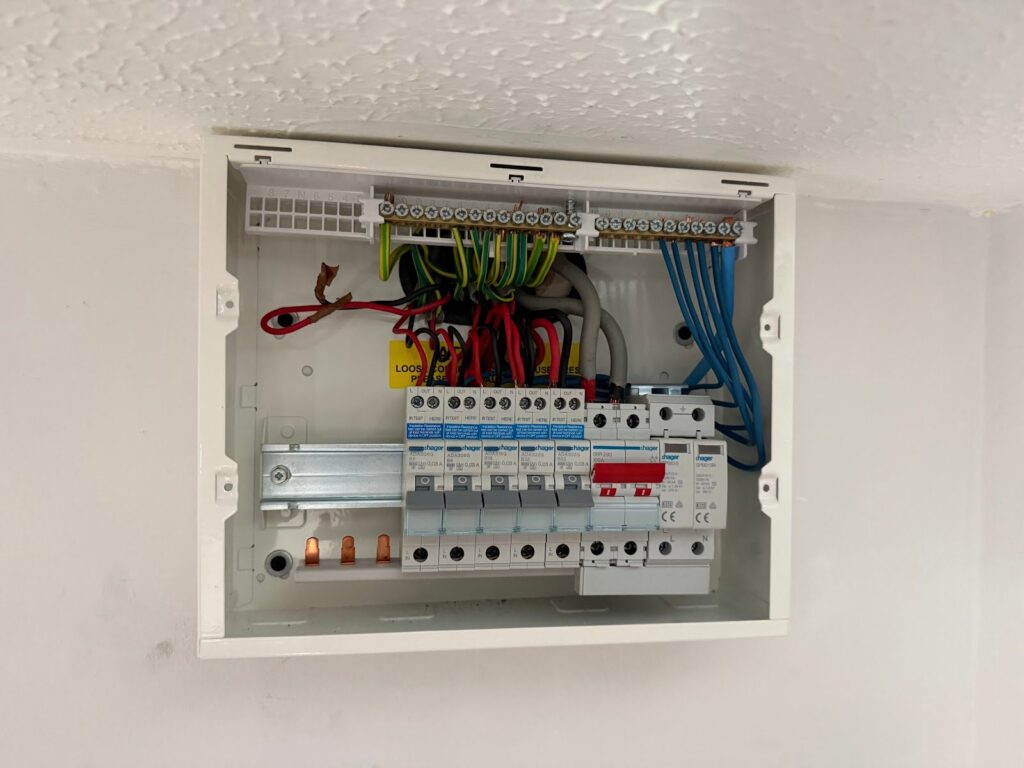
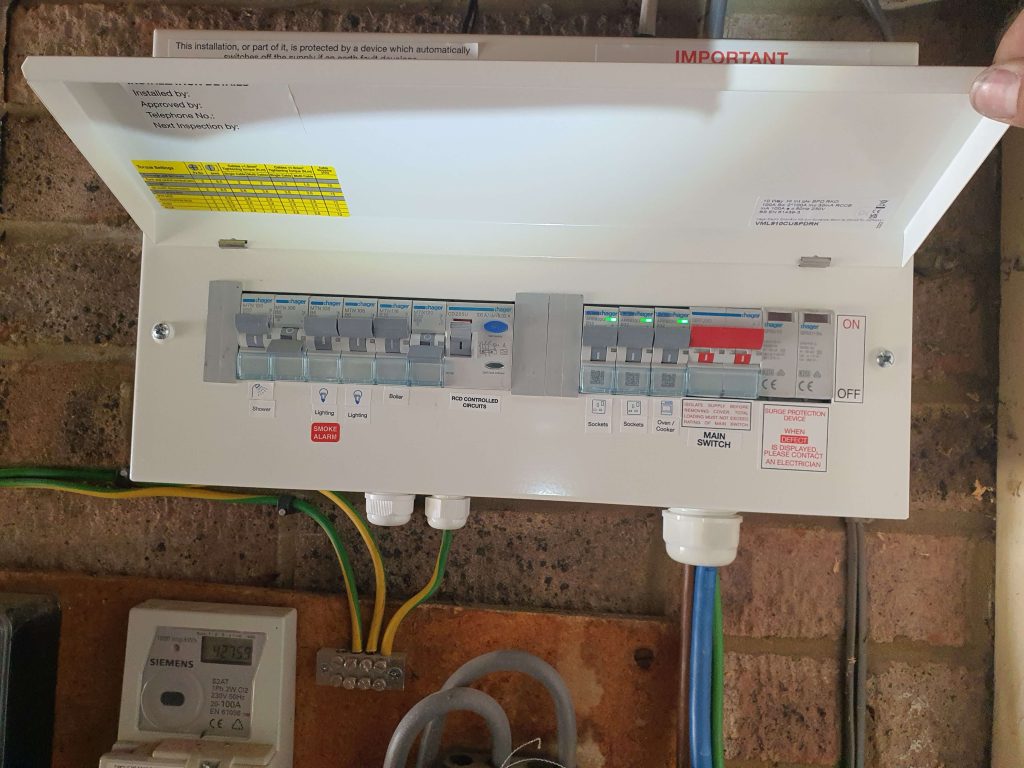
Fuse box replacement means swapping an old fuse board or outdated consumer unit for a modern one with RCD protection, clearly labelled circuits and a non-combustible enclosure. It is one of the most effective safety upgrades for an older home, but it is not always needed straight away.
This guide explains the warning signs, what the rules say, what happens on the day and when it is safe to wait. It is written for homeowners and landlords in Milton Keynes. If you want prices, see our separate guide to house fuse box replacement cost.
7 Warning Signs You Need a Fuse Box Replacement
Any one of these signs is a reason to have the board checked. Several together usually point to a fuse box replacement.
1. Rewireable fuses
If you see ceramic fuse carriers with fuse wire, the board is very old. Rewireable fuses give no protection against electric shock and are easy to refit with the wrong wire.
2. No RCD protection
An RCD switches off the power quickly if current leaks to earth, for example through a person. If your board has no RCD, you have no protection against that kind of shock. Electrical Safety First advises using plug-in RCDs on sockets until a working RCD is fitted.
3. Scorch marks, buzzing or a hot board
Heat damage, a burning smell or crackling from the board is urgent. Switch off at the main switch if it is safe to do so, and call an electrician.
4. Frequent tripping
Tripping is usually the board doing its job, but a single RCD covering the whole house can make one small fault cut power to half the property. Our guide on why your electric keeps tripping explains the causes.
5. No spare ways
A new kitchen, electric shower, garden office or EV charger needs a new circuit. If the board is full, extensions get bodged onto existing circuits instead.
6. An EICR recommends it
An Electrical Installation Condition Report may code defects at the board. A C1 or C2 needs action; a C3 is an improvement recommendation, not a fail.
7. Major work is planned
A rewire, extension or full renovation is the sensible moment to replace the board, so the new circuits and protection are designed together.

What the Rules Say About Fuse Box Replacement
Fuse box replacement in a home is building work under the Building Regulations. GOV.UK says you may need approval to replace fuse boxes and connected electrics. If you use an electrician registered with a competent person scheme, such as NICEIC, they can self-certify the work, so you do not need to apply separately.
You should receive an Electrical Installation Certificate for the work and confirmation that it has been notified to building control. Keep both. GOV.UK notes you may need certificates of compliance when you sell your home.
Why new consumer units are metal
Since 1 January 2016, BS 7671 has required consumer units in homes to have an enclosure made of non-combustible material, or to sit inside a non-combustible enclosure. Steel is the usual choice. This applies to new installations. It does not mean every older plastic consumer unit must be ripped out.
Does the 2026 amendment change anything?
BS 7671:2018+A4:2026 is the current edition. It brings changes to inspection forms, batteries and other areas, but no change to the basic rules for domestic consumer units. An installation that met an earlier edition is not automatically unsafe because the standard has moved on.
What Happens on the Day
A domestic fuse box replacement is usually completed in a day, with the power off for much of that time. The exact time depends on the number of circuits and what the testing finds.
- Pre-check: the electrician tests the existing circuits and checks the earthing and bonding. A new board cannot fix faulty wiring.
- Isolation: the supply is isolated and the old board removed.
- Installation: the new consumer unit is fitted, circuits connected and labelled.
- Testing: every circuit is tested, including RCD trip times.
- Paperwork: you receive the certificate, and the work is notified to building control.
Pre-checks matter. If an existing circuit has a hidden fault, a modern RCD will trip on it. That is a sign the new board is working, not that it is faulty. The circuit needs repairing before it can be reconnected.
How to Prepare for a Fuse Box Replacement
A little preparation makes a fuse box replacement quicker and less disruptive.
- Clear the area around the board and the electricity meter
- Empty or run down the freezer, or have cool boxes ready
- Charge phones and laptops, and plan for the internet being off
- Tell the electrician about any circuits that already trip, buzz or behave oddly
- Find any old certificates or EICRs so the electrician can see the history
- Let anyone working from home, or relying on medical equipment, know the timings
If you have a smart meter, alarm system or heating controls, write down any settings that may need resetting once power returns.
Planning Ahead: EV Chargers, Showers and Extensions
A fuse box replacement is the best time to think about what your home will need in five or ten years. An EV charger, electric shower, garden office or kitchen extension each needs its own circuit and protection.
Ask for a board with spare ways and tell your electrician what you are planning. Some upgrades, such as EV charging, also need the electrician to check that your incoming supply can cope with the extra load. Planning this now avoids paying for a second board later.
RCDs, RCBOs and Surge Protection: What to Choose
A modern board protects circuits in one of two main ways.
- Split-load board with RCDs: groups of circuits share an RCD. Cheaper, but one fault can switch off several circuits at once.
- RCBO board: each circuit has its own combined breaker and RCD. A fault only switches off the affected circuit.
For most homes we recommend RCBOs where the budget allows, because they make faults easier to find and stop a single appliance taking out the lights. Your electrician should also talk you through surge protection and arc fault detection devices (AFDDs), which BS 7671 requires in some types of building, such as high-rise residential blocks over 18 metres or more than six storeys.
When It Is Safe to Wait, and When to Call
Not every old board needs replacing tomorrow. Be honest with yourself about the signs.
- Usually safe to plan: an older board with circuit breakers and an RCD, no damage and a satisfactory EICR. Plan a fuse box replacement around other work.
- Book soon: no RCD protection, rewireable fuses, or no spare ways for planned work.
- Call now: scorch marks, burning smells, buzzing, a hot board or water near the board.
If in doubt, an EICR gives an independent view of the whole installation, not just the board.
Landlords and Fuse Box Replacement
Landlords in England must have rented homes inspected at least every five years. A board with C1 or C2 defects must be put right within 28 days, or sooner if the report says so. A planned fuse box replacement between tenancies avoids disruption and keeps the next EICR straightforward.
After the work, you will receive an Electrical Installation Certificate for the new board. Keep it with your EICR, so the next inspector can see exactly what changed and when, and give your tenants a copy of any updated report.
Choosing an Electrician
For any fuse box replacement, use an electrician registered with a competent person scheme, so the work is certified and notified. Dream Home Experts is an NICEIC Approved Contractor and ECA member, with 35+ years of experience in the team. We test before we fit, explain the options in plain English and leave you with the right paperwork.
New to the terminology? Our guide to what a consumer unit is explains each part.
Last checked: 31 October 2026.
Common questions
Is a fuse box the same as a consumer unit?
People use both terms for the same thing. “Fuse box” usually means an older board with fuses; “consumer unit” is the modern name for a board with circuit breakers and RCDs.
How long does a fuse box replacement take?
Most domestic fuse box replacement jobs take about a day. Faults found during testing can add time, because they must be fixed before circuits are reconnected.
Will I be without power?
Yes, for most of the job. Plan for no power to fridges, freezers, heating controls and internet during the work.
Do I need a new board if mine is plastic?
Not automatically. The metal enclosure rule applies to new installations. Replacement is recommended if the board is damaged, lacks RCD protection or fails an inspection.
Can I replace a fuse box myself?
No. It is notifiable work, it involves the incoming supply and it must be tested and certified. Always use a registered electrician.
Ready to upgrade? Visit our domestic electrician page or call 01908 464 431. If your board is scorched, buzzing or hot, we offer 24/7 emergency call-outs.
Power problem right now?
24/7 emergency electricians across Milton Keynes.