What Is a Consumer Unit?
7 Essential Facts for UK Homes

On this page
A consumer unit is the box that controls and protects the electricity in your home. It takes the supply from your meter, splits it into separate circuits, and switches each one off automatically if something goes wrong. Many people still call it a fuse box, and older ones did use fuses.
This guide explains what is inside a consumer unit, what each switch does, how to tell if yours needs attention, and what the current wiring rules say.
What Does a Consumer Unit Do?
A consumer unit has three jobs. It lets you switch off the whole installation, it protects each circuit from overloads and short circuits, and it protects people from electric shock.
Each circuit in your home, such as the upstairs sockets, the downstairs lights or the cooker, has its own protective device in the unit. If a fault occurs on one circuit, only that device should switch off. The rest of the house stays on.
You will usually find it near the electricity meter. Common spots are under the stairs, in a hallway cupboard, in a garage or in a utility room.
What Is Inside a Consumer Unit?
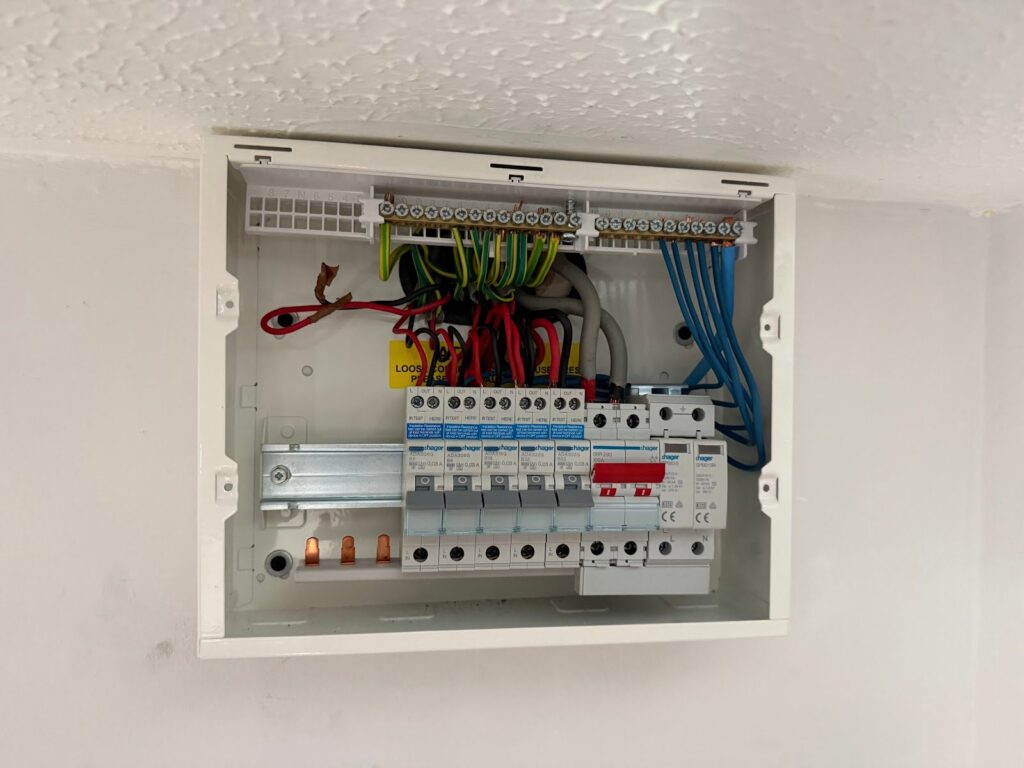
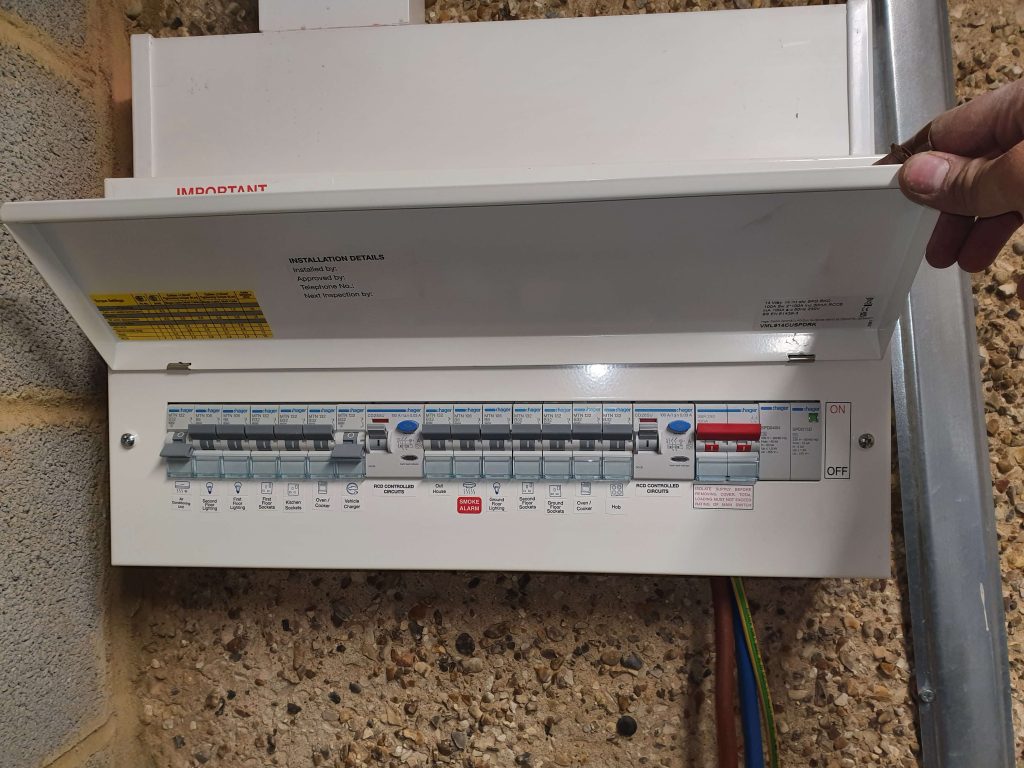
A modern board contains a few types of device. Knowing them makes quotes and inspection reports much easier to follow.
Main switch
The main switch turns off power to every circuit at once. Know where it is, so you can use it quickly in an emergency.
Miniature circuit breakers (MCBs)
MCBs protect each circuit against overload and short circuit. They replaced the old rewireable fuses. When an MCB trips, it can be reset with a switch rather than a new fuse wire.
Residual current devices (RCDs)
An RCD detects current leaking to earth, for example through a person, and cuts the power very quickly. One RCD may protect several circuits. The IET notes that an RCCB does not provide overcurrent protection on its own, so it works alongside MCBs.
RCBOs
An RCBO combines an RCD and an MCB in one device for a single circuit. With RCBOs, a fault on one circuit doesn’t switch off others that share an RCD.
Surge protection (SPD)
A surge protection device limits voltage spikes, such as those from lightning or switching on the network. The IET says BS 7671 requires this protection in single dwellings unless a specific exception applies.
Consumer Unit or Fuse Box: Is There a Difference?
In everyday speech, no. “Fuse box” is the older name, from a time when each circuit had a rewireable fuse. “Consumer unit” is the modern term used by electricians and in the wiring regulations.
In practice, though, a true fuse box is usually much older. If yours has rewireable fuses, a wooden back board or no RCD, it is worth having an electrician look at it. Our guide to fuse box replacement cost explains what an upgrade involves.

What the Wiring Rules Say About Consumer Units
The UK wiring standard is BS 7671. The current edition is BS 7671:2018+A4:2026, published on 15 April 2026.
Key points for homes:
- Non-combustible enclosures. The IET explains that a consumer unit in a home must be made from non-combustible material, or be enclosed in a non-combustible cabinet. In practice, that usually means a metal case.
- RCD testing. The recommended interval for pressing the RCD test button is six months, under Regulation 514.12.2.
- AFDDs. Arc fault detection devices are required in high-rise residential buildings, defined by NICEIC as over 18 metres or more than six storeys. For most houses, ask your electrician whether one is worthwhile.
An older unit is not automatically unsafe because the rules have moved on. The standard applies to new work and alterations. If an inspection finds no C1 or C2 defects, you don’t have to replace it.
Signs Your Consumer Unit Needs Attention
Some issues need an electrician soon. Others need one straight away. Here is how we would judge it on a call-out.
Call straight away
- A burning smell, scorch marks or crackling from the consumer unit
- A device that feels hot to the touch
- Water near or inside the unit
- A breaker or RCD that won’t reset
If it is safe, switch off the main switch and call us. We offer a 24/7 emergency service.
Book a check soon
- An RCD that doesn’t trip when you press the test button
- Frequent trips with no obvious cause
- Rewireable fuses or no RCD protection at all
- No spare ways for new circuits such as an EV charger or shower
If your power keeps going off, our guide on why your electric keeps tripping walks through the common causes.
Looking After Your Consumer Unit
Day-to-day care is simple. Keep the area in front of it clear, so you can reach the main switch in the dark. Keep the cover closed, and don’t store paint, paper or cleaning products around it.
Make sure every circuit is labelled. When a breaker trips, a clear label tells you which part of the house is affected and saves time if you need to call an electrician.
Replacing a Consumer Unit
Replacing a consumer unit is notifiable work in England under Approved Document P. It must be done by a registered installer, or checked by building control.
A good electrician tests the existing circuits before and during the swap, rather than simply changing the box. Faults that an old fuse box tolerated can make a new RCD trip, so they need finding and fixing. When the job is finished, you should receive an Electrical Installation Certificate and, within 30 days, a building regulations compliance certificate.
Dream Home Experts is an NICEIC Approved Contractor with 35+ years of experience in the team. We fit, upgrade and repair consumer units across Milton Keynes.
Last checked: 31 October 2026. Sources: IET, NICEIC and Approved Document P.
Common questions
Where is my consumer unit usually found?
Usually near the electricity meter. Look under the stairs, in hallway cupboards, garages or utility rooms.
Why does my consumer unit keep tripping?
A trip means a device has detected a fault, an overload or current leaking to earth. Try unplugging appliances on that circuit. If it still trips, call an electrician.
Can I replace a consumer unit myself?
We strongly advise against it. It is notifiable work and must be done by a registered installer or checked by building control. It also involves working on the incoming supply.
Does a plastic consumer unit have to be replaced?
Not automatically. The non-combustible rule applies to new installations. An inspection will tell you whether your existing unit is safe.
How often should a consumer unit be checked?
Test RCDs every six months using the test button. A full inspection of the installation should follow the date on your last EICR or certificate.
Need advice on your consumer unit? Contact our domestic team or call 01908 464 431.
Power problem right now?
24/7 emergency electricians across Milton Keynes.