Home Electrical Safety Check: 5 Essential DIY Steps
On this page
A regular home electrical safety check is the simplest way to catch small problems before they become a fire risk or an expensive repair. Most electrical faults build up slowly. A few minutes of checks each month, plus a professional inspection at the right interval, keeps your home safe.
Below is the home electrical safety check we would give our own family, with how often to do each check and what to do if something looks wrong.
Your Home Electrical Safety Check at a Glance
Split the checks by how often they need doing. That way nothing is forgotten and nothing takes long.
- Monthly: test smoke and heat alarms, and look over sockets, plugs and leads
- Every six months: press the test button on each RCD in your consumer unit
- Once a year: check outdoor electrics, loft cables and consumer unit labels
- At the recommended interval: book a professional Electrical Installation Condition Report (EICR)
- Any time: act on warning signs such as burning smells or scorch marks
Monthly Checks
Monthly checks are the core of a home electrical safety check. They are visual and quick. You are looking for heat, damage and overloading.
Smoke and heat alarms
The government’s Fire Kills campaign advises you to test smoke alarms by pressing their buttons once a month. Make it the first item in your home electrical safety check. If an alarm doesn’t sound, replace the battery or the unit straight away.
Sockets, plugs and leads
- Feel plugs and socket faces after heavy use. Warm is a warning; hot means stop using it.
- Look for brown or black scorch marks around sockets and switches.
- Check flexes for cuts, kinks or taped repairs.
- Don’t run high-power appliances such as heaters from extension leads.
- Avoid plugging one extension lead into another.
Every Six Months: Test Your RCDs
A residual current device (RCD) cuts the power fast if current leaks to earth, for example through a person. It is one of the most important safety devices in your home, so it belongs in every home electrical safety check.
The IET, which publishes the UK wiring regulations, says the recommended interval for pressing the test button is now six months, under Regulation 514.12.2 of BS 7671. It suggests doing it when the clocks change, so you get two reminders a year.
How to test an RCD
- Warn the household, and save any work on computers.
- Open the consumer unit cover and find the button marked “T” or “Test”.
- Press it firmly. The RCD switch should drop to off straight away.
- Push the switch back up to restore power.
- Reset clocks and timers if needed.
If the RCD doesn’t trip, or won’t reset, don’t keep trying. Call an electrician. A faulty RCD means you may have no protection on those circuits. If your home has no RCD at all, that is worth fixing too.
Once a Year
Pick a dry day each year for a slightly longer walk round. This part of the home electrical safety check covers areas you don’t see daily.
- Outdoors: check outdoor sockets, garden lights and cables to sheds for cracked covers, water inside fittings or damaged cable.
- Loft: look for cables crushed under boarding, chewed by rodents, or buried under insulation around downlights.
- Consumer unit: make sure every circuit is clearly labelled, so you can isolate the right one in a hurry.
- Appliances: check cables on kettles, irons, hair straighteners and power tools.
- Records: find your last EICR or Electrical Installation Certificate and note the next inspection date.

Where a DIY Home Electrical Safety Check Stops
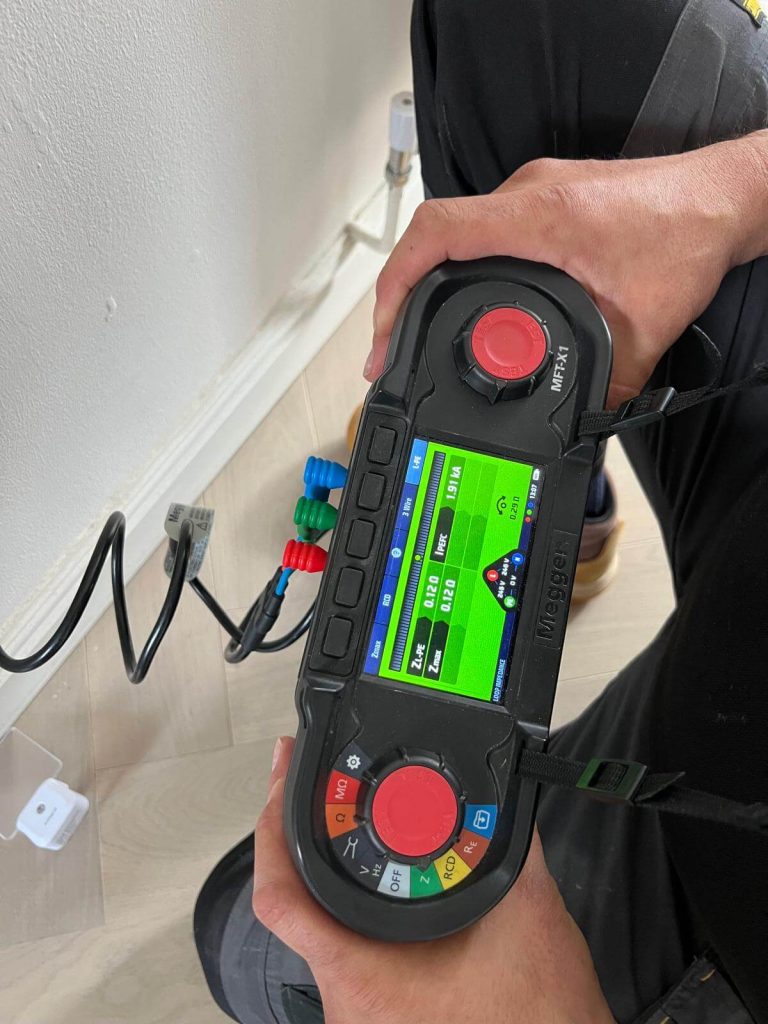
A DIY home electrical safety check catches surface problems. It can’t see inside walls or measure whether protective devices will disconnect in time. That needs an EICR by a qualified inspector.
Your last EICR or installation certificate records when the next inspection is recommended. It is also wise to book one when you buy a home, before a major renovation, or if you notice repeated faults. Our guide on what EICR means explains the report and its codes.
A note on the 2026 wiring rules
BS 7671:2018+A4:2026 is the current edition of the wiring regulations, published on 15 April 2026. NICEIC confirms it applies to new work, alterations and periodic inspections. It does not make an older installation unsafe overnight. On an EICR under Amendment 4, only C1 and C2 codes make the report unsatisfactory, while “further investigation” items no longer change the overall outcome.
Warning Signs: When to Stop and Call
Your home electrical safety check will sometimes turn up a problem. Some findings can wait for a booked visit. Others can’t. Here is how we would judge it.
Call straight away
- A burning or fishy smell near sockets, switches or the consumer unit
- Scorch marks, melting plastic or sparking
- Buzzing or crackling from fittings
- Any electric shock, however small
- Water near electrics, such as a leak through a ceiling light
If it is safe, switch off at the consumer unit first. Our 24/7 emergency electricians cover Milton Keynes and nearby towns.
Book a visit soon
- A circuit that trips now and then
- Lights that flicker or dim when appliances switch on
- Sockets that feel loose or don’t grip plugs
- Not enough sockets, so you rely on extension leads
For trips, our guide on why your electric keeps tripping explains the usual causes.
Extra Points for Older Homes
Older wiring isn’t automatically dangerous, but it needs closer attention. Add these to your homeowner electrical checklist if your home has not been rewired in a long time:
- Rubber or fabric-covered cables
- Round-pin sockets or sockets on skirting boards
- A fuse box with rewireable fuses and no RCD
- Light switches or sockets in odd places that suggest DIY changes
If your home electrical safety check flags any of these, book an EICR rather than guessing. It tells you what is safe, what needs work, and what can wait.
Dream Home Experts is an NICEIC Approved Contractor, and our team brings 35+ years of experience to home inspections and repairs.
Last checked: 31 October 2026. Sources: GOV.UK, IET and NICEIC.
Common questions
How often should I do a home electrical safety check?
Do quick visual checks and smoke alarm tests monthly, RCD tests every six months, and a longer walk round once a year. Book a professional inspection at the interval on your last report.
Can I test my own RCD?
Yes. Pressing the test button is designed for homeowners. If the RCD doesn’t trip or won’t reset, call an electrician.
Is a warm socket dangerous?
A slightly warm plug after heavy use can happen, but a socket that is hot, discoloured or smells should not be used. Switch it off and have it checked.
What should I do if I find damaged wiring?
Don’t touch it. Switch off the circuit at the consumer unit if it is safe to do so, and call an electrician.
Does a home electrical safety check replace an EICR?
No. A checklist spots visible problems. An EICR tests the installation itself, including earthing and protective devices.
Want a professional check of your home’s electrics? Book our domestic team or call 01908 464 431.
Power problem right now?
24/7 emergency electricians across Milton Keynes.