Plug In Solar Panels UK: 7 Essential Safety Checks First
On this page
Plug in solar panels UK households can now buy and use legally. Since 27 August 2026, compliant kits of up to 800 W can be plugged into a normal socket in England, Wales and Scotland. The panels are simple to set up, but they send power back into your home’s wiring. That is why your sockets and circuits need to be up to the job first.
This guide to plug in solar panels UK rules explains what changed, who these kits suit, what they can’t do, and the safety checks to make before you plug one in. Dream Home Experts does not sell or fit solar panels. We are NICEIC approved electricians in Milton Keynes, and our part is checking that your home’s electrics are safe for one.
What Changed for Plug In Solar Panels UK Homes?
The law changed on 27 August 2026. The Plugs and Sockets etc. (Safety) Regulations 1994 and Electricity Safety, Quality and Continuity Regulations 2002 (Amendment) Regulations 2026 (SI 2026/848) came into force on that date. Before this, a standard UK plug was not allowed on a device that generates electricity, so plug in solar panels UK shoppers saw abroad could not be used here.
The regulations define a “plug-in microgenerator” as a solar device that:
- has a maximum AC output of 800 W
- connects to your home through a standard plug and socket
- works alongside the electricity network
- does not store energy from the grid for later use, so plug-in batteries are not covered
Each kit must also comply with the government’s Plug-in Solar Device Interim Product Specification (version 2, published 16 July 2026). If a product doesn’t meet it, the law says it must not be installed or operated. That is the key test for plug in solar panels UK retailers now sell. The rules for using one apply in Great Britain. The Energy Saving Trust says Northern Ireland does not currently permit plug-in solar.
Who Plug In Solar Panels UK Kits Suit (and Who They Don’t)
These kits suit people who can’t easily fit a roof system. That includes renters, flat owners with a sunny balcony, and homeowners with a south-facing garden, wall or shed. You set them up yourself, and you can take them with you when you move.
Plug in solar panels UK kits are a poor fit if your home has older fuses, an old style of RCD or wiring that hasn’t been checked in years. They also aren’t for you if you can’t get permission. Tenants, leaseholders and flat owners need the landlord’s, freeholder’s or building manager’s agreement before buying. Check your lease and your home insurance too.
The limits to know
Output from plug in solar panels UK kits into your socket is capped at 800 W, however large the panels are. What you save depends on which way the panels face, shading, the season and how much power you use while the sun is out. Power you don’t use flows back out to the grid. We won’t quote a savings figure, because it varies from home to home. The Energy Saving Trust says the same.
Plug In Solar Panels UK: 7 Essential Safety Checks First
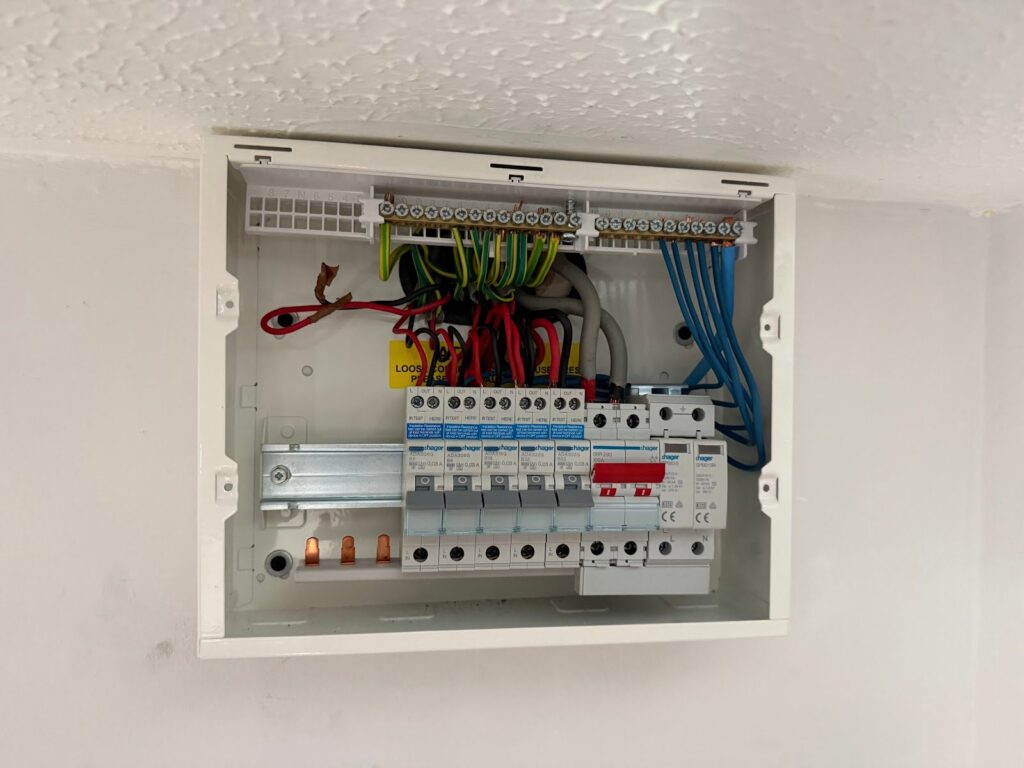
The electrical industry welcomed cheaper clean energy, but it raised clear safety concerns. In a joint statement in June 2026, ECA, Electrical Safety First, the IET, NICEIC and SELECT warned that many homes have ageing wiring, outdated safety devices or systems that haven’t been checked in years. These seven checks for plug in solar panels UK homes come from that guidance and from the official consumer checklist.
1. Get your electrics checked before you buy
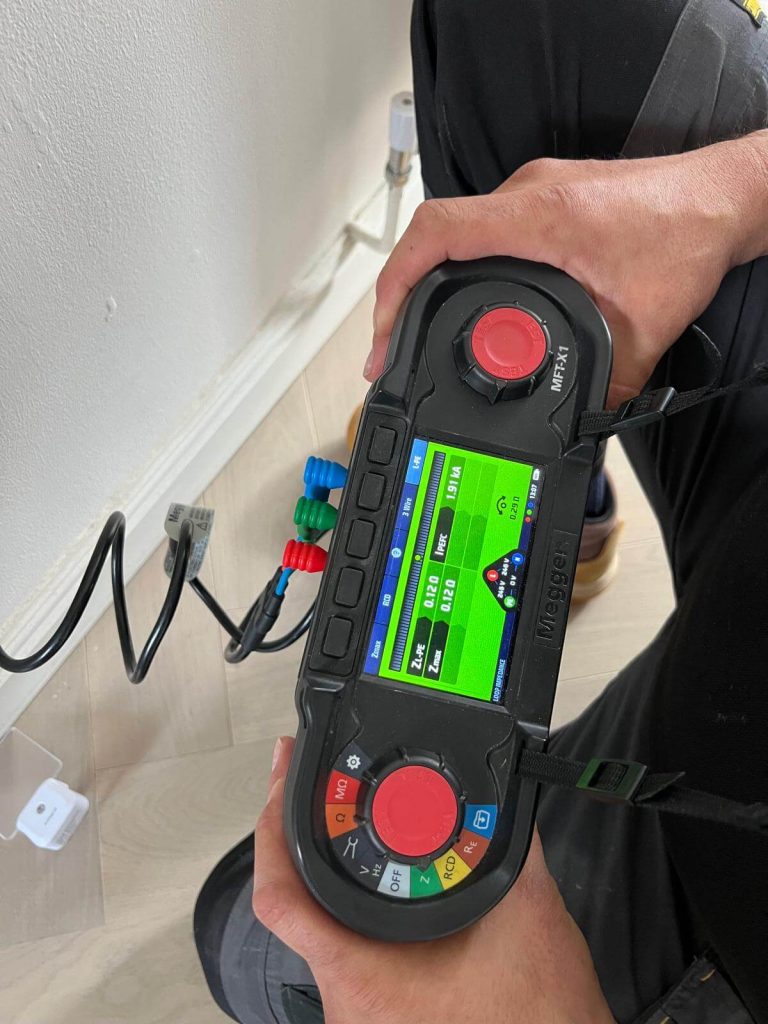
Electrical Safety First advises a registered electrician should assess your installation before you buy or use a kit, especially in older homes. The IET goes further. It says it is “absolutely necessary” to have your installation checked before buying. A qualified electrician can tell you in one visit whether your home is ready for one of the plug in solar panels UK-compliant kits now on sale.
2. Check what type of RCD you have
Electrical Safety First recommends at least a Type A bidirectional RCD on the circuit you use. If your home has older Type AC RCDs, upgrade first. The charity warns that reverse power flow may damage older devices. Most people can’t tell RCD types apart by sight, so ask an electrician.
3. No old fuses
Look at your consumer unit. If it has switches labelled RCD, RCBO or MCB, that’s a good start. If it still has rewireable fuses, the Energy Saving Trust checklist says don’t install plug-in solar. The GOV.UK announcement points consumers to this checklist. A fuse box replacement comes first.
4. Use the right socket on the right circuit
Plug the kit straight into a wall socket. The Energy Saving Trust says that socket must be on a circuit with no lighting and no hardwired appliances, such as a boiler or cooker. An outdoor socket should be weatherproof (at least IP65) and fitted by a qualified electrician. If you don’t know which sockets share a circuit, an electrician can trace them.
5. Never use extension leads or adaptors
Don’t connect a kit through an extension lead, cable reel, multiway adaptor or travel adaptor. Electrical Safety First says these can overheat and overload. Don’t cut or change the plug either. If the cable won’t reach a suitable socket, the answer is a new socket in the right place, not a longer lead.
6. One kit per home, from a reputable seller
Only one plug-in solar device is allowed per household. Ofgem’s decision on the grid connection rules sets this limit, and Electrical Safety First and the Energy Saving Trust give the same advice. Don’t link kits together. Buy from a reputable high street retailer, not an unknown marketplace seller, and check your exact model is on the Energy Networks Association’s register of compliant devices. A model missing from the register is not one of the compliant plug in solar panels UK law allows.
7. Tell your network operator and test your RCD
Ofgem’s decision requires customers to notify their Distribution Network Operator when they install or remove a kit, using a simplified G98 form. The Energy Networks Association is building an online route for this. Once your kit is running, press the RCD test button every six months, in daylight while the panels are generating. If it doesn’t trip, unplug the kit and call an electrician.
Are Plug In Solar Panels UK Kits Safe for Older Homes?
They can be, once the installation has been checked. An older home isn’t automatically unsafe. The risk is not knowing what lies behind the walls. The IET’s concern is that the current rules leave a hard judgement to the householder: is my wiring and protection suitable?
An Electrical Installation Condition Report (EICR) answers that. It tests your circuits, earthing and RCDs and records anything that needs work. If your last check was years ago, or you’ve never had one, book it before you buy a kit. Read what an EICR covers for more detail.

How Dream Home Experts Can Help
We don’t supply or fit solar panels, and we won’t tell you which kit to buy. What we do is make sure your home is ready for plug in solar panels UK buyers can now choose from. With 35+ years of experience in our team, we can:
- carry out an EICR and tell you plainly whether your circuits are suitable
- identify your RCD type and upgrade your consumer unit if needed
- fit a weatherproof outdoor socket on a suitable circuit
- trace which sockets share a circuit with lighting or fixed appliances
We’re an NICEIC Approved Contractor and ECA member, so the work is certified. Find out more about our domestic electrician services in Milton Keynes.
Last checked: 31 October 2026. Sources: legislation.gov.uk (SI 2026/848), GOV.UK, Ofgem, Electrical Safety First, the IET and the Energy Saving Trust. Plug in solar panels UK rules may change as the government publishes final product standards.
Common questions
When did plug in solar panels UK rules change?
On 27 August 2026, in England, Wales and Scotland. A kit must have an AC output of no more than 800 W and comply with the government’s interim product specification. Northern Ireland is not currently covered.
Do I need an electrician to install a plug-in solar kit?
No, the law lets you set one up yourself. But Electrical Safety First and the IET both advise having your installation checked by a registered electrician before you buy, particularly in older homes.
Can I plug a solar panel into an extension lead?
No. Plug it straight into a suitable wall socket. Extension leads, cable reels and adaptors can overheat.
Can I have more than one plug-in solar kit?
Not at present. The rules allow one plug-in solar device per household.
Do plug-in solar kits include batteries?
Plug-in battery storage is not covered by the new rules. The change applies to solar devices that don’t store energy from the grid.
Thinking about a kit? Have your electrics checked first. Call Dream Home Experts on 01908 464 431 or book through our domestic electrician page.
Power problem right now?
24/7 emergency electricians across Milton Keynes.