Electrical Maintenance Services: 9 Warning Signs to Act On
On this page
- Why the Law Expects You to Act on Warning Signs
- 9 Signs Your Business Needs Electrical Maintenance Services
- How Urgent Are the Signs Your Business Needs Electrical Maintenance?
- Why Small Signs Get Ignored
- What Happens If the Signs Are Left Unchecked
- What to Do Next, and What Electrical Maintenance Services Include
- Common questions
The signs your business needs electrical maintenance services are usually small at first: a breaker that trips more often, a light that flickers, a socket that feels warm. Spot them early and planned electrical maintenance services fix the cause. Ignore them and the same fault can become a shutdown, a failed inspection or a fire risk. This guide lists nine warnings, explains what each one means, and tells you which need a call today.
Why the Law Expects You to Act on Warning Signs
Business owners have a legal duty here, not just a practical one. Regulation 4 of the Electricity at Work Regulations 1989 says electrical systems must be maintained, where necessary, to prevent danger so far as is reasonably practicable.
The regulations do not give a fixed checklist. That is why the signs your business needs electrical maintenance services matter so much: they are often the first evidence that something is no longer safe. Acting on them is part of meeting that duty.
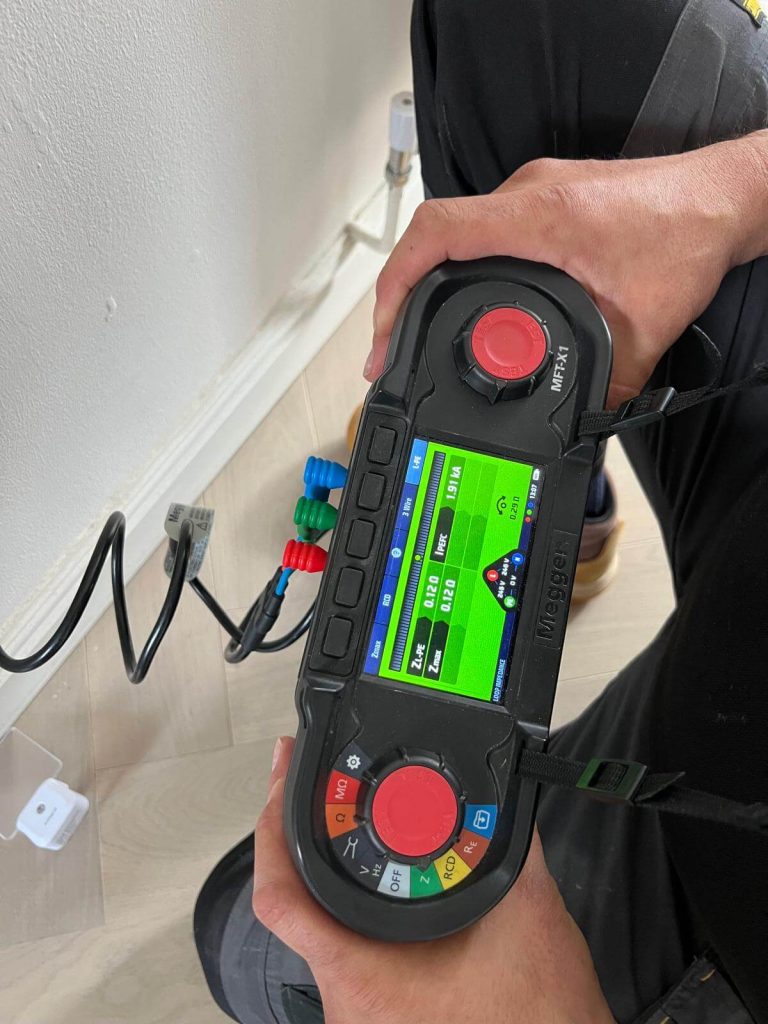
9 Signs Your Business Needs Electrical Maintenance Services
1. Breakers or RCDs that trip repeatedly
One trip on a busy day may just be an overload. Repeated tripping on the same circuit, or at the same time each day, points to a fault, a failing appliance or a circuit that is too small for its load.
2. Flickering or dimming lights
Lights that dim when machines start can mean the circuit or supply is under strain. Flickering on its own can be a loose connection, which can overheat.
3. Warm sockets, switches or plugs
Accessories should not feel warm. Heat usually means a poor connection or an overloaded socket. Stop using it and get it checked.
4. Burning smells or scorch marks
A burning smell with no obvious source, or brown marks around sockets and switches, is serious. Treat it as an emergency, not a maintenance item.
5. Buzzing or crackling
Distribution boards, sockets and switches should be quiet. Buzzing or crackling can mean arcing at a loose terminal.
6. Damaged cables and accessories
Cracked sockets, crushed flexes, exposed conductors and cables under rugs or trapped in doors are all common in busy workplaces. They are easy to fix early.
7. An overdue inspection
If you cannot find your last Electrical Installation Condition Report (EICR), or its next inspection date has passed, that is one of the clearest signs your business needs electrical maintenance services. Under BS 7671, the interval is set by the inspector based on the type of installation, how it is used and its environment.
8. Extension leads everywhere
Daisy-chained extension leads and adaptors usually mean the building does not have enough sockets where people work. That is a design problem a maintenance visit can solve.
9. Changes to how you use the building
New machinery, more staff, a new kitchen or EV chargers all add load. If the electrics have not been checked since the change, they may no longer suit the building.
How Urgent Are the Signs Your Business Needs Electrical Maintenance?
Not every sign is urgent. Use this rule of thumb.
- Call now: burning smells, scorch marks, hot sockets or plugs, smoke, sparks, crackling, or any shock from equipment. Switch off the affected circuit at the board if it is safe to do so, then call our 24/7 emergency electricians.
- Book within days: repeated tripping, flickering lights, damaged cables or accessories.
- Plan in: overdue inspections, too few sockets, or changes in use.
Our practical comment: the urgent signs are about heat. Heat at a connection gets worse over time, so do not wait to see if it settles down.
Why Small Signs Get Ignored
Most of the signs your business needs electrical maintenance services are easy to live with. Staff reset a breaker, move a plug or add another extension lead, and the problem seems solved. Nobody owns the issue, so it never gets reported.
A simple fix is to make reporting easy. Ask staff to tell one named person about any trip, smell, warm socket or damaged lead. Treat each report as a possible sign you need electrical maintenance services, not a nuisance. Keep a short log. Patterns, such as the same circuit tripping every Monday morning, are what help an electrician find the cause quickly.
What Happens If the Signs Are Left Unchecked
The direct risks of putting off electrical maintenance services are fire and electric shock. The business risks follow: unplanned downtime, damaged equipment, lost stock and data, and a harder time with insurers after an incident.
There is also a compliance angle. If the responsible person for fire safety has not maintained fire safety measures, as GOV.UK workplace fire safety guidance says they must, faults in fire alarms or emergency lighting become a legal problem as well as a safety one.
What to Do Next, and What Electrical Maintenance Services Include
- Make it safe: stop using the item or circuit, and switch off if it is safe.
- Write down what you saw, when, and on which circuit or area.
- Check the date of your last EICR and any recent changes to the building.
- Book an electrician for fault finding, and ask for written findings.
- Fix the cause, not just the symptom, and update your records.
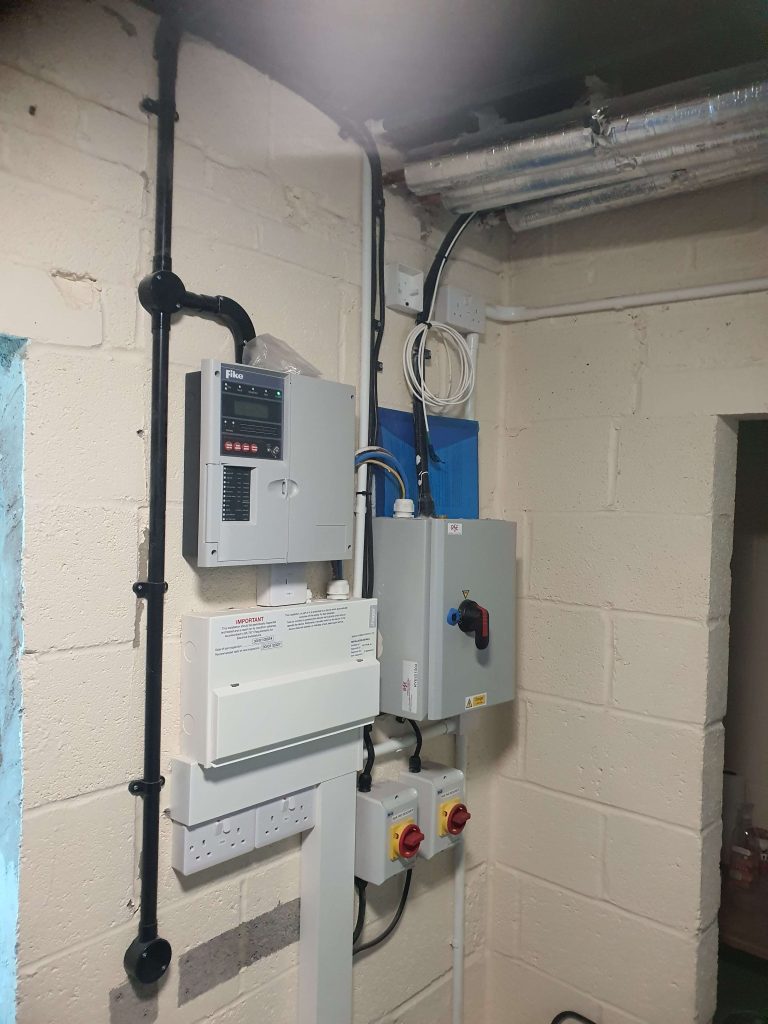
Good electrical maintenance services cover more than the fault you called about. Depending on your premises, a visit can include fault finding, an EICR of the fixed wiring, RCD and emergency lighting tests, PAT testing of portable equipment, and repairs or upgrades to boards, sockets and lighting. You should get written results for each.
Portable appliance testing can help with equipment-related signs. HSE is clear that PAT is not a legal requirement in itself, but its PAT guidance explains that equipment which could cause injury must be maintained in a safe condition, using a risk-based approach.
If signs keep coming back, it may be time to move from reactive fixes to planned electrical maintenance services. Our guides to planned vs reactive maintenance and our commercial electrical maintenance checklist explain how.
Common questions
What are the most common signs your business needs electrical maintenance services?
Repeated tripping, flickering lights, warm sockets, burning smells, damaged cables and an overdue EICR are the most common early warnings.
Is a warm socket dangerous?
It can be. Warmth usually means a loose connection or overload. Stop using it and have it checked promptly.
Should I wait for my next EICR if I notice signs your business needs electrical maintenance?
No. An EICR is a periodic check. Warning signs need investigating when they appear.
Is PAT testing a legal requirement?
Not in itself, according to HSE. The legal duty is to maintain equipment in a safe condition, and PAT is one way to show you do.
Can maintenance be done outside working hours?
Often, yes. Planned work and inspections can usually be scheduled early, late or at weekends to limit disruption.
Noticed any of these signs, or want regular electrical maintenance services? Our NICEIC approved team brings 35+ years of experience to businesses in and around Milton Keynes. See our commercial electrical services or call 01908 464 431, 24/7 for emergencies.
Power problem right now?
24/7 emergency electricians across Milton Keynes.