EICR for Landlords: 7 Essential Rules to Stay Compliant
Avoid Costly Mistakes
On this page
- What an EICR for Landlords Covers
- The Legal Rules: 7 Essential Duties
- Understanding the Codes on Your Report
- What Changed in 2026 for Landlords
- How Much Does an EICR for Landlords Cost?
- How to Prepare for the Inspection
- A Simple EICR for Landlords Timeline
- Choosing Who Carries Out Your EICR
- Common questions
An EICR for landlords is the Electrical Installation Condition Report that private landlords in England must hold for every rented home. It shows whether the fixed wiring is safe for continued use, and it must be renewed at least every five years, or sooner if the report says so.
This guide sets out the legal duties, the deadlines, what the codes on the report mean, what affects the cost, and what changed in 2026. It is written for landlords and letting agents in Milton Keynes, but the rules apply across England.
What an EICR for Landlords Covers
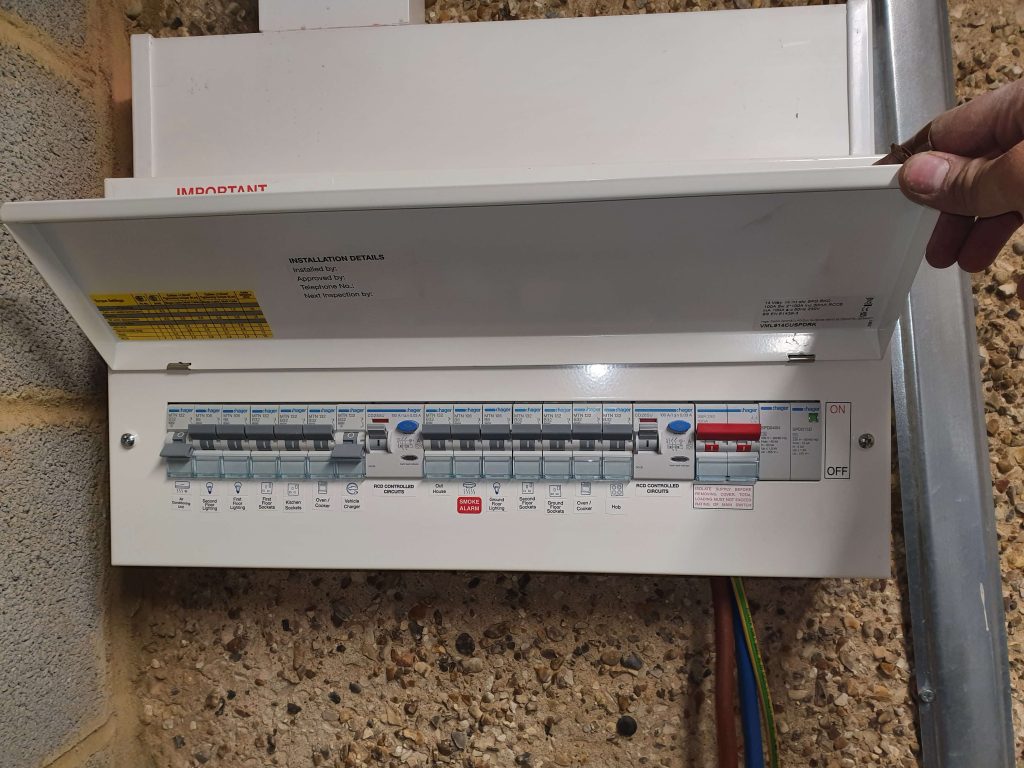
An EICR for landlords checks the fixed electrical installation, not your tenants’ appliances. That means the consumer unit, circuits, wiring, sockets, switches, light fittings and earthing and bonding.
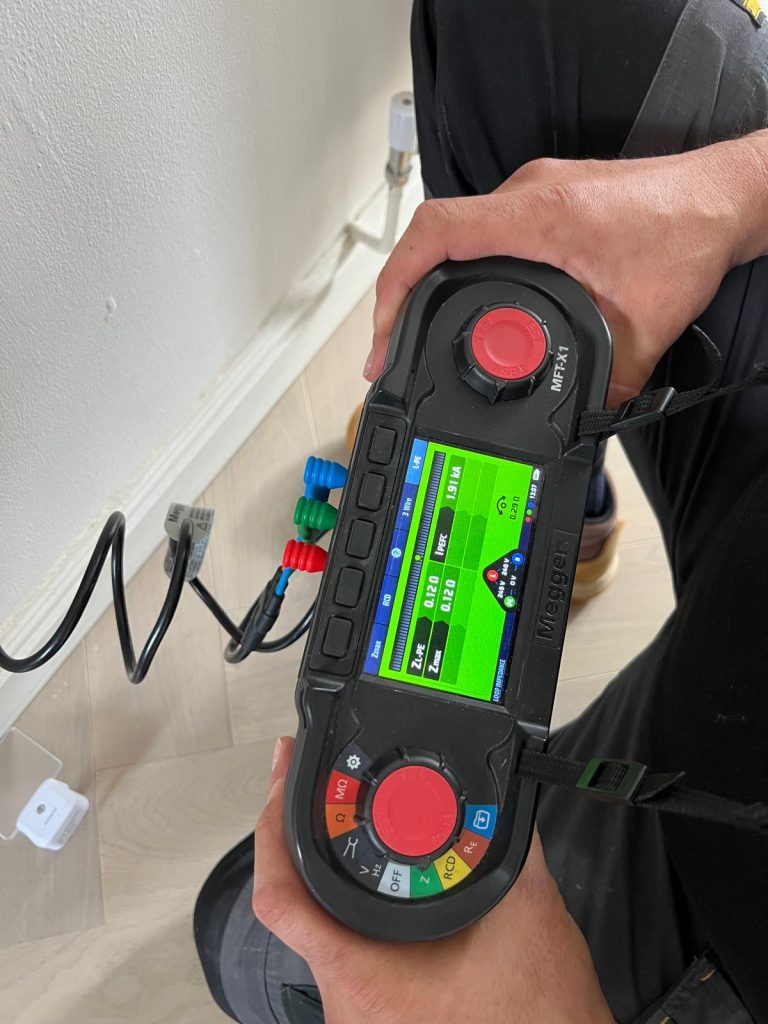
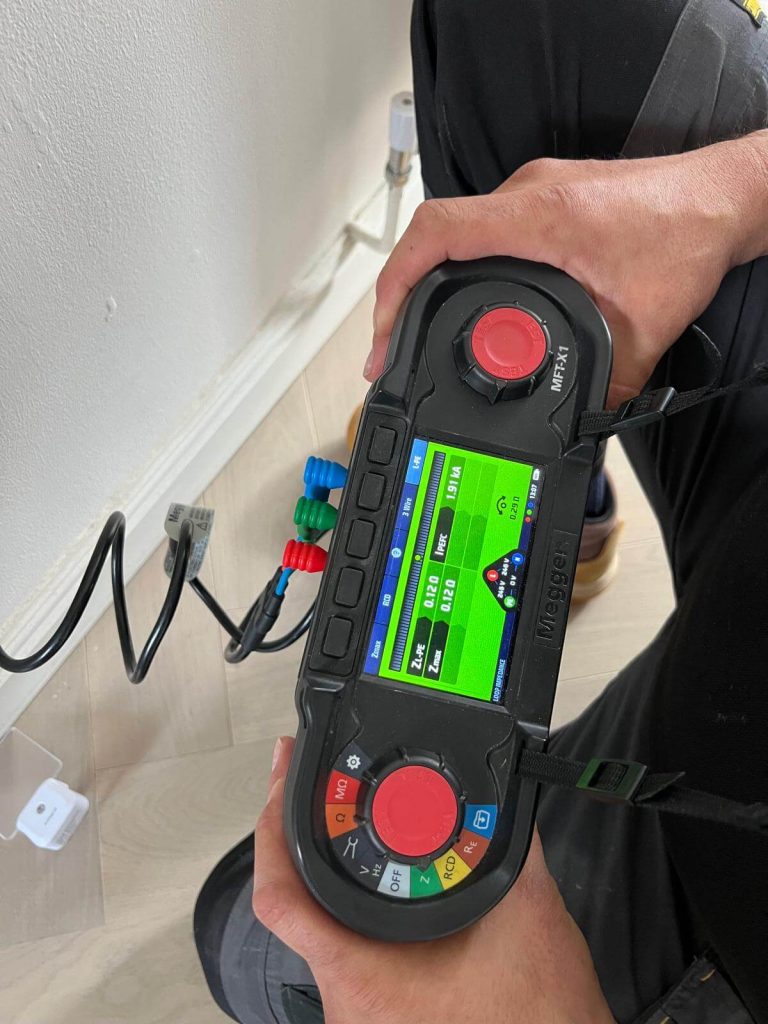
The electrician inspects, tests a sample of circuits, records any defects and gives an overall result: satisfactory or unsatisfactory. The report also states the date by which the next inspection is due.
Portable appliances you supply, such as a kettle or washing machine, are not part of the EICR. Many landlords arrange PAT testing for those separately as good practice.
The Legal Rules: 7 Essential Duties
The rules come from the Electrical Safety Standards in the Private Rented Sector (England) Regulations 2020. They were extended in 2025 to cover social housing as well. These are the duties in regulation 3, in plain English.
1. Meet the safety standards throughout the tenancy
The installation must meet the electrical safety standards whenever the property is occupied under a tenancy covered by the regulations.
2. Inspect at least every five years
A qualified person must inspect and test the installation at intervals of no more than five years. If the last report sets an earlier date, that earlier date applies.
3. Inspect before a new tenancy starts
The regulations require the installation to be inspected and tested by a qualified person before the tenancy begins. In practice, a valid EICR for landlords must already be in place when keys are handed over.
4. Give tenants a copy
- Existing tenants: within 28 days of the inspection
- New tenants: before they move in
- Prospective tenants: within 28 days of a written request
5. Give the council a copy if asked
If Milton Keynes City Council, as the local housing authority, asks in writing, you must supply a copy within 7 days.
6. Complete remedial work within 28 days
If the report shows further work or investigation is needed, a qualified person must complete it within 28 days of the inspection, or sooner if the report says so. You then need written confirmation that the work is done, sent to your tenants and the council within 28 days of completion.
7. Keep the report
Keep each report until the next inspection is due or carried out, and give a copy to the electrician doing the next inspection.
The council can impose a financial penalty of up to £40,000 for a breach, under regulation 11.
Understanding the Codes on Your Report
Every EICR for landlords lists observations with a code. Knowing what each code means tells you how urgent the work is.
- C1 – Danger present. There is a risk of injury now, and immediate action is needed.
- C2 – Potentially dangerous. Urgent remedial work is required.
- C3 – Improvement recommended. Not a reason for an unsatisfactory result on its own.
- FI – Further investigation. Something needs checking that could not be confirmed on the day.
Under BS 7671:2018+A4:2026, the current edition of the wiring regulations, only C1 and C2 make the overall result unsatisfactory. FI observations are now listed separately. Treat them seriously anyway, because a further investigation can reveal a C1 or C2.
A C3 is not a hidden fail. An older installation is not automatically unsafe just because it does not meet the latest edition of the wiring regulations.
What Changed in 2026 for Landlords
Two changes matter for an EICR for landlords this year.
Renters’ Rights Act written statement
From 1 May 2026, under regulations made for the Renters’ Rights Act 2025, the written statement of terms for a private assured tenancy must explain the landlord’s electrical safety duties. That includes meeting the safety standards, having the installation inspected at least every five years, and supplying the report to the tenant. The five-yearly interval itself has not changed.
New edition of the wiring regulations
BS 7671:2018+A4:2026 was published on 15 April 2026 and is now the current edition. Your existing report stays valid until its due date. You do not need a new EICR just because the standard was updated.
How Much Does an EICR for Landlords Cost?
We do not quote a single price for an EICR for landlords because the work depends on the property. The main factors are:
- Number of circuits and size of the property
- Whether it is a flat, house or HMO
- Age and condition of the installation, and whether records exist
- Access, such as locked rooms, loft spaces or tenants’ availability
A larger property with more circuits takes longer to test. HMOs often have more circuits, communal areas and fire alarm interfaces, so they usually take longer too.
Be wary of very low fixed prices. A proper inspection takes time, and a rushed report is no use if the council or an insurer questions it. Ask for a written quote for your EICR for landlords before booking.
How to Prepare for the Inspection
A little preparation makes an EICR for landlords faster and avoids a return trip.
- Give tenants written notice and agree a time
- Make sure the consumer unit, loft and meter are accessible
- Find previous EICRs and any certificates for recent work
- Warn tenants that power will be off for parts of the visit
If a tenant refuses access, keep a record of your attempts. The regulations say a landlord is not in breach if they can show they took all reasonable steps to comply.
A Simple EICR for Landlords Timeline
Missed deadlines are an easy way to fall foul of the rules. A simple timeline keeps an EICR for landlords on track.
- Three months before the due date: book the inspection and tell your tenants.
- Inspection day: the electrician inspects and tests, and flags any immediate danger.
- Within 28 days: send the report to existing tenants, and complete any required remedial work.
- Within 28 days of the work: send written confirmation and the report to tenants and the council.
- Before any new tenant moves in: give them a copy of the latest report.
Set a calendar reminder for the next due date as soon as the report arrives. If you use a letting agent, confirm in writing who books the EICR for landlords and who sends copies to tenants. The legal duty stays with you as the landlord, even when an agent handles the paperwork.
Portfolio and HMO landlords
If you own several properties, keep one register listing each address, the date of the last report, the result and the next due date. Staggering inspections across the year spreads the cost and avoids several reports falling due at once. For HMOs, check whether your licence sets extra conditions, such as shorter intervals or extra fire safety checks.
Choosing Who Carries Out Your EICR
The regulations require a “qualified person”, meaning someone competent to inspect and test the installation. The simplest check is to use an electrician registered with a recognised scheme.
Dream Home Experts is an NICEIC Approved Contractor and ECA member, with 35+ years of experience in the team. We carry out EICRs for single lets, portfolios and HMOs, and we can quote for any remedial work straight after the report so you stay inside the 28-day window.
For background on the report itself, read what is an EICR and our landlord EICR certificate guide.
Last checked: 31 October 2026.
Common questions
How often is an EICR for landlords required?
At least every five years, or sooner if the last report says so. The installation must also have been inspected and tested before a tenancy starts.
Do I need a new EICR for every new tenant?
The rules require the installation to have been inspected and tested before the tenancy starts, and the new tenant must get a copy of the latest report before moving in. If your EICR for landlords is close to its due date, renewing it before a new let is the safest choice.
What happens if my EICR is unsatisfactory?
You must have the C1, C2 or further investigation items dealt with by a qualified person within 28 days, or sooner if stated, then send written confirmation to your tenants and the council.
Does the EICR cover appliances I provide?
No. It covers the fixed installation only. PAT testing of supplied appliances is separate and recommended good practice.
Are HMOs treated differently?
Not under these regulations. An EICR for landlords of HMOs follows the same rules. Licensing conditions may add their own requirements, so check your licence.
Need an EICR for a rental property? See our EICR and electrical testing page or call 01908 464 431 for a quote.
Power problem right now?
24/7 emergency electricians across Milton Keynes.