EV Charger Without a Driveway: 5 Essential Facts
2026 Guide
On this page
- What Is Cross-Pavement Charging?
- Do You Need Planning Permission for an EV Charger Without a Driveway?
- What an EV Charger Without a Driveway Costs
- Can a Grant Help With an EV Charger Without a Driveway?
- Renting or Living in a Leasehold Flat?
- What It Means in Milton Keynes
- How to Plan Your Installation
- Common questions
Getting an EV charger without a driveway has just become simpler. Since 21 October 2026, you no longer need planning permission for a cross-pavement charger, which runs a cable from your home, under the pavement, to your car on the street. This guide explains what has changed, what it costs, which grants can help and what to check before you book.
We install home chargers across Milton Keynes, including an EV charger without a driveway for homes that park on the street. We would rather you understood the options before you book than found a problem afterwards.
What Is Cross-Pavement Charging?
The short answer: it is a way to charge on the street using your own home electricity. A cable runs from your house, under the pavement, to your car parked on the street. You charge on your own supply rather than at a public charger.
That matters because home electricity is usually much cheaper than public charging. The government says charging at home can cost as little as 2p per mile.
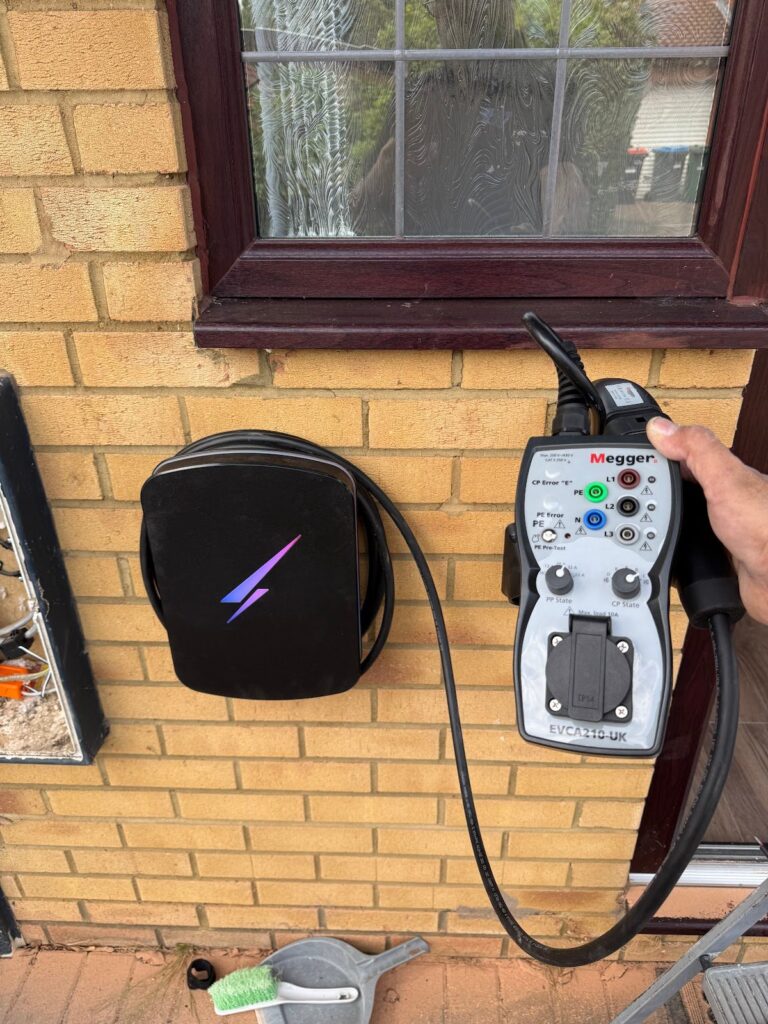
The main parts of a cross-pavement setup are:
- The charger or supply at your home. Fitted on your own electrics, on its own circuit.
- The route under the pavement. GOV.UK gives a charging gully as one example of a cross-pavement solution.
- Your car on the street. You plug in where you park, outside your home.
Do You Need Planning Permission for an EV Charger Without a Driveway?
No, not any more. From 21 October 2026, qualifying cross-pavement charging solutions no longer need planning permission. The Department for Transport says this saves drivers up to £300 on installation and makes the whole process quicker.
The change is part of the government’s “everyday fixes” to help with the cost of living. Changes to permitted development rights also make it quicker and cheaper for charge point operators to install larger public charging hubs.
There is one honest caveat. EVA England, which welcomed the change, said it is now up to local authorities and landlords to make these solutions easier to access in practice. So ask early what your council will need from you before any work on the pavement starts.
What an EV Charger Without a Driveway Costs
We will not quote a single national price for an EV charger without a driveway, because there isn’t one. The cable route, the pavement work and the state of your home’s electrics all change the figure.
The saving on paperwork
The government puts the saving from removing planning permission at up to £300 on installation. That is money that used to go on the application alone.
The saving on running costs
The Buses and Local Transport Minister said cross-pavement charging lets residents without off-street parking use cheaper domestic electricity, with savings of up to £1,750 on running costs.
The cost of the installation itself
For a typical home charger, our guide to EV charger installation cost explains each factor, from cable length to consumer unit upgrades. A cross-pavement job adds the route under the pavement, so a survey is the only reliable way to price it.
Can a Grant Help With an EV Charger Without a Driveway?
Yes, if you qualify. The Office for Zero Emission Vehicles runs several chargepoint grants, and GOV.UK lists a grant for households with on-street parking of up to £500 when you install a cross-pavement solution. GOV.UK says its chargepoint grant schemes are available until 31 March 2027.
Before you rely on a grant, check:
- Your vehicle. It must be on the OZEV-approved list.
- The current rules. Grant amounts and eligibility can change, so read GOV.UK first.
- Who claims it. Ask your installer whether they handle the grant paperwork.
More drivers are making the switch. September 2026 was another record month for UK electric car sales, up 36% on a year before, with nearly 100,000 sold in a single month. The Electric Car Grant has helped over 190,000 drivers save up to £3,750 on a new EV.
Renting or Living in a Leasehold Flat?
If you rent or own a leasehold flat, an EV charger without a driveway has usually meant asking someone else first. The government is consulting on making that easier, and you can respond until 16 December 2026.
The two consultations cover:
- Tenants and leaseholders. Clearer guidance for landlords on how to handle a chargepoint request, and the government is considering mandatory requirements to make it harder to refuse a renter’s application.
- Building regulations. Possible changes so chargepoints are installed in new and refurbished covered car parks.
Nothing changes overnight for renters, but the direction is clear. In the meantime, ask your landlord or freeholder in writing before you book any work.
What It Means in Milton Keynes
Plenty of homes in Milton Keynes park on the street or in shared bays rather than on a private drive. Until now, many of those households had no realistic way to charge at home, and an EV charger without a driveway was simply not an option.
EVA England’s research found that 60% of petrol and diesel drivers without off-street parking would never consider an EV. Removing planning permission for cross-pavement charging is a step towards changing that, for local drivers as much as anyone.
If you are weighing it up, our guide on whether a home EV charger is worth it sets out the benefits in plain terms.
How to Plan Your Installation
The quickest route to a clear answer on an EV charger without a driveway is a short survey. An electrician needs to see your consumer unit, your supply and the route from your home to where you park.
Before the visit, it helps to:
- Take a photo of your consumer unit and your electricity meter
- Note where you usually park and how far it is from your front wall
- Check whether you qualify for a chargepoint grant
- If you rent, get your landlord’s agreement in writing
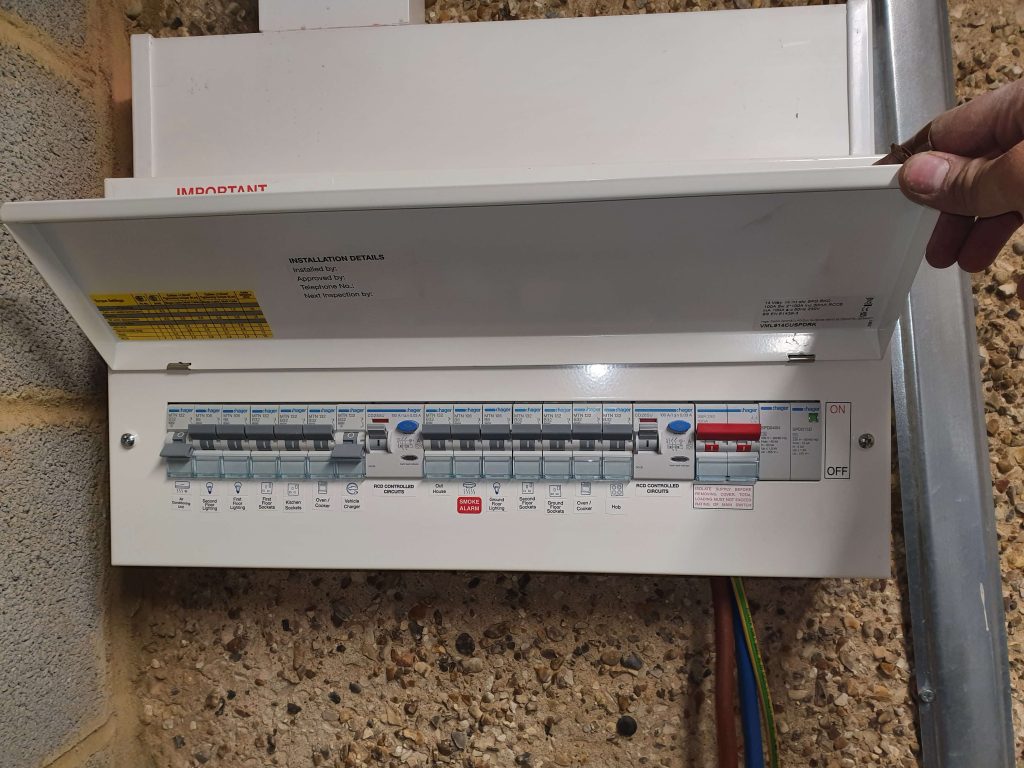
An EV charger is a heavy, continuous load on its own dedicated circuit, so an older or full consumer unit may need work first. Our guide to house fuse box replacement cost explains what that involves. A new circuit is also notifiable work under Part P in England, which a registered installer can self-certify for you.
Dream Home Experts is an NICEIC Approved Contractor, and our team brings 35+ years of electrical experience. We install home chargers and the consumer unit upgrades that sometimes go with them, and we will tell you plainly if your home is a good fit for cross-pavement charging.
Last checked: 8 November 2026. Planning, grant and consultation details are taken from GOV.UK and may change.
Every street and every home is different, so a survey is the only reliable way to plan an EV charger without a driveway before any work starts.
Common questions
Can I get an EV charger without a driveway?
Yes. A cross-pavement solution runs a cable under the pavement to your car on the street, and since 21 October 2026 qualifying solutions no longer need planning permission.
How much does the planning change save?
The government says removing planning permission saves drivers up to £300 on installation. Home charging can then cost as little as 2p per mile.
Is there a grant for an EV charger without a driveway?
GOV.UK lists a chargepoint grant of up to £500 for households with on-street parking who install a cross-pavement solution. Check the current rules and that your vehicle is on the OZEV-approved list.
I rent my home. Can I still get one?
Ask your landlord first. The government is consulting until 16 December 2026 on clearer guidance for landlords and on making it harder to refuse a renter’s request.
Does my consumer unit need to change?
Not always. A charger needs its own circuit and suitable protection, so an older or full consumer unit may need upgrading first. A survey will tell you.
Do I need building control approval?
A new circuit is notifiable work under Part P in England. A registered installer self-certifies the work and notifies building control for you.
Want to know if your home can have an EV charger without a driveway? Book a survey with our domestic team or call us on 01908 464 431.
Power problem right now?
24/7 emergency electricians across Milton Keynes.