Electrical Safety Tips: 15 Surprising Facts for Safe Homes
On this page
These electrical safety tips start with the facts behind your sockets, switches and fuse box. Each fact is checked against an official UK source, and each comes with a practical tip for keeping your home safe. Some are surprising. A few could prevent a fire.
Electrical Safety Tips Start With Your Supply
1. UK homes are supplied at 230 volts
The Electricity Safety, Quality and Continuity Regulations 2002 set the declared voltage at 230 volts between phase and neutral. The supply may run up to 10% above or 6% below that figure and still be within the rules.
2. The frequency is 50 hertz
Alternating current in Great Britain changes direction 50 times a second, or 50 Hz. The same regulations allow it to vary by 1% either way.
3. Power is volts times amps
Watts are roughly volts multiplied by amps for simple loads like kettles and heaters. At 230 V, a 3 kW kettle draws about 13 amps. That is why high-power appliances should never share one adaptor.
4. A kilowatt hour is what you pay for
Your bill counts kilowatt hours (kWh). One kWh is one kilowatt used for one hour, so a 2 kW heater running for three hours uses 6 kWh. Knowing this helps you spot which appliances drive your bill.
Electrical Safety Tips for Preventing Fires
5. Electricity causes almost half of domestic fires
Electrical Safety First states that almost half of all domestic fires are caused by electricity. That is why the electrical safety tips below matter.
6. Adaptors are a common risk
Electrical Safety First warns against overloading adaptors, particularly with high-current appliances such as kettles, irons and heaters, and against plugging adaptors into other adaptors. Our practical advice: if you need more sockets, have more sockets fitted.
7. Warning signs are usually there first
Electrical Safety First lists burning smells, buzzing or crackling, fuses blowing and circuit breakers tripping as signs you should never ignore. Knowing them is one of the most useful electrical safety tips for any homeowner, because they give you time to act.
8. Smoke alarms are your back-up
Working smoke alarms give you early warning if a fault does start a fire. Test them regularly, and consider mains-powered, interlinked alarms so one triggers them all.
Electrical Safety Tips for RCDs and Breakers
9. An RCD watches for leaking current
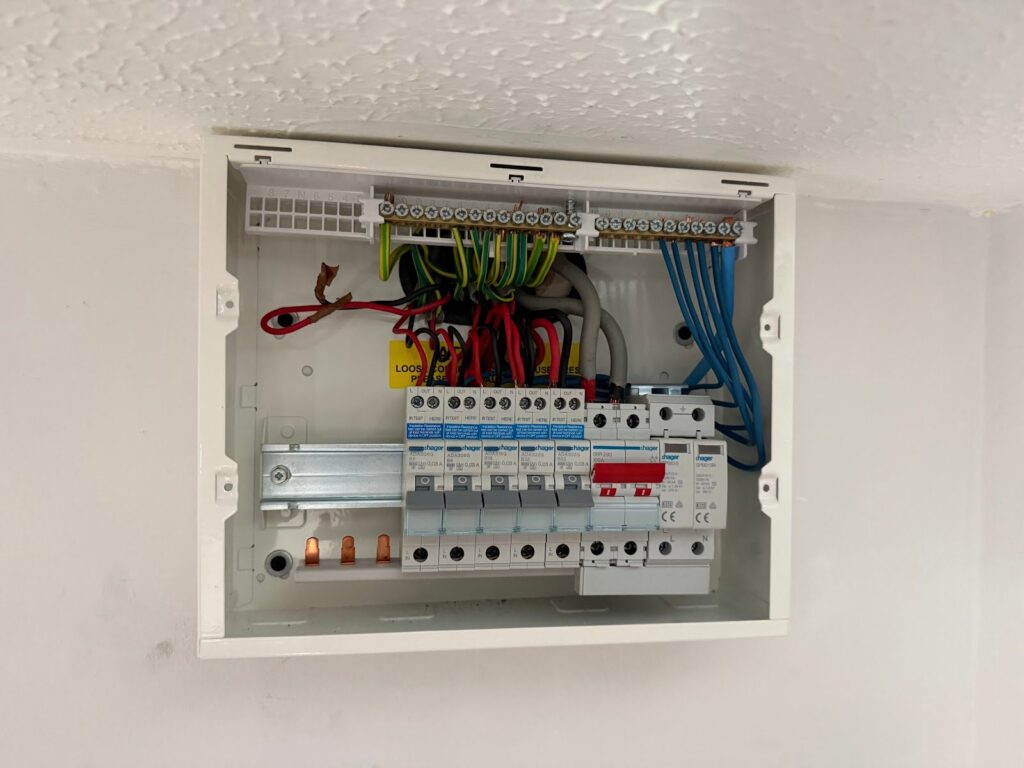
A residual current device (RCD) compares the current going out with the current coming back. If some is leaking, perhaps through a person, it cuts the power very quickly. It is one of the most important safety devices in a modern consumer unit.
10. You should test your RCDs every six months
The RCD notice that BS 7671 requires next to your consumer unit asks you to press the “Test” button every six months. The power to the protected circuits should switch off. If it does not, call an electrician.
11. A tripping breaker is doing its job
When a circuit breaker or RCD trips, it is protecting you from a fault or overload. Repeated tripping is a sign to investigate, not to keep resetting. Our guide on why your electric keeps tripping explains the common causes.
Inspections, Rules and the Law
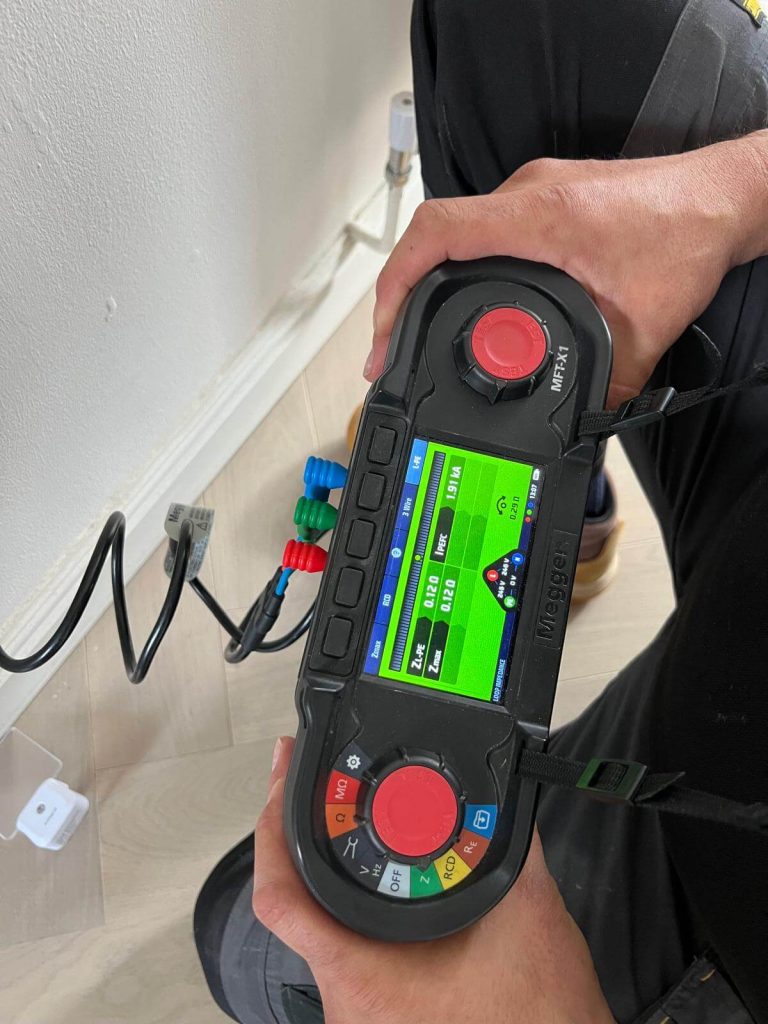
12. Landlords must have the wiring checked every five years
Under the GOV.UK electrical safety standards guidance, private landlords in England must have the installation inspected and tested at least every five years, and give tenants a copy of the report.
13. Homeowners should aim for every ten years
There is no legal duty for owner-occupiers, but Electrical Safety First advises having your wiring checked by a registered electrician at least every ten years, and when you move into a new property.
14. The wiring rules are updated regularly
Electrical work in the UK follows BS 7671, the IET Wiring Regulations. The current edition is BS 7671:2018+A4:2026. A new edition does not make older wiring unsafe overnight, but new work must follow the current rules.
15. Workplaces see around 1,000 electrical accidents a year
HSE says around 1,000 electrical accidents at work are reported to it each year. Electricity is just as unforgiving at home, which is why fixed wiring work belongs with a qualified electrician.
Electrical Safety Tips During a Power Cut
If the whole street goes dark, the fault is probably on the network, not in your home. You can call 105, the free power cut number in England, Scotland and Wales, which connects you to your local network operator. One of the simplest electrical safety tips: keep a torch near your consumer unit so you can check it safely in the dark.
If only your home is off, check your consumer unit first. If a switch has tripped and will not reset, or you smell burning, leave it off and call an electrician. We run a 24/7 emergency electrician service for exactly this.
Common Myths vs Facts About Electricity
Some beliefs about home electrics are wrong, and a few are dangerous.
- Myth: a breaker that keeps tripping is faulty. Usually it is doing its job and detecting a fault or overload. Find the cause.
- Myth: a bigger fuse will stop it blowing. A fuse protects the cable and appliance. Fitting a higher rating removes that protection.
- Myth: old wiring is always unsafe. Not necessarily. Age is a reason to test it, not proof of danger.
- Myth: if the plug fits, the adaptor is fine. Electrical Safety First warns against overloading adaptors, whatever fits.
Separating myths from facts about electricity is often the difference between a safe fix and a hidden risk.
5 Electrical Safety Tips to Remember
Put simply, these facts point to a short list of electrical safety tips:
- Do not overload adaptors, especially with heaters and kettles
- Press your RCD test buttons every six months
- Never ignore burning smells, buzzing or repeated tripping
- Have your wiring checked at least every ten years
- Use a registered electrician for new circuits and fuse board work
For a room-by-room routine, use our homeowner electrical checklist.
Last checked: 31 October 2026.
Common questions
What voltage is UK mains electricity?
The declared voltage is 230 volts, with an allowed range of 10% above to 6% below.
How often should I test my RCD?
Every six months, using the test button on the RCD, as the notice beside your consumer unit says.
How many home fires are caused by electricity?
Electrical Safety First says almost half of domestic fires are caused by electricity. Overloaded adaptors and ignored warning signs are risks you can control.
Where can I find more electrical safety tips?
Electrical Safety First publishes free guidance for homes. For anything involving your fixed wiring, speak to a registered electrician.
Worried about something these electrical safety tips raised? Our NICEIC approved electricians have 35+ years of experience. Visit our domestic electrician page or call 01908 464 431.
Power problem right now?
24/7 emergency electricians across Milton Keynes.