EV Charger Types: 4 Essential Speeds, Simply Explained
On this page
EV charger types come down to three questions: how fast the charger is, whether it has its own cable, and whether it is smart. For most homes, the answer is a 7 kW smart wallbox on a single-phase supply. This guide explains the options in plain terms so you can pick the right one for your car, your property and your budget.
EV Charger Types by Speed
Charging speed is measured in kilowatts (kW). Power is voltage multiplied by current, and the UK’s declared supply voltage is 230 volts under the Electricity Safety, Quality and Continuity Regulations 2002. That simple sum explains most of the speeds you will see.
Standard socket (slowest)
Many cars come with a cable that plugs into a normal 13 A socket. It is slow, adding only a few miles of range per hour, and it puts a long, heavy load on a socket not designed for daily use. Treat it as a backup, not your main way to charge.
7 kW home charger (most common)
A dedicated wallbox on a single-phase supply draws up to 32 A. At 230 V that is about 7.4 kW, usually sold as “7 kW”. This is the standard home charger in the UK and will fill most cars overnight.
22 kW charger (three-phase)
A 22 kW charger needs a three-phase supply, which most UK homes do not have. It is more common at workplaces, depots and car parks. Many cars cannot accept 22 kW on AC anyway, so check before paying for it.
Rapid and ultra-rapid chargers
These use direct current (DC) at much higher power and are found at public sites such as motorway services. They are not a home option.
Why Your Car Matters More Than EV Charger Types
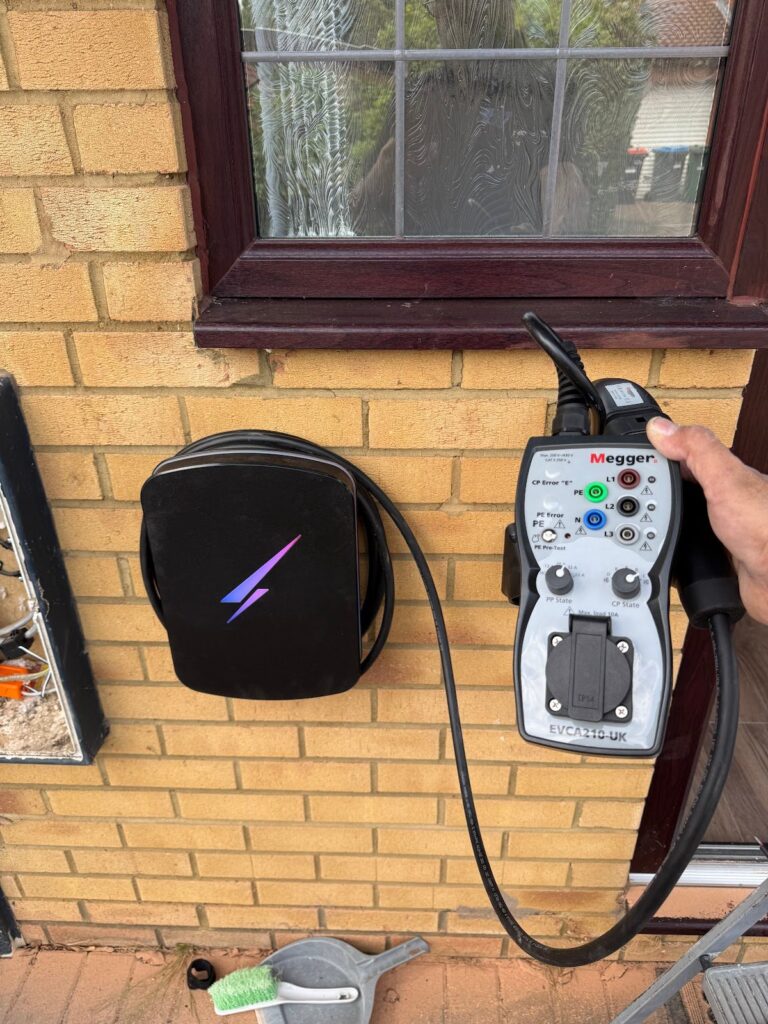
Every electric car has an onboard charger that converts AC from the wallbox into DC for the battery. Its maximum rate caps how fast you can charge at home. If your car’s onboard charger is 7 kW, a 22 kW wallbox will still charge at about 7 kW.
So before comparing EV charger types, check your car’s maximum AC charging rate in the handbook or on the manufacturer’s website. It is often the single biggest factor in the decision.
Tethered vs Untethered EV Charger Types
The second choice is about the cable.
- Tethered – the cable is fixed to the charger. You just unhook it and plug in. Convenient if you will only ever charge one type of car.
- Untethered – the charger has a socket, and you use your own cable. Tidier on the wall, and more flexible if you change cars or have visitors with different cars.
Most cars sold in the UK use a Type 2 connector for AC charging, so either style suits most drivers. Untethered units mean keeping a cable in the car or by the door.
Smart Chargers Are Now Standard
Since 30 June 2022, home and workplace chargers sold in Great Britain must be smart. The GOV.UK smart charge point guidance says they must be able to send and receive information, respond to signals to change when or how fast they charge, and come with pre-set off-peak default hours that you can change. Public rapid chargers are not covered by these rules.
In short, all home EV charger types sold today are smart. For you, this means scheduling. You can set the car to charge on a cheaper off-peak tariff. A good Wi-Fi or mobile signal at the charger helps the smart features work properly.
Which EV Charger Types Suit Your Property?
Here is how we usually match EV charger types to properties.
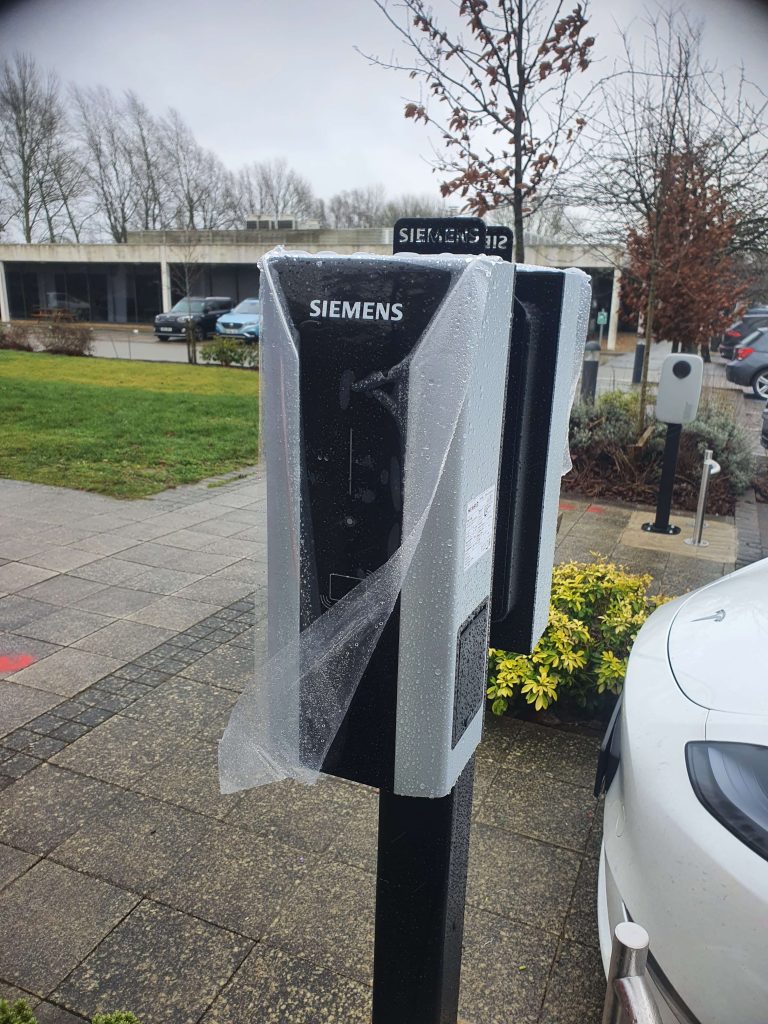
- House with a driveway – a 7 kW smart charger, tethered or untethered
- Two EVs at one home – one charger with load sharing, or two chargers if the supply allows
- Flat with an allocated space – a 7 kW charger, subject to permission and a cable route
- Office or workplace – several 7 kW or 22 kW points, often with load management
- Depot or fleet site – 22 kW points on a three-phase supply, sized to the fleet
The right answer also depends on your daily mileage. A short commute needs far less overnight charging than long daily trips.
What the Installer Checks First
Whichever of the EV charger types you choose, the installation matters as much as the box on the wall. Before fitting, we check:
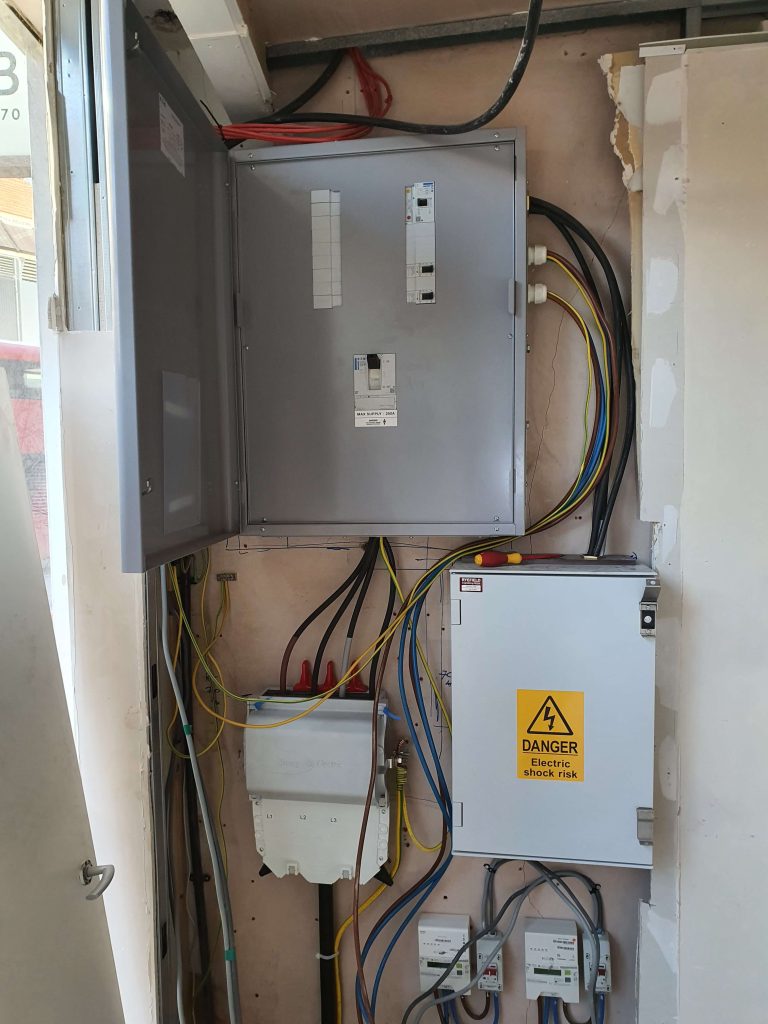
- The main fuse rating and the total load in the property
- The consumer unit’s condition and space for a new circuit
- The earthing arrangement, which has specific rules for EV chargers in BS 7671
- The cable route, distance and any drilling needed
If the supply is near its limit, a charger with load management can reduce its output when the house is busy. In some cases the network operator needs to be told about the new load. We handle that as part of the job.
Common Mistakes When Choosing EV Charger Types
- Buying a 22 kW charger for a home that only has a single-phase supply
- Paying for speed your car’s onboard charger cannot use
- Choosing a charger without checking the Wi-Fi signal at the parking space
- Relying on an extension lead and a three-pin plug for daily charging
Avoid these and you will get a charger that works well for years. For brand and feature comparisons, see our guide to the best EV charger for home. For a wider look at running an EV, read the benefits of electric cars.
Last checked: 31 October 2026. Government chargepoint grants of up to £500 are available to some renters, flat owners, landlords and businesses until 31 March 2027, according to GOV.UK.
Common questions
What is the most common home EV charger?
A 7 kW smart charger on a single-phase supply. It suits most cars and most UK homes.
Can I fit a 22 kW charger at home?
Only if you have a three-phase supply, and only worth it if your car can accept 22 kW on AC. Most homes are single-phase.
Do all new home chargers have to be smart?
Yes. Home and workplace chargers sold in Great Britain since 30 June 2022 must meet the smart charge point regulations.
How many EV charger types are there?
For home use, think of three choices rather than a long list: speed (usually 7 kW, or 22 kW with three-phase), cable (tethered or untethered) and smart features, which are now standard. Public rapid chargers are a separate category.
Is a tethered or untethered charger better?
Neither is better overall. Tethered is more convenient day to day. Untethered is more flexible if you change cars.
Not sure which of the EV charger types suits you? Our NICEIC approved electricians, with 35+ years of experience, can survey your property and recommend the right unit. Visit our domestic electrician page or call 01908 464 431.
Power problem right now?
24/7 emergency electricians across Milton Keynes.