EV Charger Installation: What Happens in 6 Simple Steps
On this page
A home EV charger installation usually follows six steps: a survey, a supply check, network notification, the fitting itself, testing and setup, then handover with your paperwork. Knowing what happens at each stage helps you prepare your home and avoid delays.
This guide covers the process only. If you are still deciding which unit to buy, see our guide to choosing the best EV charger for your home. For prices, see our EV charger installation cost guide.
Before You Book: What to Have Ready
A smooth EV charger installation starts with a few simple details. Have these to hand when you ask for a quote:
- Photos of your consumer unit, electricity meter and main fuse.
- Where you park and where you would like the charger.
- The distance from the consumer unit to that spot, roughly.
- Whether you own the property, rent it or live in a flat.
- Whether your Wi-Fi reaches the parking space.
Photos let the electrician spot obvious issues early, such as an old fuse box or a small main fuse. That saves a wasted visit.
Choosing the Charger Position
The position you choose affects the cost and the look of your EV charger installation. The best spot is usually close to where the car’s charging port sits when parked, and as near to the consumer unit as practical.
Think about how you park day to day, whether the cable will cross a path, and whether a tethered or untethered unit suits the space. A short, direct cable route keeps an EV charger installation simpler and tidier.
What Happens During an EV Charger Installation: 6 Simple Steps
Every property is different, but a home EV charger installation follows the same basic order.
1. Survey
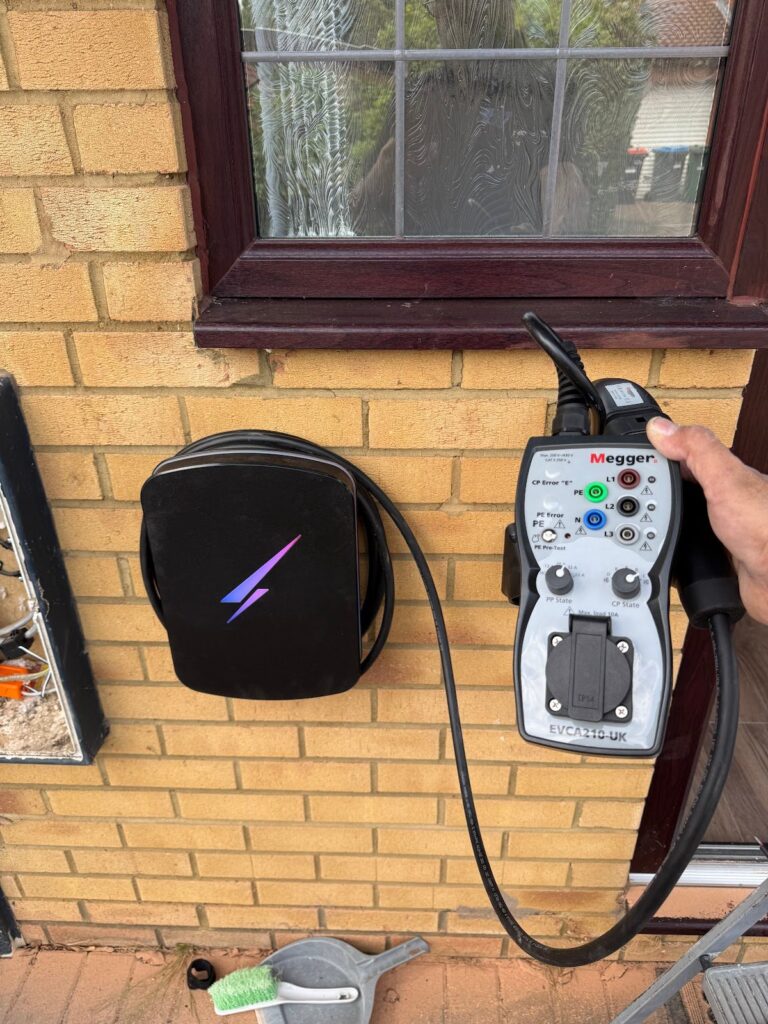
The electrician checks your supply, consumer unit, earthing arrangement and the cable route to the charger position. They also confirm the mounting surface is suitable and the unit will not block a path or door.
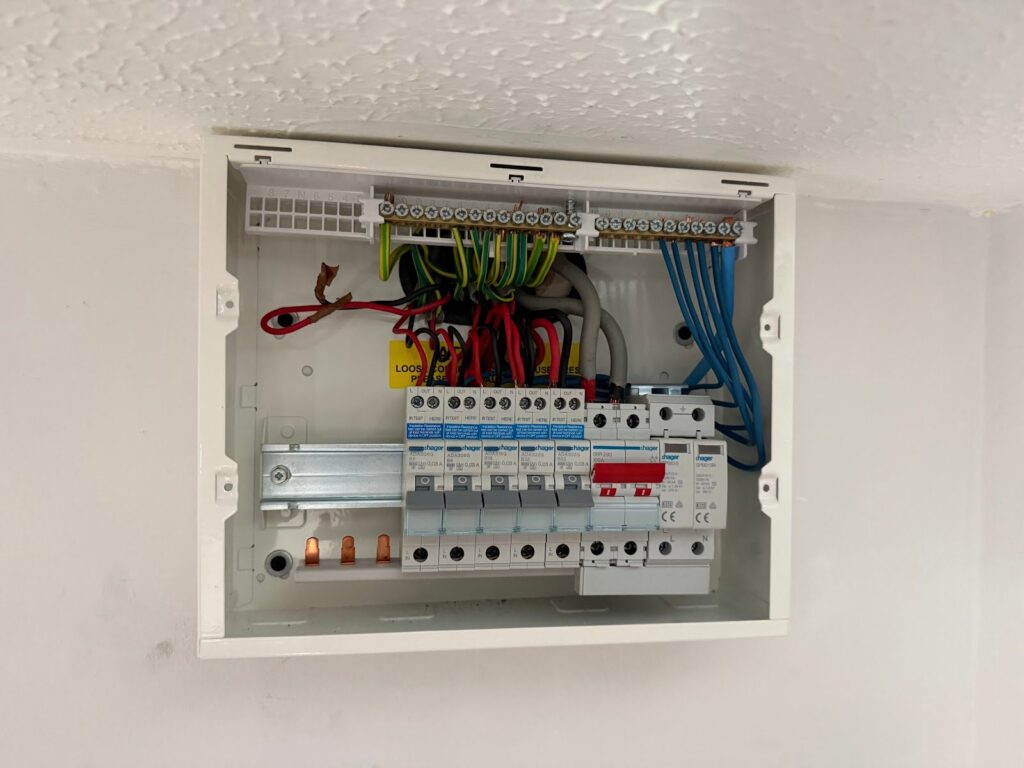
This is when problems are found. An old fuse box without RCD protection, for example, may need upgrading before the charger can be connected.
2. Supply and load check
A home charger can draw a large current for hours at a time. The electrician works out whether your supply can handle it alongside your other appliances, such as an electric shower or oven.
If capacity is tight, many chargers can reduce their charging rate automatically when the house is using a lot of power. In some cases, the supply itself needs upgrading by your network operator.
3. Notifying the network operator
Your local electricity network operator may need to know about the charger. GOV.UK guidance says the chargepoint installer will visit the property and determine whether the network operator needs to be informed before or after installation. Your installer should handle this for you.
4. Installation day
On the day of your EV charger installation, the power is switched off while the new circuit is connected. The electrician mounts the charger, runs the cable along the agreed route and fits a dedicated protective device at the consumer unit.
Cable is usually clipped neatly to the wall or run through the property. Tell the electrician if you want it hidden in a particular way, because that can affect time and price. A straightforward job is normally finished in a single visit.
5. Testing and setup
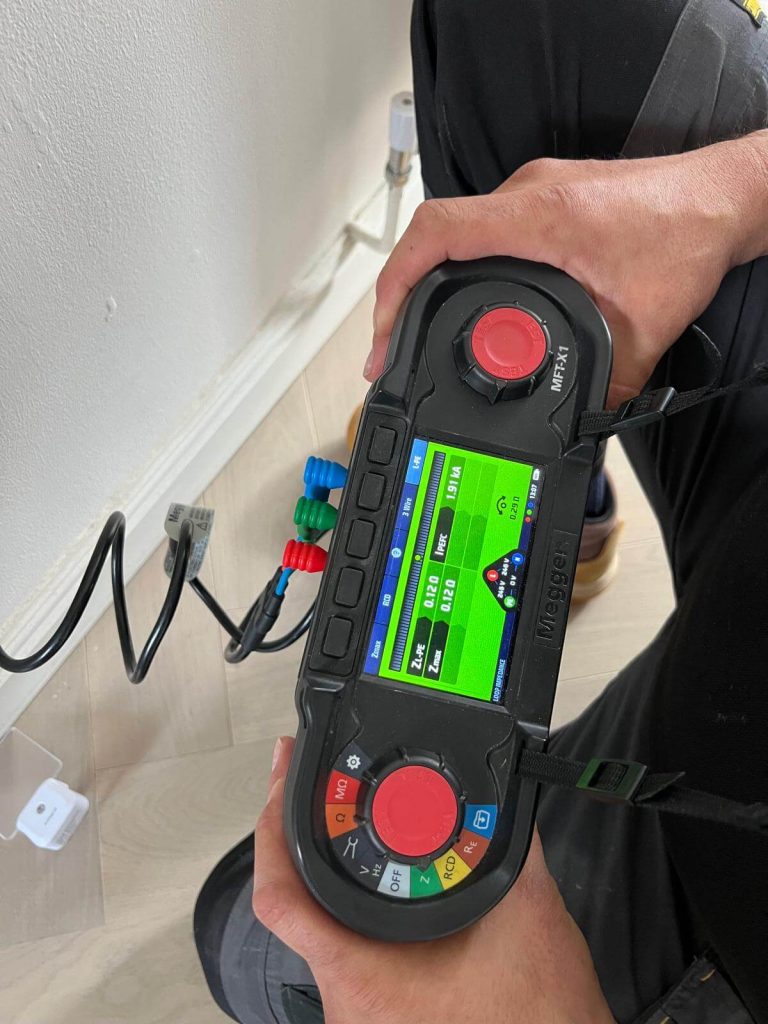
Once connected, the circuit is tested to make sure it is safe. The charger is then powered up, connected to your Wi-Fi and paired with its app.
Chargers sold in Great Britain since 30 June 2022 must be smart. GOV.UK says they must be able to send and receive information, include pre-set off-peak default charging hours and allow a randomised delay. You can accept or change the default hours during setup.
6. Handover and paperwork
The electrician should show you how to start and stop charging, use the app and reset the unit. You should receive an Electrical Installation Certificate for the new circuit, plus manufacturer warranty details.
Keep these together. You may need them for your insurer, your landlord, a future sale or a grant claim.
Grants for Renters and Flat Owners
Government chargepoint grants are listed on GOV.UK. According to the GOV.UK grants page, last updated 1 April 2026:
- Renters and flat owners can get up to £500 towards a chargepoint, if they have private off-street parking.
- Households with only on-street parking can get up to £500, if they install a cross-pavement solution such as a charging gully.
- These schemes are available until 31 March 2027.
The grant for renters and flat owners covers 75% of the cost of buying and installing a socket, up to £500. Check eligibility and the application steps on GOV.UK before your EV charger installation goes ahead.
Common Delays and How to Avoid Them
Most hold-ups are predictable. These are the ones we see most:
- Old consumer unit that needs upgrading first.
- Supply upgrades needed from the network operator.
- Long or difficult cable routes, such as to a detached garage.
- Landlord or freeholder permission not yet in place for rented homes and flats.
- Weak Wi-Fi at the parking space, which stops smart features working.
Sending clear photos and confirming permissions early removes most of these before your EV charger installation day.
After Your EV Charger Installation
A home charger needs little maintenance. Keep the cable off the ground when not in use, check it for damage now and then, and keep the unit’s software updated through the app.
If the charger stops working, check the app for error codes and see whether its circuit breaker or RCD has tripped. If it trips again after a reset, leave it off and call an electrician.
Last checked: 31 October 2026.
Common questions
How long does a home EV charger installation take?
A straightforward job is usually completed in a single visit. Supply upgrades, long cable runs or a consumer unit replacement add time.
Will my power be off during the EV charger installation?
Yes, for part of the visit, while the new circuit is connected at the consumer unit.
Do I need permission to install a charger?
If you rent or live in a flat, you will usually need permission from your landlord or freeholder. Your installer also handles any network operator notification.
Does my charger have to be a smart charger?
Chargers sold for home use in Great Britain since 30 June 2022 must meet the smart charge point rules.
Can I get a grant?
Renters, flat owners and homes with only on-street parking may get up to £500 until 31 March 2027. Check eligibility on GOV.UK first.
Dream Home Experts install home and workplace EV chargers across Milton Keynes. We are NICEIC Approved Contractors with 35+ years of experience. See our domestic electrical services to book a survey, or call 01908 464 431.
Power problem right now?
24/7 emergency electricians across Milton Keynes.