Electrical Warning Signs: 8 Dangerous Problems at Home
On this page
The most common electrical warning signs at home are flickering lights, buzzing or warm sockets, a burning smell and breakers that keep tripping. Overloaded extension leads and old or damaged wiring are close behind. Some are minor. Others are early warnings of a fire or shock risk. This guide explains eight problems we see most often, what causes them and when you should stop and call an electrician.
Electricity is a major cause of house fires. Electrical Safety First says almost half of all domestic fires are caused by electricity. Spotting problems early really matters.
We are NICEIC approved electricians in Milton Keynes with 35+ years of experience in fault finding and repairs, and we offer a 24/7 emergency service.
8 Electrical Warning Signs at Home
Here are the electrical warning signs that homeowners call us about most.
1. Circuit Breakers or RCDs That Keep Tripping
A breaker or RCD trips to protect you. One trip can be a one-off, often caused by a faulty appliance. If it keeps happening, there is a fault to find. Unplug everything on that circuit, reset, then plug items back in one at a time. If it trips with nothing plugged in, the fault is probably in the wiring. Our guide on why your electric keeps tripping goes into more detail.
2. Flickering or Dimming Lights
A single flickering light is often just a failing bulb or an incompatible dimmer. If several lights flicker, or lights dim when a large appliance switches on, there may be a loose connection. Loose connections create heat, so get them checked.
3. Hot, Scorched or Buzzing Sockets and Switches
Burn marks, discolouration, a crackling sound or a socket that feels hot are serious warning signs. They usually point to a loose connection or overloading. Stop using the socket and switch off the circuit until an electrician has looked at it.
4. A Burning Smell
A burning or fishy smell near sockets, switches or the consumer unit can mean plastic is overheating. Treat it as an emergency. If it is safe, switch off at the main switch. If there is smoke or fire, get out and call 999. Our electrical emergency guide explains what to do next.
5. Overloaded Sockets and Extension Leads
Plugging too many appliances into one socket through adaptors and extension leads can cause overheating. High-power items such as heaters, kettles and tumble dryers are the biggest risk. If you rely on extension leads in every room, you need more sockets, not more adaptors.
6. Damaged or Old Wiring
Exposed cables, cracked insulation or old-style wiring are among the most serious electrical warning signs. Electrical Safety First says that if the electrics in a home are more than 50 years old, they should be checked and updated. An inspection will tell you whether a repair or a rewire is needed.
7. Light Fittings That Overheat
Curled labels, discolouration or scorch marks on a light fitting are warning signs of overheating. Using bulbs above the fitting’s rated wattage is a common cause. Swapping to LED bulbs runs cooler, but damaged fittings should be replaced.
8. Shocks or Tingles From Appliances or Metalwork
Any shock, even a small tingle, is a sign of a fault. It may be a faulty appliance or a problem with earthing. Stop using the item and call an electrician straight away.

What Causes Electrical Warning Signs?
Most electrical warning signs come down to a handful of causes. Knowing them helps you judge how serious a problem might be.
- Age and wear: cable insulation, accessories and older consumer units deteriorate over time.
- Loose connections: terminals can work loose, which creates heat at sockets, switches and in the consumer unit.
- Overloading: modern homes use far more appliances than older wiring was designed for.
- Damage: nails and screws through cables, rodents in lofts and water from leaks all cause faults.
- Poor workmanship: unqualified DIY or unregistered work is behind many of the faults we repair.
- Faulty appliances: a worn kettle, heater or washing machine can trip an RCD and point the finger at the wiring.
Often, more than one cause is behind the electrical warning signs you notice. That is why proper testing matters before any repair.
When It Is Safe to Wait and When to Call
Not all electrical warning signs need an urgent call-out. Use this as a guide.
Call an electrician straight away if you notice:
- A burning smell, smoke, sparking or scorch marks.
- A shock or tingle from an appliance, switch or metalwork.
- Water near electrics, for example after a leak.
- A breaker or RCD that trips with nothing plugged in.
- Exposed or damaged cables.
Book a visit soon if you have:
- Lights that flicker across several rooms.
- Occasional tripping you cannot trace to one appliance.
- Too few sockets and a reliance on extension leads.
- Electrics you know are old or have not been checked for years.
Usually fine to handle yourself: replacing a blown bulb with the correct type, or resetting a breaker once after a known appliance fault. If you are ever unsure, switch off and ask.
How to Catch Electrical Warning Signs Early
Most electrical warning signs can be caught early with a few simple habits.
- Test your RCDs. Look for the “Test” or “T” button on your consumer unit. If you do not have one, your home may not have RCD protection.
- Get a periodic inspection. Electrical Safety First recommends owner-occupiers have their electrics checked every ten years.
- Do not overload sockets. Spread high-power appliances across different sockets.
- Look and listen. Check sockets and switches for marks and listen for buzzing.
- Use a registered electrician. Poor DIY work is a common cause of the faults we are called to fix.
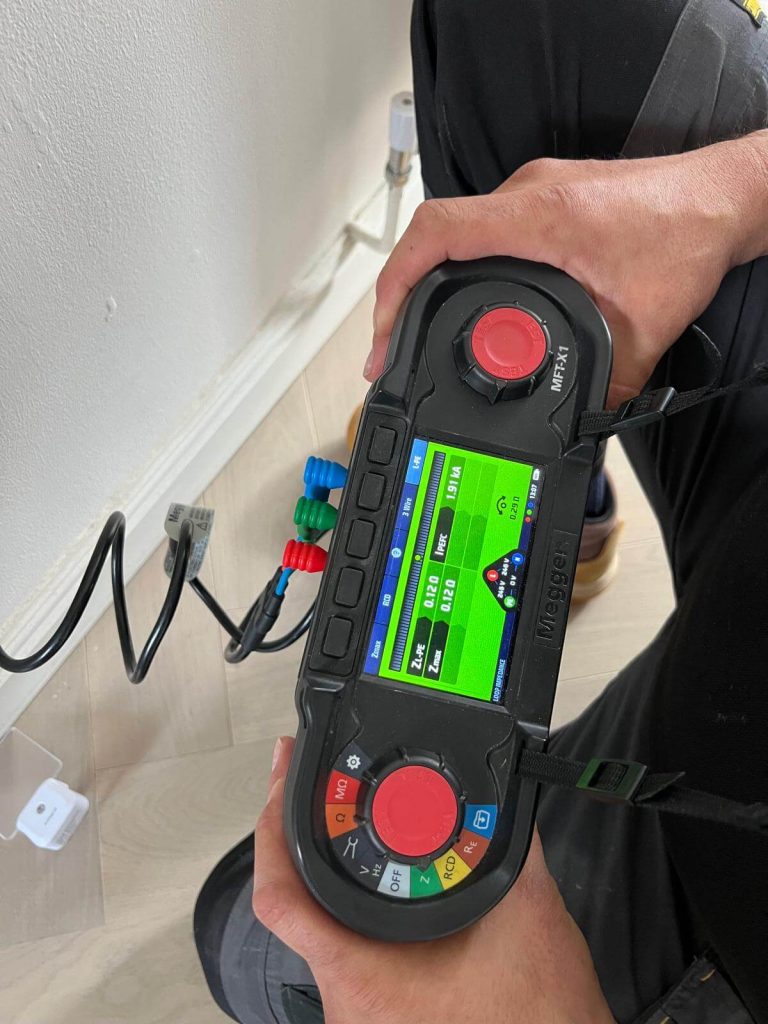
When a problem is hard to pin down, professional electrical fault finding uses proper test equipment to trace the cause rather than guessing.
Common questions
What is the most common electrical problem in UK homes?
Of all the electrical warning signs, tripping breakers and RCDs are the call-out we get most. They are often caused by a faulty appliance, but repeated tripping needs investigating.
Are flickering lights dangerous?
One flickering bulb usually is not. Flickering across several lights, or dimming when appliances switch on, can mean a loose connection, which can overheat and should be checked.
What should I do if a socket feels hot?
Stop using it, unplug anything connected and switch off the circuit if you can do so safely. Then call an electrician.
How do I know if my wiring needs replacing?
Warning signs include old-style cables, scorch marks, frequent faults and no RCD protection. An EICR will confirm the condition of your wiring.
Can the faults behind electrical warning signs be fixed the same day?
Many can, such as replacing a damaged socket or tracing a faulty appliance. Wiring faults can take longer to find and repair.
Spotted one of these problems? Our domestic electricians diagnose and fix faults across Milton Keynes, with 24/7 cover for emergencies. Call 01908 464 431 for help.
Power problem right now?
24/7 emergency electricians across Milton Keynes.